
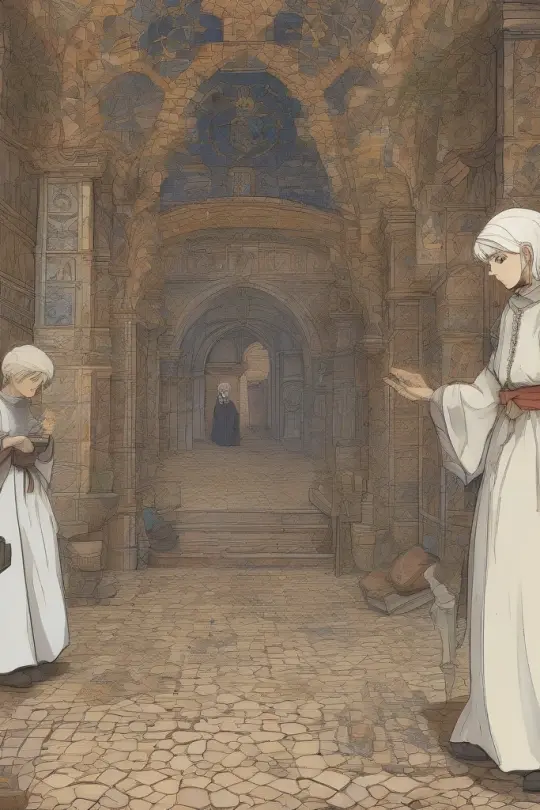
The Seville Kiln
Join the conversation! Readers are sharing their thoughts:
About the Story
In 16th‑century Seville, a family of tile‑makers confronts official scrutiny after a convent commission forces a choice between public survival and private memory. Amid inspections, a staged renunciation, and the dispersal of hidden patterns, craft becomes both refuge and risk in a slow, combustible city.
Chapters
Story Insight
Set in 16th‑century Seville, The Seville Kiln places the reader inside a small family workshop where clay, cobalt, and kiln heat shape both livelihood and lineage. Catalina Herrera, who has taken up the brush and the responsibility of the family trade after loss, navigates daily routines of mixing glazes, stretching paste, and firing panels meant to adorn convent walls. When a prestigious commission brings Doña Beatriz’s patronage into the courtyard, the potential to secure the household’s future collides with a more dangerous attention: methodical inspections, official seals, and bureaucratic requests that threaten to expose a private language embedded in the tiles. The inciting pressure is gentle in appearance—forms and samples called for inspection—but it carries a historical weight that alters every practical choice the family makes. The narrative privileges material detail: the smell of lime and smoke, the exact way a brush releases pigment, and the tactile decisions that hide memory in negative space and sequence rather than words. At its heart the story treats craft as a means of cultural survival. Patterns function as mnemonic devices, a grammar taught in apprenticeship and passed in fragments to trusted hands; what outwardly reads as ornate devotion also carries encoded registers of lineage and belief. The plot refuses easy moral binaries. Catalina and her kin must weigh pragmatic compromise against preserving private ritual, and those choices are rendered with an attentive honesty that resists melodrama. The inquisitorial presence is depicted less as melodramatic villainy and more as institutional pressure—meticulous, bureaucratic, effective—so the tension arises from the slow narrowing of options rather than a single dramatic confrontation. Emotional tones shift between anxious vigilance, the small fierce pleasure of making, and a bittersweet resolve when survival demands dispersal instead of display. What makes this work distinct is its close attention to the material culture of early modern craft, the politics of patronage, and the ways women operate authority within constrained social orders. The prose leans on sensory specificity and practical expertise about the making process to make the stakes tangible: a misplaced mark, a glazed edge, or a sequence of tiles can mean livelihood or ruin. The narrative scope is compact and deliberate, favoring careful unfolding over spectacle and honoring both the visible labor of artisans and the private economies of memory. Those drawn to historical fiction that values texture, ethical nuance, and the interplay of art and survival will find a concentrated portrait here—one in which preservation becomes an act of design, and the kiln’s heat holds both danger and refuge.
Related Stories
The Knotwright's Daughter
In a windswept harbor where craft and contraption jostle for place, Nell Booth races to blend skill with speed when a wounded coaster drifts toward the rocks. The town rallies, a steam twister coughs, and a brass goose squawks while hands splice, heave, and teach in a night that will decide their future.
The Binder of Tides
In a windswept port, apprentice binder Aurelia Voss discovers the disappearance of the maritime registry that governs the harbor’s livelihoods. She must bind truth, rally fishers, and outwit a powerful guild to restore rights and reshape her city’s future.
Ink and Oath
In a provincial city’s printshop, a young typesetter faces an impossible choice when incendiary pamphlets ignite unrest and authorities close in. She must decide whether to hand over the press’s tools to spare loved ones, or preserve the workshop and risk brutal suppression. The stakes: lives, evidence, and the fate of the words she sets.
Between Hem and Horizon
In a coastal 19th‑century harbor, Beatrice Voss, a master sailmaker, must act when a brig founders on a reef and lives hang on her craft. Hands, ropes, and a stubborn stitch set the pace; a small sewn patch hints at someone she once lost. Salt, lantern light, and a goose keep the night human.
The Bridgebuilder of Mercersford
Isobel Harrow leads Mercersford to build a hybrid timber-and-iron bridge, negotiating guild oversight and town needs while turning crises into practical tasks. The final chapter follows the bridge’s completion, a tense crossing solved by Isobel’s skill, and a modest opening where craft, apprenticeships, and community everyday life converge.
The Last Inn on the Road
Ruth Hargreaves refuses a hush payment and drives an inquest into her son’s death at a railway cutting, confronting contractors, threats, and the law. The final chapter follows the court proceedings, the verdict, and the village’s uneasy reckoning as railways and livelihoods collide.
Other Stories by Marcel Trevin
Frequently Asked Questions about The Seville Kiln
How does the family’s craft function as a means of cultural preservation in The Seville Kiln ?
The Herrera family encodes lineage and memory into tile motifs, negative space, and sequences. Patterns are dispersed to trusted apprentices and allies, allowing cultural practice to survive covertly under scrutiny.
What historical setting and period does The Seville Kiln portray ?
Set in 16th‑century Seville, the story explores workshop life, guild networks and convent patronage amid the social and religious pressures of an era shaped by inquisitorial oversight and record-keeping.
What is the central conflict driving the plot in The Seville Kiln ?
The core dilemma pits public survival—accepting a lucrative convent commission—against protecting private faith and family memory. Official inspections and record demands escalate risk and force strategic compromises.
Who is Catalina and what role does she play in the family's struggle ?
Catalina Herrera is the workshop's lead painter and strategist. She oversees samples, invents coded motifs, coordinates dispersal of designs, and balances craft, leadership, and the moral weight of secrecy.
How does the story portray the inquisitorial process and its impact on artisans ?
Don Alonso’s methodical inspections show bureaucracy as a slow constriction: polite procedures, requests for records, detainment and comparison of samples that compel artisans toward secrecy and compromise.
What themes will readers interested in historical craft and secrecy find in The Seville Kiln ?
Readers will encounter themes of art as memory and resistance, public identity versus private faith, gendered authority in craft, the politics of patronage, and the costs of preserving tradition clandestinely.
Ratings
I wanted to love this because the premise is rich, but the execution left me frustrated. The opening is lovely — Catalina at the table, the kiln’s warmth — yet the story spends so much time luxuriating in craft detail that the central conflict with the convent and the inspections never quite earns its weight. The staged renunciation reads like a plot device rather than an organic consequence of character choices, and the dispersal of the hidden patterns is presented more as symbolism than as an event with convincing fallout. Characters feel sketched more than lived: Tomas’s thumb-on-shard gesture is evocative, but we never get enough of his interiority to make his sacrifices land. Likewise, Mateo and the apprentices hover at the edges without becoming real threats or allies. Pacing is the main problem — the slow, combustible city is atmospheric, but the story’s momentum sputters where it should flare. Nice sentences, interesting ideas, but ultimately underdeveloped.
Wryly impressive. On the surface The Seville Kiln is about tiles and trade; under the surface it’s about how a family learns to translate rebellion into ornament. The staged renunciation? Brilliant bit of drama — the convent commission dangling like a moral minefield, and the Herreras tiptoe around it with their brushes. I chuckled and then felt my grin gone once the hidden patterns were dispersed — that moment hits like when someone shuffles your family photos and pretends it’s no big deal. The storytelling leans slow and careful (deliberate, not bored). The author clearly loves craft, and they get all the little things right: the stubborn blue pigment staining the skin, the hiss of a fresh panel near hot bricks. If you like your historicals with texture and a hint of gallows humor, this is your jam. 🙂
Restraint is the great strength here. The prose rarely raises its voice, and yet it communicates such a layered history: family techniques passed "by bone and breath," the kiln that has "lived for three generations," the lime’s citrus — these are small, exact things that carry the weight of the era. I particularly liked the courtyard’s privacy against the city’s noise; the contrast between the workshop’s intimate rituals and the looming inspections is handled with subtlety. The scene where the apprentices wheel glazes and whisper about timetables felt lived-in and believable. A quiet, atmospheric piece that lingers.
The Seville Kiln is a compact, disciplined piece of historical fiction that excels at showing rather than telling. The author uses craft—literally—to structure the narrative: repeat motifs (the kiln’s hiss, the cobalt veins of glaze, the shard Tomas tests) act like a refrain, reinforcing the family’s continuity even as public pressures threaten it. I appreciated the careful world-building; 16th‑century Seville is evoked through textures and tradespeak rather than heavy exposition, which keeps the pace deliberate but never dry. Two moments stood out analytically. First, Catalina’s control of the brush and the way pattern functions as "family speech" is both an ingenious metaphor and a tangible plot device—those hidden grammars carry the story’s stakes when designs must be dispersed. Second, the staged renunciation and the inspections provide a moral pivot: the narrative interrogates survival strategies under institutional pressure without resorting to melodrama. If there’s a quibble, it’s the story’s brevity: with such a rich premise, I wanted a little more on the apprentices (Mateo’s murmured concerns, for instance) and the aftershocks of dispersal. Still, a tight, intelligent read that rewards close attention.
I finished The Seville Kiln with my hands smelling like dust and my chest oddly tight — in the best way. The opening image of dawn as "pewter light" and Catalina at the long table is so tactile you can feel the cold clay under your palms. The scene where Tomas rubs a thumb along a shard stuck with family memory made me stop and reread it; that little gesture carries generations. I loved how craft functions as language here: the way the family leaves spaces in a pattern to speak privately felt like holding a secret conversation in plain sight. The tension around the convent commission and the staged renunciation is handled with quiet cruelty — you feel the city’s pressure at the edges of the yard, the inspectors’ footsteps like a threat to the kiln’s warmth. And when the hidden patterns are dispersed, it’s heartbreaking and clever at once. This story reveres work and memory while refusing to romanticize suffering. Beautifully done, deeply felt, and full of small details — the lime’s citrus, the hiss of the kiln — that sink in long after you close the page.