
The Knotwright's Daughter
Join the conversation! Readers are sharing their thoughts:
About the Story
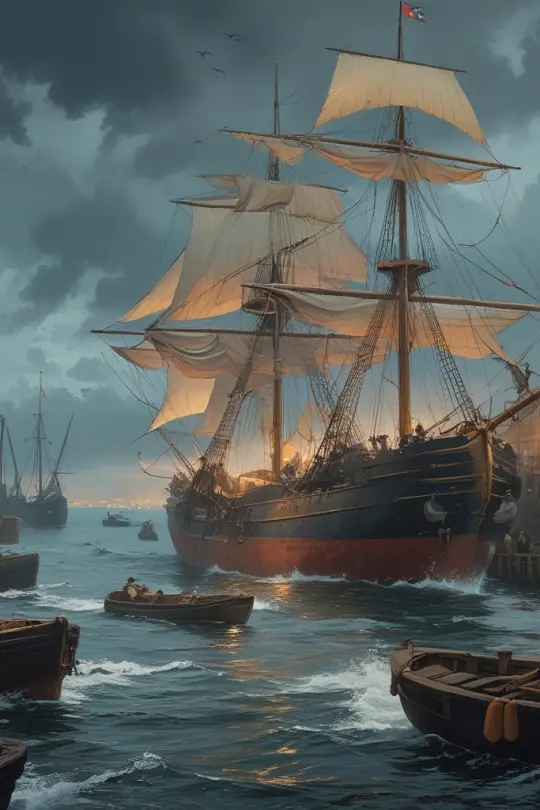
In a windswept harbor where craft and contraption jostle for place, Nell Booth races to blend skill with speed when a wounded coaster drifts toward the rocks. The town rallies, a steam twister coughs, and a brass goose squawks while hands splice, heave, and teach in a night that will decide their future.
Chapters
Story Insight
The Knotwright’s Daughter follows Nell Booth, a talented ropemaker in a wind‑blown harbor town at the cusp of steam‑age change. When Peregrine Pemberton arrives with a noisy, opinionated rope‑twisting machine—the Twister—Nell is thrust into a practical dilemma: embrace speed and a possible contract that could lift the town’s fortunes, or protect a way of work that shapes identity, family ties and local apprenticeship. The story lives in tactile details—tarred hands, the bite of hemp on skin, capstans and bitt‑frames, the smell of fried fish and lemon tarts at a noisy festival—and it matches that material life with a streak of human comedy. Peregrine’s mechanical goose and a Twister‑spun ornamental coil that lands on the mayor’s chin keep the tone humane; these small absurdities undercut dread and reveal how a community uses laughter to steady itself. That balance between craft and contraption sits at the narrative’s center, making the stakes feel immediate and grounded rather than abstract. At its heart the book treats profession as both literal work and metaphor. Ropework—eye splices, whipping, chafe protection, and the choreography of hauls—is rendered with hands‑on authority; the text privileges action and embodied skill, so crises are answered with splice, haul and guile rather than long philosophical rumination. Family dynamics and apprenticeship structures provide the social scaffolding: Josiah Booth’s slow, steady instruction, Lottie Marsh’s practical steadiness, and the apprentices’ eager fumblings show how knowledge is transmitted and contested. Economic friction and civic ritual are woven together through events such as the Festival of Knots, where public demonstrations shift quickly into tests of competence and character. The narrative is concise but layered: it scrutinizes how technology alters relationships, who gains from mechanization, and what responsibility looks like when a tool reshapes livelihoods. This compact, three‑part tale moves with practical urgency. The pacing tightens from demonstration to public test to a tense, tactile climax that asks the protagonist to act with the authority of her craft. Dialogue is used to reveal loyalties and generational tensions as much as to move the plot, and the prose favors varied, muscular verbs that make labor visible and gripping. For readers interested in historically rooted fiction that values workmanship, interpersonal nuance, and a humane mix of gravity and absurdity, this story offers precise, credible scenes of labor and community. Its particular pleasure is the fidelity to craft—the way a finished splice holds weight in the mind—and the realization that moral choices are frequently negotiated with hands as much as with words.
Related Stories
The Bellmaker of San Martino
In a coastal Italian town, a young apprentice bellmaker uncovers a hidden charter within the great bell and must defend the town's voice against a wealthy foundryman's designs. A historical tale of craft, law, and courage where sound and solidarity hold a community together.
The Bronze Voice of Brenward
In a 17th-century riverside town, a bell's silence ignites a craftsman's resolve. Gideon, a foundry apprentice, risks docks, deceit, and a mercantile buyer to reclaim a communal voice. Through cunning, a tuning iron, and the town's stubbornness, he restores the bell and his place among the makers.
Embers on the Left Bank
In spring 1871, a seamstress on Paris's Left Bank turns her craft into concealment when a packet of urgent papers arrives. As bombardment and smoke sweep the streets, she must shelter testimony inside garments and decide what to save when the barricades fall—an intimate portrait of survival in a city undone by conflict.
Sky Cloth of Timbuktu
In 1591, a young scribe in Timbuktu defies a new ban on moving books. Guided by a desert seamstress and a loyal dog, Zeinab smuggles manuscripts through sand and tricks a proud captain. She returns to rebuild a shaken library, teaching others to guard words with patience, wit, and courage.
The Binder of Saint Aveline
In seventeenth-century Venice, binder Livia Levrini must recover a stolen ledger that condemns her father. Through canals, hidden cellars, and court chambers she pieces together a web of secrets, trains in craft and cunning, and binds truth to witness to restore honor and teach others.
Beneath the Choir Stalls
On a feast morning in sixteenth‑century Seville, a master carver exposes secret papers hidden beneath a donated choir stall. Confronted with patronage, clerical power, and public spectacle, she must barter her safety to secure sanctuary for those marked by a corrupt network.
Other Stories by Victor Hanlen
Frequently Asked Questions about The Knotwright's Daughter
What is The Knotwright's Daughter about and who is the protagonist Nell Booth ?
A historical tale set in a coastal harbor where ropemaker Nell Booth confronts mechanization. She must blend handcraft with a steam Twister to secure a contract and protect her community.
What historical setting and craft details does the story emphasize to create an authentic atmosphere ?
Set in an early industrial harbor, the narrative foregrounds ropework techniques—splicing, whipping, chafe protection—plus everyday textures: market food, festival rituals, and tarred workshops.
How does the story balance humor and seriousness, for example with Peregrine's Twister and the mechanical goose ?
Absurd touches—like the Twister spitting decorative coils and a brass goose nesting in reels—provide comic relief that humanizes tension, making the stakes feel warm and lived‑in.
Is the climax resolved through action or revelation, and how does Nell's profession play a role in the rescue at sea ?
The climax is resolved through practical action: Nell uses splicing, rigging, and hauling skills to secure a broken coaster. Her professional competence, not a sudden insight, saves lives.
What themes about technology, tradition, and apprenticeship are explored in The Knotwright's Daughter ?
The story examines responsible integration of new tools, the social meaning of craft identity, and how apprenticeship transmits both technique and ethical stewardship of labor.
Who will appreciate this story and what reading experience does it offer to lovers of historical fiction ?
Readers drawn to tactile, work‑centered historical fiction—detail‑rich depictions of labor, practical tension, and humane humor—will find a compact, grounded maritime drama.
Are there practical takeaways about craft stewardship or community adaptation that emerge without heavy‑handed moralizing ?
Yes. Through scenes of training, safety protocols, and combined machine‑and‑hand workflows, the plot models pragmatic compromises and concrete stewardship practices.
Ratings
The prose is beautiful — you can practically taste the tar and hear the bell — but I left feeling a bit unsatisfied. The steam twister and brass goose are clever touches, yet they sometimes distract from the central conflict instead of deepening it. The moment when the wounded coaster drifts toward the rocks should be the emotional fulcrum, but it’s handled a touch too theatrically; the ‘night that will decide their future’ line reads like a promise that isn’t fully paid off. Characters like Josiah Booth and Lottie Marsh are sketched well, but I wanted more interaction that revealed their backstories or stakes. Worth reading for the atmosphere, but structurally it could use tightening.
Delightful! I can’t get the metal goose out of my head — that squawked image is gold 😂. The story balances craft and charm in a way that feels effortless. Favorite moment: Peregrine’s contraption hiccuping as it rolls and the goose deciding a reel would be a good nest — made me laugh aloud. But there’s real grit too: Nell’s splicing under pressure and the whole town’s scramble to save the coaster at night felt tense and urgent. The writing smells of tar and frying fish in the best possible way. Brilliant little historical slice with heart and humor.
I wanted to adore this — the setting and imagery are excellent — but the story stumbles in a few predictable ways. The wounded coaster drifting toward the rocks supplies obvious stakes, and the ‘night that will decide their future’ is telegraphed so heavily it loses some urgency. Peregrine and his Twister verge on caricature (the brass goose is cute, but also a little on-the-nose), and while Nell is vividly drawn in the workshop, other characters hover at the edges without much depth. Pacing is another issue: the opening luxuriates in detail, then the action compresses and several potentially interesting threads (innovation vs. tradition, family strain with Josiah Booth) don’t get enough room to breathe. Still, when the town rallies — the hands splicing, the steam coughing — the scene has power. It just needed a bit more daring to transcend familiar beats.
Short and lovely. The harbor is a character in itself here — creaky planks, tar-dark workshop, the smell of frying fish. Nell’s hands on the cord is one of those small, exact moments that tells you everything about her. The brass goose made me smile (so delightfully odd), and the scene where the town rallies to keep the coaster from the rocks felt genuinely communal. Beautiful atmosphere, precise craft detail, and a heroine you root for.
A tight, sensory piece that gets the technical details right without ever becoming dry. The author clearly knows the language of rope and splice — that specificity anchors the whole story. The juxtaposition of industrial oddities (Peregrine’s Twister and the brass goose) with everyday wharflife (frying fish, barley bread) creates a believable microcosm where innovation and tradition jostle. I particularly appreciated the rhythm: the bell above the quay, Nell’s quick fingers, Josiah’s measured presence — they set up a steady rising tension when the wounded coaster appears. The prose is economical but evocative; the steam twister coughing and the goose’s squawk are almost musical notes in the soundscape. My only small gripe is that a few secondary characters feel hinted at rather than fully fleshed out, but at novella length that’s understandable. Overall, smart, immersive, and satisfying.
I loved the way the book opens — that line about dawn unlatched the harbor stuck with me for days. Nell is a wonderfully tactile protagonist; the scene where she runs her palm along a coil and ‘tastes in calluses the same weather her eyes read in the sky’ is poetry disguised as craftsmanship. The town feels lived-in: Lottie heating pitch, the cook waving a spatula like a flag, even the small detail of a herring cake with caraway. Peregrine Pemberton and his brass goose add a lovely eccentricity, and the threat of the wounded coaster drifting toward the rocks gives real, knotted tension. The community rallying together — hands splicing, heaving, teaching — made me cheer. Atmospheric, warm, and quietly heroic. If you like historicals with grit and heart, this one is a treat.