
The Last Ballad of Kinloch
Join the conversation! Readers are sharing their thoughts:
About the Story
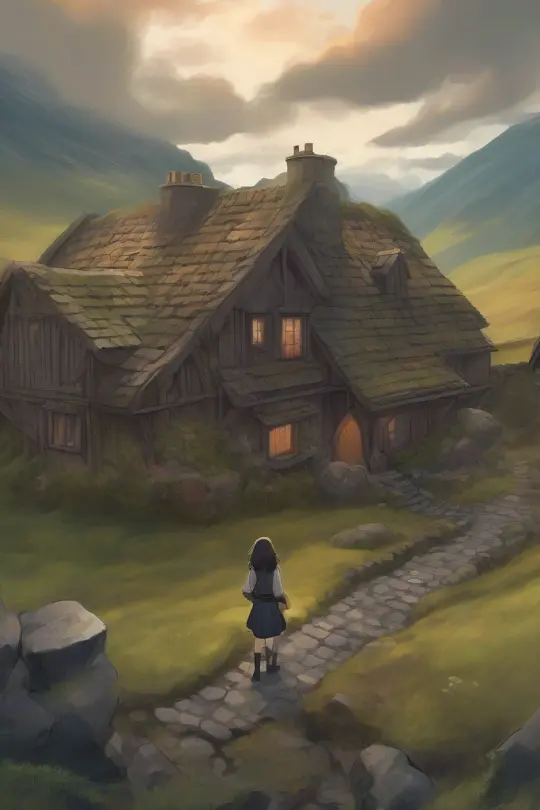
Peat smoke and low clouds hang over a Highland glen where estate 'improvements' threaten roofs and songs. Eilidh, a singer and midwife, must decide whether to stay with her father and neighbours or to carry the community's melodies away to a city and its presses.
Chapters
Story Insight
The Last Ballad of Kinloch unfolds in a Highland glen where peat smoke and low skies press close, and daily life is measured as much by song as by roofs and winter stores. Eilidh, a singer, midwife, and informal teacher, stands at the story’s moral center: she carries place-names and laments that function like maps, and she must decide how those maps survive when estate “improvements” begin to reorder tenancy and common grazing into sheep runs and coastal settlements. The narrative follows the immediate, human consequences of policy—polite notices, stern clerks, and the factor’s gentle vocabularies—alongside the intimate work of women who keep oral tradition alive. Samuel Grant, an earnest schoolmaster and collector, arrives with neat notebooks and a promise to print the songs; Morag faces the arithmetic of feeding children; Lachlan, Eilidh’s father, negotiates between pride and provision. The story’s three-part structure—opening in the warmth of a ceilidh, tightening through bargaining and private choices, and closing on the motion of removal—keeps the stakes contained and vivid without sacrificing historical texture. This is a study of preservation as a practical dilemma rather than a single moral lesson. Songs in Kinloch act as instruction as well as memory: refrains name springs and hollows, lullabies hold kinship, and reels teach steps that make labor tolerable. The book examines the trade-off between permanence through print and the mutability of lived transmission, showing how a typesetter’s gloss, a patron’s taste, or a printed glossary can alter meaning even while promising survival. The portrayal resists simple villains: Captain Caldwell and his clerks operate inside economic pressures and administrative logics that remake land as accounting, while neighbors make choices born from hunger, shame, and care. Women emerge as political actors in everyday forms—midwifery, teaching, borrowing a shawl to pack for a sea crossing—so that the tale reframes cultural survival as hands-on, improvisatory labor. Emotionally it moves from communal warmth through mounting anxiety and private grief to a resolute, if fragile, hope; small, concrete details carry the weight of larger loss. Craft and voice are aimed at immediacy and fidelity. Close sensory detail—peat smoke, the scrape of cart iron, the cadence of a child’s hummed phrase—places the reader inside the glen; songs recur as motifs that change shape according to context. The prose privileges short scenes and careful exchanges, and the invented mnemonic devices (charred slates, notched lids) sit alongside Samuel’s notebooks as a layered meditation on how memory travels. Historical elements are rendered with attention to period practice: ceilidh customs, tenancy language, and the social mechanics of relocation avoid caricature and emphasize lived constraint. The Last Ballad of Kinloch suits readers who value intimate historical fiction that explores language, labor, and moral complexity. Its compact form concentrates emotional force and invites sustained attention to small acts—teaching a chorus, signing a paper, choosing who will carry a song—that determine how culture endures when land and lives are being rearranged.
Related Stories
The Harbor's Charter
In a mid‑19th‑century coastal town, widow Miriam Calder turns communal memory into evidence to resist a plan that would enclose the eastern slip. A discovered family folio, legal hearings and a frayed community lead to a tense negotiation before a pragmatic court order pauses construction and forces a conditional settlement.
The Engraver of Thorne Hall
In 1840s England an apprentice engraver uncovers a rubbed heraldic seal and a child's token that point to a missing heir and a quiet conspiracy. With a small band of helpers, an eccentric lensmaker and a retired captain, he fights to restore a name and a house using craft, courage and stubborn proof.
Ink and Oath
In a provincial city’s printshop, a young typesetter faces an impossible choice when incendiary pamphlets ignite unrest and authorities close in. She must decide whether to hand over the press’s tools to spare loved ones, or preserve the workshop and risk brutal suppression. The stakes: lives, evidence, and the fate of the words she sets.
The Paper of Names
A meticulous customs clerk in a 19th‑century port uncovers a hidden manifest linking local elites to illicit night shipments. Her copying and witness‑gathering unsettle civic comforts, ignite press scrutiny, and push private records into public view—forcing hard choices for family and community.
The Last Forge
In a village edged by presses and proclamations, a young master of a family forge faces a public reckoning. Amid inspections and offers, she must bind tradition to a new livelihood. The atmosphere blends heat and hush, the protagonist’s resolve and the hush of a community gathering to witness a fragile choice.
Margins of Justice
Revolutionary Paris is both theater and machine in which Claire Moreau, a meticulous copying clerk, slips an arrest slip into her apron and finds a trail of requisitions funneled to private pockets. Inquiry, public scenes and private grief force her into a small, stubborn fight to keep records human.
Other Stories by Dorian Kell
Frequently Asked Questions about The Last Ballad of Kinloch
What is The Last Ballad of Kinloch about and which historical moment does it portray ?
A three-chapter historical novella set amid the Highland Clearances. It follows Eilidh, a singer and midwife, who must choose between staying to keep her community’s oral songs alive or carrying them to print as evictions begin.
Who is Eilidh and why is she central to the plot ?
Eilidh is a young singer, midwife, and informal teacher in her glen. She acts as the community’s oral memory, deciding how to pass songs and place-names on as families face resettlement and dispossession.
How does the story treat the conflict between preserving songs orally and printing them for posterity ?
The narrative shows preservation as a moral and practical dilemma: printed texts promise permanence but risk altering context, while oral teaching keeps songs alive in place yet is vulnerable to displacement.
Are the evictions, estate 'improvements', and social pressures in the story historically grounded ?
Yes. The plot draws on documented practices of the Highland Clearances—tenant reallocation, consolidation into sheep runs, and pressures from factors—while focusing on personal experiences and local custom.
Does the book include authentic dialect, song fragments, or notation systems used by Eilidh ?
The concept uses realistic song fragments and a simple, homegrown notation (not formal staff notation) to show how memory travelled. Dialect and named places are handled with care for authenticity.
Who are the other key characters and how do their choices shape the narrative ?
Key figures include Lachlan (Eilidh’s father), Captain Caldwell (the factor), Morag (a pragmatic neighbour), and Samuel Grant (a schoolmaster/collector). Their varied choices—stay, sign, move, publish—drive the moral and practical stakes.
Ratings
This story is a small, fierce thing. It captures how culture is passed — through breath, through knees bent at work, through the fiddles and pipes in a longhouse — and makes the danger of removal feel like an injury to the body. Eilidh’s multiple roles (midwife, teacher, singer) are handled with confidence: she’s not an evangelist for the past but a practical guardian of it. The writing is unshowy but very precise; the line about her voice 'settling into the room like a lantern' is a perfect image of how art provides light in cold places. The moral dilemma — to keep songs where they can be lived or to send them to presses where they might be fixed but safe — lingers after the last page. A quietly powerful piece about memory, belonging, and the price of preservation.
I admire the ambition here but felt the treatment sometimes bordered on sentimental. The ceilidh is vivid, yes, but the narrative occasionally relies on familiar images — peat smoke, thatch, the noble rural figure — without fully complicating them. Lachlan is sketched well but other figures remain a bit shadowy; the visitor who brings news feels like a plot device rather than a fleshed-out force. Also, the tension between leaving songs in the mouth and putting them in print is interesting but not fully explored; Samuel Grant’s role deserves more moral friction. That said, there are moments of real lyricism that save the piece. Worth reading, but not as deep as it could be.
There’s a real tenderness to the way the writer sketches Kinloch. The sensory work is superb — turf on the air, wool, thatch, the way voices 'rose and fell in easy cadences' — which makes the political stakes hit harder because they're rooted in lived life. Eilidh is a memorable protagonist: practical as a midwife, soulful as a singer, and caught between two kinds of survival. The scene where people lean in when she threads a lament is heartbreaking in its specificity. My only tiny wish: more time with the songs themselves — a lyric or two on the page would have made the pressure of losing them even more acute. Still, a moving read.
Quiet, compassionate, and gorgeously observant. The author is brilliant at making the domestic feel epic: a ceilidh becomes a whole politics of survival, and Eilidh's singing is both comfort and weapon. The line about songs living 'under her ribs with the names of spring burns' is one of those sentences that make you pause. The emotional center — Eilidh's choice — is handled with real care; you never feel rushed into a tidy resolution. I also liked how the community's rhythms (children running, elders clapping) are used to measure time and loss. Highly recommended for anyone who loves character-led historical fiction.
I wanted to love this but found it disappointingly familiar. The 'singing midwife in danger of losing her community' is a trope at this point, and while the prose is competent the plot feels like a checklist: cottage-y opening, bright communal music, male stoic farmer, outsider bearing news. The threat of 'estate improvements' is presented but not interrogated — who benefits? Who enforces? The pacing drifts; the middle lags with reverie when the narrative needs sharper stakes. Also, the manuscript-to-press angle (Samuel Grant) is intriguing but underdeveloped, like a subplot sketched and then abandoned. If you love atmospheric description you’ll enjoy the piece; if you want a fresher take on displacement, look elsewhere.
A lyrical, restrained piece that really understands the politics of memory. The author uses sensory detail — the smell of peat, the patched curtains, the cadence of hands on tables — to show how culture is embodied, not just recorded. Eilidh's songs are not merely entertainment; they are a map of the land: spring burns, edges of stones. That specificity makes the threat of displacement much more heartbreaking. I admired the subtle characterization of Lachlan: his hands, his grunt, the way he listens when the visitor comes. Samuel Grant's potential role in transferring the songs to the presses raises interesting ethical issues about preservation and ownership. I felt greedy for more of this world, but what is here is rich and carefully wrought.
Loved this — so evocative. The longhouse scene is a gem: fiddles, pipes, hands on tables, and a voice that 'settled into the room like a lantern.' I actually laughed out loud at the child's shout during the drinking song; such life in a tragic setting. Eilidh as midwife/teacher/singer is exactly the kind of heroine historical fiction needs — practical, fierce, and tender. The prose sings and the stakes feel human. Can't wait to see where she goes. 🙂
Short, haunting, and full of texture. The ceilidh scene felt lived-in — I could smell stew and turf and nearly taste the peat smoke. Eilidh's choice (stay or take songs to the city) is such a devastating knot of duty, survival, and art. The author doesn't rush her; instead we live in the small moments that make the decision meaningful. I loved Lachlan's silent recognition when he hears the news — a tiny, devastating beat. This story stays with you.
This is an intelligent and empathetic take on the Highland Clearances — not sensationalised, but never flattening the pain. The prose is careful: images of thatch and wool, of hands 'like the planks of the table', ground the political threat in real human textures. I appreciated how the narrative frames oral tradition against the city and the press: Samuel Grant feels less like a character and more like the idea of inscription—what happens when songs move from muscle and mouth into print? Eilidh's dual role as midwife and keeper of names creates a powerful metaphor for cultural transmission. A small quibble: I wanted a little more about the mechanics of the estate improvements (the men who decide, the legal pressures), but that may be deliberate — the focus is on what is lost and what might be carried forward. Highly recommended if you like measured, humane historical fiction.
I was transported from the first line. The opening image of peat smoke laid 'like a slow hand across the glen' stayed with me all day — such an exact, tactile sentence. Eilidh is written with a rare tenderness: her voice as a lantern, the way songs live 'under her ribs' is the sort of small magic that makes historical fiction sing. I loved the ceilidh scene where the child's shout lifts the chorus — it felt alive and true. Lachlan's quiet strength, the grief threaded through the community's rhythms, and the looming threat of 'estate improvements' created real stakes without melodrama. The story balances the intimacy of the longhouse with the larger sweep of displacement perfectly. I wanted to follow Eilidh to the presses and also stay sitting at that turf-smelling table. A beautiful, mournful piece about what we carry and what we choose to save.