
The Spark Key of Sundown Ridge
Join the conversation! Readers are sharing their thoughts:
About the Story
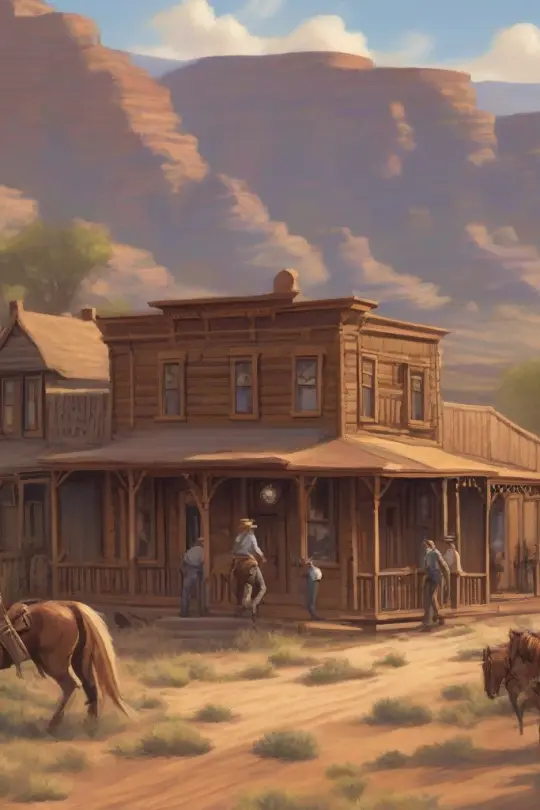
In the dusty town of Sundown Ridge, Mara Quinn keeps the telegraph and the depot running. When the town's rails are cut and a land baron moves to seize the water and the deeds, Mara gathers unlikely allies, a spark key, and a stubborn heart to save her home.
Chapters
Related Stories
The Singing Spring
New Mexico Territory, a young telegraph operator and map-lover, Alma Reyes, dares to outwit a ruthless rancher to restore an old mission acequia and a hidden spring. With a healer-smith, a quick-eyed boy, and a potter’s gift, she faces storms, gunfire, and law to bring water—and a town—back to life.
Pitch and Horseshoes
Joss Thorne, a taciturn blacksmith and farrier, wakes to a town buzzing with the fever of a newly found resin—pitchbloom. When an outsider offers wealth in exchange for tools that would enable rapid extraction, Joss must decide how his craft will be used. Tension tightens as thefts, makeshift rigs, and a hungry pump threaten the valley’s fragile hold on its land. The last stand is fought with anvils, calked shoes, and the steady hands of a man who bargains in iron.
The Last Telegraph of Dustwater
In a small frontier town threatened by a ruthless landman, telegraph operator Etta Lark must trade the safety of wires for the dirt of the trail. When her foster brother is taken, she follows the tracks, gains a steadying ally, and fights to reclaim the town’s ledger—and its future. A Western of small courage and the long, slow work of justice.
Spring at San Miguel Wells
A farrier named Nora Hart rides into San Miguel Wells to find her brother accused of robbing a stage. Tracking signs, clever allies, and a roan mare lead her to a hired gun and a water baron choking the town. In dust, rain, and gunfire, Nora fights to free her kin and return the well to its people.
Forged Across the Canyon
In a sun-scorched canyon, stoic blacksmith Cal McCready is pulled into a risky plan to span the gorge with a freight cable. When sabotage and a sudden wind turn the inaugural run into a runaway disaster, Cal must use his craft and quick judgment to stop the car and hold his town together.
Dustrow Springs
In the dust-choked town of Dustrow, Rhiannon "Rye" Calloway fights to save her family's spring from a railroad magnate. With a stubborn mare, a bellows-heart pump, and a ragtag community, she faces threats, wins hard-fought justice, and learns what it takes to protect home.
Other Stories by Colin Drevar
Ratings
Mara Quinn grabbed me from the first line and didn't let go — I was hooked by how alive the depot felt. The telegraph's steady clack becomes almost a character in its own right, and those small, precise moments (her wrapping the leather strap around the new coil, Mac's china-pale eyes watching like weather) give the whole place texture and warmth. The Spark Key isn't just a neat plot gadget; it's woven into Mara's hands-on world — the scene where she checks the signal lamp and tastes oil on her tongue made her feel utterly real, messy and competent. What I loved most was the blend of quiet craftsmanship and rising stakes. The land baron's threat to the water and deeds is classic Western fuel, but the book treats it with impatience and heart: Mara doesn't wait for rescue, she rigs, splices, and rallies. The supporting cast is lively without stealing the spotlight — Gus's grease-smear, Tommy's wonder, and Mac's gruff tenderness all land because the prose trusts small details to do the heavy lifting. Stylistically it's clean and vivid; the author knows how to make a simple morning at the depot tell you who these people are. Comes-of-age beats sit comfortably alongside frontier adventure, and I left wanting more of Sundown Ridge. Definitely recommended for anyone who likes grit, gears, and a stubborn heroine. 🙂
I wanted to like this more than I did. The setting and the prose are often lovely — that opening paragraph is very effective — but the plot leans on familiar Western tropes without offering much new. The rails get cut, a land baron moves in to seize water and deeds, and Mara gathers allies and a magical-sounding spark key. It occasionally feels like a checklist: plucky woman, grizzled mentor, greasy train driver, eager kid, slimy villain. The spark key itself verges on deus ex machina in places; its powers and limitations aren't always clear, which reduces tension in key scenes. Pacing is another issue: the middle chapters drag a bit while set pieces repeat similar emotional beats, and the antagonist’s motivations never feel fully developed beyond "he wants the land." I appreciated the sensory details — the oil tang, the telegraph clack — but wanted more complexity in the conflict. Still readable and sometimes quite pretty, just not as surprising or sharp as its premise promised.
This story stayed with me long after I put it down. Sundown Ridge is realized through textures — the coal dust under fingernails, the smell of bread and lard, the steady clack of the telegraph — and those textures make Mara’s fight sensible and urgent. The moment she wraps the leather strap over the new coil feels like preparing armor. I loved how the author threaded the spark key through the narrative: it’s not just a gizmo but a piece of heritage, a literal tool that ties community survival to ingenuity. The interpersonal dynamics are the heart here. Mac is achingly human: his pale, knowing gaze and his frugality with food create quiet scenes that told me more about the town’s past than a page of exposition could. Gus and Tommy provide warmth without stealing focus, and Mara’s stubbornness reads as principled rather than contrived. The showdown with the land baron (when the rails are cut and the water is threatened) felt earned because we’d been invited into the depot’s rhythms from the beginning. If I have one wish, it’s for a little more backstory about how Mara first learned telegraphy — but honestly, the lack is also a strength; it keeps the story immediate. A beautiful, tactile Western about belonging, skill, and the small machinery of resistance. Highly recommended.
Okay, who knew telegraph mechanics could be this cinematic? Whoever wrote this deserves a hat tip. Mara’s practical competence — winding coils, checking gauges — turns everyday work into quiet heroism. I smiled at Gus leaving a smear of grease on Mara’s sleeve (classic frontier bromance energy) and laughed at Mac’s map-like shoulders. The land baron is satisfyingly slimy, and the idea of a spark key as both plot device and symbol is clever. Not everything is groundbreaking, but it’s charmingly told. The story doesn’t try to be bigger than it is: a plucky heroine, a grubby town, a crooked foil, and a handful of allies. Sometimes that’s exactly what you want. If you’re into hands-on, slightly romanticized frontier tales, this one’s a treat. Also, Tommy’s wide-eyed wonder? Stan immediately. (Also yes, I cried a little at a telegraph.) 😅
Short and sweet: I adored the atmosphere. That first paragraph gave me everything — dawn, coal dust, the telegraph’s steady music. Mara is quietly fierce; the scene where she sets the pot on the burner and scolds Mac about eating warm food is tender and human. The spark key is a cool touch, both literally and metaphorically, and the threat to the town’s water feels urgent. Clean, focused, and emotionally resonant — a small-town Western done with care.
The Spark Key of Sundown Ridge is an enjoyable exercise in craft and atmosphere. The prose is precise without being precious: lines like "fingers that remembered the right twist" tell you everything you need to know about Mara in a sentence. The author does a fine job grounding the reader in the mechanics of the depot — signal lamps, coils, oil tang — which lends credibility to the plot when the rails become both literal and metaphorical lines of conflict. Pacing is mostly well-managed. The quiet opening gives us time to care about the depot and its people before the central conflict — the land baron threatening water and deeds — kicks in. I particularly liked the scene where Mara tests the signal lamp and tastes oil on her tongue; it's small but reveals her intimacy with the work and the environment. If there's a nitpick, it's that a few secondary characters could use a touch more backstory (the baron's motivations feel a little schematic), but this doesn't significantly detract from the narrative thrust. Overall, a solid Western with heart and enough technical detail to please readers who enjoy frontier craftsmanship.
I loved Mara Quinn from the first paragraph. The image of dawn cutting the plain and Mara with coal dust under her nails hooked me immediately — that opening is pure mood. The telegraph’s clack as the town’s “only honest music” is such a brilliant line; you can almost hear it as you read. I was especially taken with the small, domestic moments: Mara wrapping the leather strap over the new coil, the stew on the burner, Mac chewing stale bread. Those details make the stakes feel real when the rails are cut and the land baron shows up. The spark key itself is wonderfully symbolic — a straight-up relic that ties the town’s future to one stubborn girl’s hands. The relationships are honest and unshowy. Mac’s pale, weathered attention; Gus’s greasy grin and the kid Tommy’s wide eyes — all of them breathe life into Sundown Ridge. I finished the story with a smile and a lump in my throat. This is a coming-of-age Western that leans into heart and grit, and it does both beautifully.