
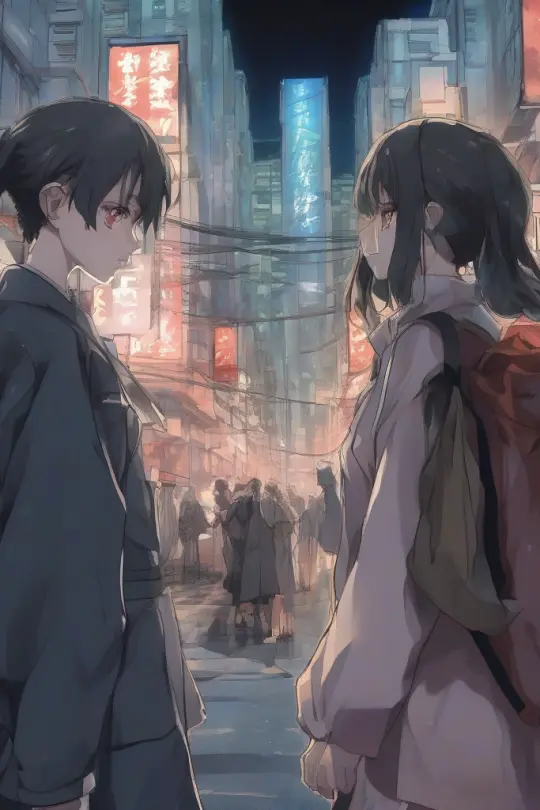
Ashen Oath
Join the conversation! Readers are sharing their thoughts:
About the Story
In a city kept by a ritual that guzzles private memories, a keeper finds proof that the abyss beneath them once held a life — her sister's. Faced with ledgered cruelty and a forbidden transference rite, she chooses to trade her past to free the one she loved, and the chasm answers with a terrible, intimate exchange.
Chapters
Related Stories
The Bone Orchard
In a decaying city of bell-trees and collected silence, a young bellwright named Eiran risks himself to reclaim his sister from a devouring seam that hoards voices. Dark bargains, hidden markets, and a moral choice between memory and mercy push him to sacrifice and reshape his craft, forging a fragile reckoning between loss and the stubborn persistence of sound.
The Cartographer of Hollowlight
In Hollowlight, maps bind the city's light to memory. When the Wellsong Ledger is stolen and the lamp dims, apprentice cartographer Riven must chase a thief into vaults of jars and bargains. He trades parts of his past, wrestles a collector of names, and stitches a new dawn.
First Intake - Chapter 1
A city unravels as a book that keeps the dead begins to take from the living. Rowen Ashvale, who has tended that book for years, faces the impossible choice of destroying the Codex, resisting a power that will weaponize memory, or becoming the living anchor the old rites demand. Against Malverin’s crackdown and the fraying of neighbors’ lives, a final, intimate sacrifice is made in the vault where the Codex sleeps.
The Bonewright's Bargain
Hester, a bonewright, takes a sliver of living calx-bone to restore her brother’s gait. She tests, tempers, and binds its appetite, facing theft attempts and moral peril. Physical extraction, a tense installation, and a violent attempt to seize the fragment force Hester to choose restraint over profit and bind the fragment within a harness and a shared rule.
Saltglass Bells
In river-bound Harrowsend, mortuary assistant Edda tends bells that keep an ancient tide-hunger at bay. When children return voiceless and the city’s magistrate bargains in silence, Edda seeks a bone-ink vow and a coal-salamander ally in the ossuary below to bind the fogborn predator and bring stolen names home.
Rivenreach: Hollow Bargain
Elias Crowe returns to a city hollowed by stolen memories and bargains with the Nightwright—a mechanism that trades fragments of life for the return of loss. As Elias pays for pieces of his missing love, the ledger's appetite grows, and a desperate choice emerges: scatter the harm across the town or surrender his own name to restore her. In a tense, rain-slicked finale, a ritual severs his syllable and the city reknits itself, leaving Elias present but nameless, and Lina and others restored in small, altered ways.
Other Stories by Isabelle Faron
Frequently Asked Questions about Ashen Oath
What central ritual keeps the city alive in Ashen Oath and how does it affect its citizens ?
The ritual, called the Oath, requires daily offerings of private memories to the Gullet beneath the city. It preserves civic life but erodes individual identity, reshaping relationships and public trust.
Who are Eiryn and Anwen in the story, and how does their relationship drive the plot ?
Eiryn is the Keeper who tends the Oath; Anwen is her sister revealed to be the original binding anchor. Their bond propels Eiryn’s quest—her discovery of ledger lies and the agonizing choice to free Anwen.
What is the Gullet and what role does it play in the moral conflict and memory economy of the city ?
The Gullet is a subterranean maw that consumes and stores surrendered memories. It functions as both a literal source of civic stability and a moral engine, forcing questions about sacrifice, identity, and who pays for safety.
How does the forbidden transference rite function in Ashen Oath, and what cost does a willing substitute endure ?
The transference rite shifts the binding from one living person to another. A willing substitute gives up all private recollections and personal identity, remaining functional but bereft of the past that made them unique.
In what ways does the Order alter ledgers and records to hide human sacrifice, and why does that secrecy matter ?
The Order rewrites registers, sanitizes language, and siphons small memories to delay new anchors. This bureaucratic concealment masks personal cost, turning a human life into a ledger entry and provoking resistance.
What emotional and thematic elements can readers expect from Ashen Oath's dark fantasy atmosphere and tone ?
Readers should expect a mournful, atmospheric dark fantasy focused on memory as currency, sacrificial love, institutional compromise, and moral ambiguity—intense, intimate, and unsettling in tone.
Ratings
I wanted to love this more than I did. The premise is strong — a city sustained by a rite that consumes memories, a sister freed by a forbidden exchange — and the opening imagery (Eiryn’s palms on the worn stone, the hairline scars) is striking. But the story falters in pacing and explanation. Scenes that should build dread instead skim the surface; the ritual’s bureaucracy is called “ledgered cruelty” but we never quite see how the ledger works or why people continue the practice beyond vague civic duty. The private window trick is intriguing, but it’s underused; it could have been a through-line to show Eiryn’s changing identity, yet it’s mostly decorative. The transference rite is named forbidden but its mechanics and consequences are fuzzily handled — the “terrible, intimate exchange” is more hinted at than shown, which left me unsatisfied rather than haunted. There are good lines and a few genuinely chilling images, but the story feels like it’s promising a deeper exploration of memory and power that it ultimately doesn’t deliver. Disappointing given the potential.
Alright, I wasn’t expecting to be punched in the chest by a ritual description, but here we are. Ashen Oath manages to make bureaucracy feel gruesome — ledgered cruelty indeed. The bit where Eiryn lists names like unwinding thread? Chef’s kiss. It’s the kind of line that makes you go “yep, I’m invested now.” The smell of wet ash and iron at dawn thread through the whole thing so well that I could practically breathe the city’s mourning. The forbidden transference rite and the choice to trade one’s past for a loved one is classic dark-fantasy poison, and the author uses it brilliantly. It’s grim, intimate, and occasionally very sly (the way memories become commodities is handled with a wry, bleak humor). If you want pretty swords and clear heroes, skip this. If you want moral grayness, echoes of loss, and a finale that unsettles more than it resolves — do yourself a favor and read it. ☕️
Quietly devastating. The scene of Eiryn naming household memories until faces blur is written with a surgeon’s hand — clean, cold, and intimate. I loved the private window trick, that small defiant way of searching for self among the missing pieces. The Gullet as a locked pantry of swallowed things is a perfect, awful metaphor. This is dark fantasy that relies on atmosphere and emotional gravity rather than spectacle. The sisterhood at the heart of the plot gives the ritual real stakes. I’m still thinking about the exchange described at the end — unsettling, intimate, and morally messy. Lovely and distinctly sad.
Ashen Oath is a tight, atmospheric piece that nails mood and moral tension. The worldbuilding is economical but effective: the ritual circle’s hairline scars, the hush for the absent, and the Gullet as a repository of stolen lives give the setting immediate texture without info-dump. I especially liked the technique of showing memory loss through sensory substitutions — scents replaced, laughs that feel borrowed — which externalizes what could easily have been told in exposition. The narrative centers on a single, wrenching choice: Eiryn’s decision to trade her past to free her sister. That scenario fuels the ethical ambiguity of the story; the rite is framed as civic duty yet operates like ledgered cruelty, and the forbidden transference adds a compelling layer of taboo. The author resists neat answers, instead letting the “terrible, intimate exchange” resonate as both sacrifice and violation. If I have a quibble, it’s that some readers might want more on the mechanics of transference or the city’s institutions, but the restraint also preserves the story’s claustrophobic focus. Overall: precise prose, haunting images, and a moral core that lingers.
I read Ashen Oath in one sitting and was left with a hollow, beautiful ache. The opening scene — Eiryn with her palms pressed to the worn stone, feeling the heartbeat beneath the city — is such a lived image that it haunted me all night. The ritual circle described as a map of hairline scars, names smoothed by centuries of palms, made the whole town feel like it’s built on shame and crumbs of memory. What sold the story for me was the intimate scale: the way the author lets us linger on small sensory details (the wet ash and iron at dawn, the dissolve of a bread-smell when a name is given) while threading a radically unsettling premise — a city that eats private recollections — through a sister’s love. When Eiryn chooses to trade her past to free her sister, it is both heartbreakingly noble and morally fraught. The Gullet is a brilliant image, a pantry of swallowed things, and the “terrible, intimate exchange” at the end stuck with me. I appreciated the ambiguity too: the ritual’s cruelty is ledgered and bureaucratic, but the characters carry the weight in quiet, human ways. This is dark fantasy that trusts the reader to feel the cost without spelling everything out. Rich, haunting, and utterly memorable.