
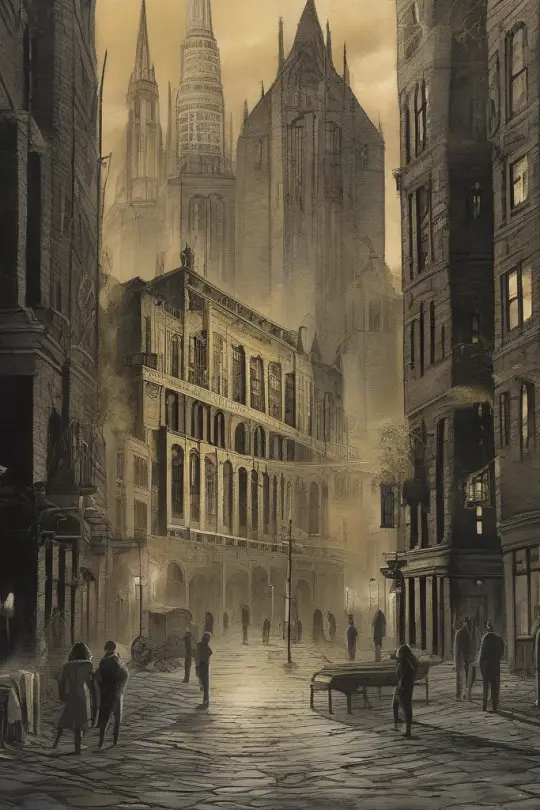
Where the City Listens
Join the conversation! Readers are sharing their thoughts:
About the Story
A young sound archivist discovers the city's lull has been erased. With a thread that hears and a ragged choir of allies, she confronts a corporation harvesting memories. A Young Adult urban tale about listening, theft, and weaving public sound back into life.
Chapters
Related Stories
Cables and Comrades
Tess Moreno, a teenage rigging apprentice at a small-town playhouse, climbs into a life-or-death storm to stop a failing rig during the waterfront showcase. Amid gusting wind, absurd mascots, and a town of small rituals, she steadies a sliding overhead assembly with knots, come-alongs, and human muscle—then faces choices about city opportunities and home ties.
Harmonic Passage
Nineteen-year-old freediver Nova fights to save her island’s resonant shelf and its visiting whales from a corporate survey. With a retired acoustics engineer as mentor and a callpipe built by her late father, Nova dives the headland’s hidden pass, outwits a salvage chief, and brings home proof—turning her town into guardians.
Unwritten Lines
June Harlow finds a peculiar blank journal that makes written lines come true. As she uses it to mend fractures after her sister’s death, memories begin to fray for others. When the cost becomes clear, she confesses, faces the fallout, and tries to rebuild truth by human work rather than quick fixes.
The Lightsmith's Tide
On floating isles held aloft by captured sunlight, a young glasssmith named Noor follows the theft of her island's keystone prism into the heart of a hoarding Tower. She must trade memories and craft a machine's song to return the light and remake stewardship across the archipelago.
Keeper of Hollowfall
In the cliffed city of Hollowfall, living lamps hold people's memories. When one lamp is stolen and a machine begins siphoning light, twenty-year-old Maya must leave the quay, learn to listen, and fight a collector who would cage moments. A coming-of-age tale about repair, choice, and what we keep.
Contact
Rowan follows a hidden trail of photographs and letters into a public reckoning. In a town where silence kept people safe and secrets kept others forgotten, the discovery of negatives leads to confrontations, a return that had been deferred, and a choice between protection and truth.
Other Stories by Pascal Drovic
Ratings
I respect the concept, but the execution left me cold. The opening is cinematic — you can practically feel the city's hum — yet after that the story leans on familiar YA tropes: the plucky young archivist, the mysterious corporate villain, the ragtag band of allies. None of those beats feel particularly new here. I also kept asking practical questions the text doesn't answer: why has this lull been erased without mass panic? How does the company's harvesting actually operate? The 'thread that hears' and the braided wire are evocative images but feel underdefined, almost like props dropped in to be poetic rather than functional. If you want atmosphere over substance, this will probably work for you. I wanted a stronger central mystery and tighter stakes.
This was a quietly addictive read. The excerpt earns its keep by doing a lot with little: in a few pages we meet Marin, learn her quirks (the recorder, the braided wire), and feel the emotional stakes of a city that's been silenced. The image of the lull as something you can hum under your breath stuck with me — it's a lovely, tactile metaphor for shared memory. I liked the pacing overall — measured and deliberate — and the ragged choir of allies hints at the kind of found-family relationships that work so well in YA. A minor nitpick: I want more texture about how memory-harvesting functions (is it tech? ritual? both?), but maybe that's deliberate withholding to build suspense. Also: the scene where she checks the recorder’s batteries with a practiced tug is the kind of grounding detail that sells her as someone who lives in sound. Nice work. 🙂
Clean, focused YA urban fantasy. The writing never gets flashy for the sake of it; instead it layers sensory details so scenes sing without shouting. Marin's toolkit (recorder, braided wire, that cedar-and-lemon charm) is wonderfully concrete and grounds the fantasy elements. I appreciated how the story treats sound as civic fabric — the lull isn't just background noise, it's evidence of communal life. The sleep-spray ad is a brilliant piece of worldbuilding shorthand: corporate commodification of silence feels both creepy and eerily plausible. If you like atmospheric reads with strong central characters and a bit of mystery, this is a solid pick.
Absolutely loved this. The author writes sound the way other writers do smell — with such richness that I could almost hear the rain on corrugated roofs and the tram bell answering the avenue. Marin is an unforgettable protagonist: quietly stubborn, meticulous (checking batteries with a practiced tug — yes), and full of the small rituals that make her job feel sacred. The world blends urban grit with music-magic in a way that felt fresh. I especially loved the intimacy of the archive scenes hinted at; Archivum South felt like a cathedral for memory. Tobias's little felt charm is a beautifully humanizing detail — a reminder of friendship and steadiness amid theft. The billboard selling silence was deliciously wicked. This is YA that trusts its readers: it gives us sensory clues, a moral center, and a community of ragged allies rather than lone-hero grandstanding. Poetic, political, and genuinely moving — can't recommend enough.
I wanted to like this more than I did. The premise of a city lull being erased is cool and the opening passage is very strong — those first paragraphs where Marin listens to the layered noises are vivid. But the story stumbles once it leans on a corporate antagonist harvesting memories, which feels a little on-the-nose and familiar from other YA dystopias. Pacing is uneven: we get gorgeous, slow-feeling sensory prose in the beginning, then the plot jumps into a mystery/conspiracy mode without fully explaining stakes or mechanics. How exactly does the corporation erase a lull? Why hasn't anyone else noticed? Marin's tools (thread that hears, braided wire) are clever but under-explained, so some scenes felt like setup without payoff. I appreciate the atmosphere, and Marin is a sympathetic lead, but the narrative could use tighter plotting and fewer obvious villain cues.
Short and lovely — I adored the opening. That image of Marin flattening her palm on the glass and feeling the city's 'skin' vibrate gave me chills. The lull as a ribbon between buildings is such a neat concept, and the sleep-spray billboard made me laugh/sad in the same beat. Marin checking the recorder's batteries felt so real — tiny practical moments like that sell the whole thing. Can't wait to read more of the ragged choir and find out what the corporation's up to. 💫
Where the City Listens is an impressively realized piece of urban fantasy. The worldbuilding is economical but textured: the mid-frequency lull as a thing you can 'hum under your breath' is an elegant metaphor that doubles as a plot engine. The author handles sensory description like a composer arranging layers — the tram bell answering the heartbeat under the avenue, refrigeration units whispering — and that layering is mirrored in the mystery structure. Technically speaking, the story's constructs (the recorder, the braided thread that hears, archival work at Archivum South) are clever because they ground the fantastical in professional practice. Marin's methods feel plausible within the rules the story sets. Tobias's charm is a nice human touch — a small tactile anchor against larger, corporate erasure. If I have one critique, it's that I'd like a touch more on the corporation's mechanics (how memory-harvesting actually works), but even as-is this is a potent YA urban tale with heart and smarts.
I fell into Marin's world the moment she pressed her palm to the window and felt the city vibrate like skin. The prose here is quietly gorgeous — tactile and a little melancholy — and the idea of a missing lull is such a smart, specific way to dramatize theft and grief. I loved small, lived-in details: the recorder with worn corners, the felted charm Tobias made, the braided wire she uses to trace acoustic seams. That scene at the market with the sleep-spray billboard felt chilling and timely — a consumer product literally promising silence felt like a perfect, terrible omen. The ragged choir of allies is fun and believable; you can tell these are people who have been put together by need rather than a Hollywood team-up. I also appreciate the YA coming-of-age core: Marin learning how to listen to herself while trying to stitch the city back together. Very satisfying, atmospheric read. Please, more of this world.