
The Last Line
Join the conversation! Readers are sharing their thoughts:
About the Story
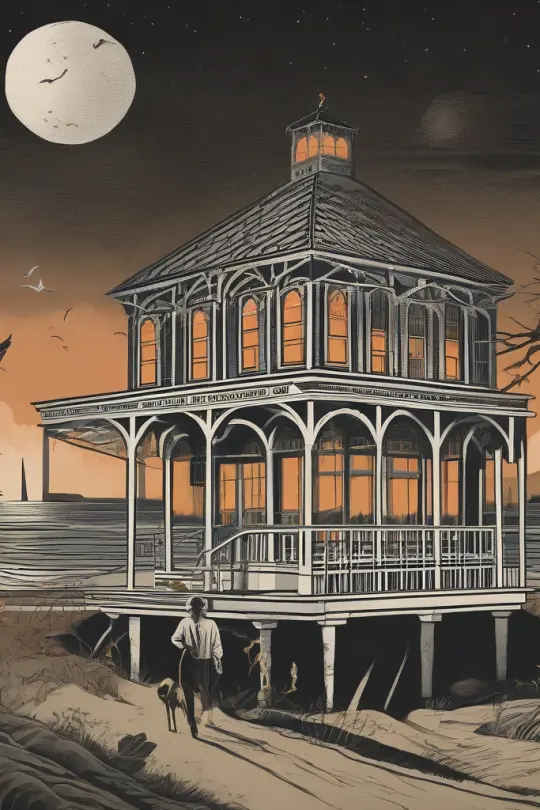
When her brother vanishes near a shuttered seaside pavilion, sound archivist Maya Sorensen follows a humming on the wind into an echoing hall between worlds. With a gifted tuning fork, an unlikely guide, and her grandmother’s lullaby, she challenges the pavilion’s keeper to finish the song he’s held open for a century.
Chapters
Related Stories
Unclaimed Hours
A watchmaker binds herself to a liminal archive that keeps missing hours to stabilize her town. In the final chapter she chooses a binding ritual that steadies the community’s fractured days but exacts a private toll: the loss of fine-grained memories and the acceptance of living as the town’s hinge. The atmosphere is close and tactile—brass, lemon oil, winter air—while friendship, absence, and precise craft quiet the edge of grief as the city reorders itself around a new, uneasy balance.
The Harvest of Echoes
Fog coats a small riverside town where a reservoir keeps more than water. Nora Finch, who hears trapped voices, uncovers a municipal ledger that recorded a century of traded lives. To return the missing she must offer memory itself—risking the one thing that kept her sister alive in her mind.
The Ledger of Lost Names
Returning to settle her mother's estate, archivist Mara Cole finds her sister missing from every photograph and municipal ledger. In fogbound Evershade an ancient Ledger devours names and a secret Keepers' order defends oblivion. To restore memory, someone must willingly vanish.
The Unremembered Room
On her grandmother's property, Evelyn Hart discovers a hidden chamber that answers with echoes of the dead but takes back pieces of the town's memory. Facing a moral calculus, she will either reclaim one life or protect the many. The attic asks for a price, and the town gathers to hear it named.
Stitching the Vertical City
In a stacked city where elevators stitch lives together, a solitary elevator technician becomes central to a neighborhood’s survival. Rory moves from routine repairs to leading a community-led safety network when shafts begin to misalign, blending grease-soaked craft with unexpected companionship.
The Copper Bow
In the fog-stitched port of Greyhaven, luthier Mara Voss uncovers a violin that hums with the city's lost bargains. As music and memory collide, she gathers unlikely allies to confront the thing that keeps promises tied to the mooring. A supernatural tale of grief, choice, and repair.
Other Stories by Marie Quillan
- Under Neon Bridges
- Whoever Holds the Switch
- Between Floors and Family
- Counterweights & Company
- The Fifth Door
- Rivenreach: Hollow Bargain
- The Accidental Spectacle
- The Little Star That Lost Its Way
- The Littlest Lantern
- The Quiet Register
- The Night the Wind Fell Asleep
- The House That Counts Silence
- The Lattice Beneath
- Mila and the Night-Stitch
Ratings
The Last Line is a lovely, tightly written supernatural piece that trusts subtlety. The author's use of audio imagery—the reel-to-reel, the wax cylinders from Gull’s Reach, the tuning fork—is not just decorative but integral to the plot, and that integration is what makes the story feel original. I also appreciated the small moments: Jamie’s casual “Feel this vibe” text, Maya’s steady hands threading like how her grandmother taught her, the elevator breathing shut. These details give the narrative a lived-in authenticity. The keeper’s century of silence and the idea of a song held open like a wound is a haunting conceit, handled here with restraint and care. Fans of folklore-tinged ghost stories will find much to love.
I wanted to like this more than I did. On the plus side, the writing is atmospheric—the archive basement scene and the salt-in-the-air imagery are evocative. But plotwise it felt a bit too comfortable in its own devices. The pavilion’s premise (a keeper holding a century-long unfinished song) is intriguing, but the motivations behind his actions are underexplored; I never got a convincing sense of why he’d keep the song open or what finishing it truly costs. Maya is sympathetic but her investigative choices sometimes read as plot-necessitated rather than character-driven: she grabs a tuning fork and suddenly understands things that the story hasn’t earned. Pacing slackens in the middle—there are lush passages that stall forward momentum. I also found the emotional resolution somewhat tidy for such a weighty premise. If you care more about mood than plotting, this will satisfy; if you want your supernatural mysteries to hold up under scrutiny, you might feel a few holes.
A beautiful little ghost story that reads like a recorded lullaby—soft at the edges but with a persistent resonance. The author’s command of atmosphere is astonishing: the university archive as an undersea belly, the breath of the river carrying the sea into town, the hum on the boardwalk that only Jamie seems to catch. These are images that do the emotional work for you. Maya’s relationship with sound feels lived-in; the physical act of digitizing fragile wax cylinders becomes a metaphor for remembering and mending. I particularly loved how the grandmother’s lullaby functions both as private history and as a key to the pavilion’s larger sadness. The keeper isn’t a cartoon villain but a tragic figure who’s been holding a song like a wound—challenging him to finish it becomes an act of compassion. The ending is satisfying in an aching way: it’s not a tidy wrap but it gives the characters the closure they need. This is an excellent example of folklore and music blended into supernatural fiction with a human heart.
Okay, so I came for the ghost vibes and stayed for the tunes. This is the kind of spooky I can get behind: cultured, melancholic, and not in a hurry to scream. Maya is great—nerdy about sounds in the cutest way—and Jamie’s boardwalk photo sending her down the rabbit hole felt very sibling-energy (the exact kind that makes you pack a tuning fork and go investigate at midnight lol). The pavilion keeper? Love him. He’s tragic and weird and weirdly sympathetic. A few scenes genuinely gave me goosebumps, especially when the lullaby threads into the keeper’s unfinished song. Cleansed my palette for horror that’s more heart than jump-scare. Would read again. 🎵👻
Short and sweet: I adored the sensory writing. That first scene in the archive is superbly done—the tape clicking, acetone smell, dust like plankton—so vivid. The lullaby as a motif really elevated the emotional stakes; when Maya lifts the headphones and tastes salt, you believe the town’s peculiar magic. Felt intimate, eerie, and humane. Definitely recommend to anyone who likes music-driven ghost stories.
Technically graceful, emotionally resonant. The author does a masterful job of leveraging sound as both motif and mechanism: the tape hiss, the hum on the boardwalk, the tuning fork as a literal and figurative device. I appreciated how the prose respects Maya’s craft—there are little teaching moments about digitizing fragile recordings that never slow the pace but enrich the worldbuilding. The coastal setting (Gull’s Reach, the tide that carries the sea into town) is used as more than backdrop; it mirrors the story’s themes of return and echo. The pavilion keeper’s century-long hold on a song is a lovely piece of folklore that raises questions about obligation and grief rather than resorting to neat explanation. Pacing is generally tight; the basement scenes are claustrophobic and meticulous, and the boardwalk/humming scenes open into wider, eerie spaces. My one nitpick: I wanted a touch more on Jamie—he’s the catalyst, but his interior life is mostly absent. Still, a thoughtful, well-crafted supernatural tale with real tonal control.
This story stayed with me for days. The opening—"At two in the morning the university’s basement felt like the inside of a sleeping whale"—is such a perfect image, I could taste the salt and hear the fluorescent hum. Maya as a sound archivist is a brilliant choice; the details about reel-to-reel tapes and wax cylinders are tactile and specific, which made the supernatural parts feel earned rather than arbitrary. I loved the way the author tied music and memory together: her grandmother’s lullaby isn't just sentimental, it’s an actual key. The scene where Maya listens to Jamie’s photo-text from the boardwalk and decides to go to Gull’s Reach made their sibling bond believable and urgent. The keeper of the pavilion is deliciously ambiguous—he feels mournful rather than evil, and the final confrontation feels like a duet rather than a battle. If you like ghost stories that hum instead of shout, this is for you. Charming, melancholy, and uncanny in the best possible way.