
Bone Market
Join the conversation! Readers are sharing their thoughts:
About the Story
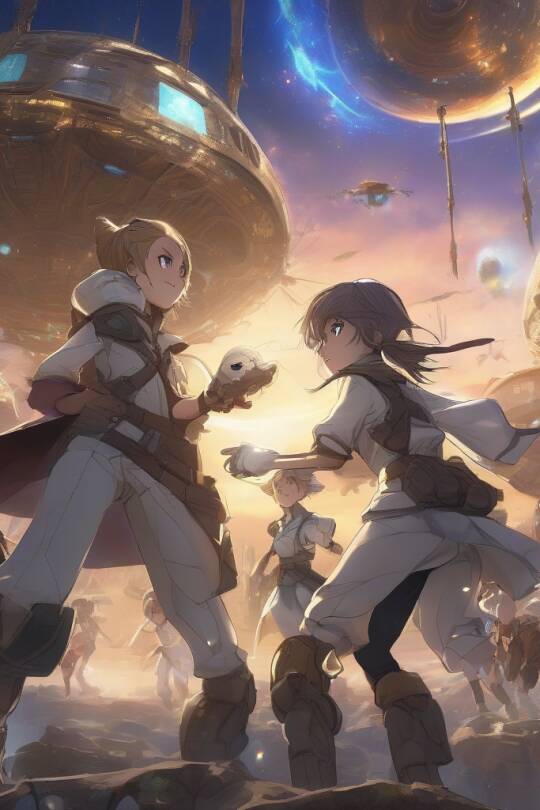
Under a sky clogged with dust, scavenger Etta uncovers an ancient orbital relay that can redistribute sunlight—but its activation requires a living steward tied to the machine. As dome forces move to seize the relay, Etta and a ragged team race to bind the array and choose who will pay the cost.
Chapters
Story Insight
Bone Market opens under a sky fouled by dust and rationed light, where scavengers trade the brittle parts of a once-ambitious civilization. Etta Solan is introduced as a pragmatic scavenger whose repairs keep community grow-houses from failing; her work is personal, the practical labor of someone who measures loyalty in patchwork and seedlings. When she uncovers a fragment of a maintenance log pointing to Aster — an orbital relay capable of redirecting usable sunlight — the quiet labor of the market collides with a larger structural dilemma. The relay’s surviving schematics include a stark requirement: stability depends on a living neural integrator, a person bound into the machine’s feedback loop. That mechanical condition turns a technical salvage mission into an ethical and political race; any attempt to bring the relay online requires choosing who will anchor it, while civic authorities withhold access behind bureaucratic language and the threat of force. Public notices about scheduled maintenance create a narrow window, and confiscation policies make every spare part a matter of civic law. The premise sets up urgent stakes without melodrama, framing scarcity not just as scarcity but as a designed leverage point in a fractured social order. The story blends grounded, tactile worldbuilding with a clear grasp of engineering logic. Etta joins Bram, a former dome technician who knows the tolerance limits of failing systems, and Niko, a sharp-handed hacker carrying old compromises. Iris, the station’s maintenance intelligence, speaks in diagnostics and exposes the relay’s constraints without moralization; its laconic reports make the relay’s needs feel procedural and unyielding. Travel across the Pale Route uncovers mirror-storms, ruined concentrator fields, and the barter economies that keep settlements alive; these scenes are sensory and exact, not merely scenic. The technical heart of the book — phase alignment, reflector bays, neural-mapping protocols, and the dilemma of simulation versus biological feedback — is presented in accessible terms, showing how hardware design forces moral choices. Tension deepens when raids, diplomatic maneuvers, and betrayals place the team between a machine that will not compromise and a dome that will use law to secure advantage. Small repairs, tactical improvisations, and calibrated test pulses that light distant grow-houses make the work feel plausible and consequential. Bone Market’s particular strength is the way it treats sacrifice and repair as reciprocal acts rather than tidy moral lessons. The narrative examines redistribution versus centralized control, how identity is reshaped when a person becomes infrastructure, and the fragility of trust in communities built from shortages. Prose emphasizes tactile details — the rasp of silt on metal, the smell of resin in a maintenance bay, the fragile warmth of an early sunbeam on a seedling — to anchor ethical conflict in lived experience. The novel avoids facile resolutions: choices are costly, and the repair of systems repeatedly asks what is owed to individuals and to the many. The tension between technological plausibility and human consequence is handled with care; scenes that translate memory and rhythm into technical anchors are both unsettling and illuminating. For readers interested in post-apocalyptic fiction that foregrounds engineering logic alongside moral urgency, this story offers a restrained, thoughtful exploration of what rebuilding demands under a narrow, dangerous sky.
Related Stories
Ash & Root
Ash & Root follows a reluctant agronomist, a scavenger, and an orphan as they find a buried seed repository that requires a living human context to awaken. In a tense standoff with a resource band, they attempt an experimental distributed memory upload, forcing a costly, personal reckoning as new shoots push through ash.
The Humming Well
In a drought-battered valley, a mechanic steals a stamped rotor from a guarded dam to save her town’s failing well. The theft triggers a regional crisis, violent choices, and a risky technical gambit to decentralize control. Amid loss and political reckoning, a fragile cooperation begins to form around shared maintenance and teaching.
Brine and Sunlight
In a drowned coastal city, former plant tech Aisha defies a water baron to revive an abandoned desalination intake. With a teen scavenger, an old electrician, and a squeaky service robot, she faces raids and sabotage to bring free water to the rooftops—and writes a new charter for survival.
Fallow Sky
A community struggles with a discovered relic promising ecological recovery that requires living partnership.
The Sieve and the Vault
In a sun-scorched, post-apocalyptic city, a young greenhouse technician named Mara leads a desperate quest to restore her settlement's failing water purifier. With a ragged crew, a repaired maintenance drone, and hard bargains with raiders, they fight to reclaim seeds, technology, and a future.
Whoever Holds the Switch
Rain-soaked and careful, signal technician Cass Havel rigs a jury bypass to divert a relief train bearing purifiers and presses to a neighboring town. Tension and ingenuity mingle with small absurdities and the day's work of hands and tools — a tight, tactile struggle for salvage and connection.
Other Stories by Bastian Kreel
Frequently Asked Questions about Bone Market
What is the central premise of Bone Market and who is Etta Solan, the protagonist in this post-apocalyptic tale ?
Bone Market follows scavenger Etta Solan, who discovers an orbital relay capable of redistributing sunlight. The plot centers on community survival, political control, and the cost of sacrifice.
How does the ancient orbital relay Aster function within the world of Bone Market, and why is a living steward required for activation ?
Aster is a derelict mirror-relay designed to redirect usable sunlight to distant settlements. Its legacy design needs a human neural integrator to stabilize feedback; automation alone is unreliable.
What is the moral and political dilemma that fuels conflict between Etta's ragged team and the dome authorities in Bone Market ?
The core conflict asks whether scarce light should remain hoarded by the dome or be redistributed. Activation demands a permanent human steward, forcing choices about individual sacrifice versus communal need.
Who are Bram, Niko and Iris in Bone Market, and how do their skills and flaws shape the attempt to reactivate Aster ?
Bram is a former dome technician who knows the hardware; Niko is a resourceful hacker burdened by past compromises; Iris is the station's decaying maintenance AI. Their skills and flaws shape technical fixes and ethical choices.
What practical changes occur for settlements when Aster is reactivated, and does the story present a simple solution to scarcity ?
Reactivation delivers calibrated shafts of sunlight to grow-houses, improving crops and morale. The story avoids easy fixes: benefits are real but political tensions, technical failures, and human costs remain.
Is Bone Market a complete three-chapter story, and which major themes will appeal to readers of post-apocalyptic fiction ?
Yes—Bone Market is a three-chapter novella exploring resource redistribution, identity vs. utility, trust, sacrifice, and human-AI interfaces. It blends survival action with moral complexity and community focus.
Ratings
I admired the textures here but ultimately found the story frustrating. The Bone Market's opening is cinematic — the pale smeared dawn, the seam of the dome — and Etta is a credible survivor, which kept me reading. However, the central mechanism (activate an orbital relay that redistributes sunlight but needs a living steward) is handled at a high level with shaky mechanics. There are a few plot holes that bothered me: if the relay can redistribute sunlight, why is it suddenly something to fight over now? How does binding to an orbital array practically work — is it biological, neural, magical? The story asks us to accept a huge sacrifice without grounding the science or the stakes enough. That missing detail weakens the emotional impact of choosing 'who will pay the cost.' The 'ragged team' trope is serviceable, but most members blur together, and the dome's political stakes feel vague — who are the dome forces, and what do they want beyond seizing the relay? The scene with Tam is the highlight; small, human moments like that are the story's strengths. But when the plot leans on big-science moral dilemmas, it needs firmer internal logic. Good writing, intriguing concept, but uneven justification makes it harder to fully invest in the final sacrifice.
I wanted to love this more than I did. The setup is strong — the Bone Market is vivid, and Etta's survival instincts are believable — but the story leans on familiar beats and a predictable emotional arc. The idea of an orbital relay that requires a living steward is interesting, but the moral dilemma it creates is handled in ways we've seen a dozen times: ragtag team, desperate choice, one person must pay the cost. It feels like a trope checklist rather than a fresh interrogation of sacrifice. Pacing is uneven. The market opening is beautifully slow and sensory, which works, but the urgency when dome forces move in ramps up quickly and then resolves too neatly. Key logistical questions go unaddressed: how exactly does the relay bind to a person? Why wasn't this used earlier if it's so straightforward? Those gaps make some plot beats feel like conveniences rather than organic developments. Characters beyond Etta are present but thin; Tam is a lovely detail, but the rest of the team rarely breaks out of archetype. I kept waiting for a surprise or a twist that never arrived. Overall: good atmosphere and a strong premise, but the execution relies too heavily on genre clichés and leaves too many technical and moral questions glossed over.
Short, sharp, and kind of a gut-punch — I had to smile at how human this apocalypse feels. The Bone Market name alone is a great tonal cue (cruel, practical, clever), and the market scenes are full of the tiny economy stuff I love: a bent rail buying a week of paste, Tam lifting the cloth like he's revealing treasure. Real people, small trades, big consequences. The relay idea is cheeky in the best way. Sunlight redistribution? That's the kind of neat sci-fi twist that also forces moral decisions. The image of someone living as the relay's steward — bound to a machine that gives light to others — stuck with me. The team's scramble, dome guards closing in, and the choice about who pays the cost all make for tense, character-driven drama. If I'm nitpicking: I wanted a bit more of the team's bickering before the binding — give me the barbed lines, the near-misses. Still, the emotional beats land hard. Read this if you like post-apoc that treats survival as social and ethical rather than just spectacle. Also: Tam's laugh is now my favorite minor detail. 😂
I liked how restrained this felt. Not every line needs to shout apocalypse to be convincing; the Bone Market gives you the world in small, believable notes — the squeal of metal, the smell of oil, Tam's late laugh. Etta's practicality (the tightening of straps, reading the market by sound) anchors the story in a lived reality. The central conceit — an orbital relay that can redistribute sunlight but requires a living steward — is elegantly simple and emotionally heavy. The moment they talk about 'binding the array' and having to choose who pays the cost is where the quiet becomes tragic. I appreciated that the story doesn't glamorize sacrifice; it makes it difficult and communal. Stylistically the prose is calm, precise. I also liked the scene descriptions around the dome — that seam of glass catching ghost light felt uncanny. The only small reservation is that some of the 'ragged team' beats feel familiar to the genre, but the moral question at the heart redeems those clichés. All in all, a subtle, well-crafted piece that trusts its reader to feel the stakes without melodrama.
Analytical take: Bone Market is successful because it keeps its scope tight while delivering big stakes. The market opening functions almost like a short film's establishing shot: sensory, efficient, and character-revealing. From a craft perspective, the author does three things well — concrete detail (the rail, the coil of copper with a scorched end), economy of scene (Tam's booth as micro-society), and a clean central dilemma (the relay requires a living steward). The relay mechanic is smartly conceived: it gives an in-world technology a human cost, which raises stakes beyond 'win/lose' to 'who are we willing to be?'. The dome patrols provide constant pressure, and the race to bind the array creates a taut timeframe that propels the ragged team's choices. Pacing is generally controlled; the market lingers just long enough to orient you before the narrative thrusts toward the relay. The prose favors clarity over showy flourishes, which suits the gritty milieu. My only quibble is that secondary characters like Tam could be slightly more distinct in voice, but that's minor — the emotional center (Etta's choices) carries the piece. A solid, thoughtful post-apocalypse with a fresh ethical core. Good for readers who want both survival detail and moral conflict.
This story landed in my chest like a fist and stayed there for a long time. The Bone Market is such a vivid piece of worldbuilding — I could smell the grease and hear the child's shout at the stall where Etta trades that bent rail. Those opening paragraphs (the market smells, Tam lifting the cloth, the dome like a sunless pearl) set tone so beautifully: bleak but lived-in, full of small economies and quiet loyalties. Etta herself is my favorite kind of protagonist: practical, a little weary, not a cartoon hero. Her tightening the straps on her pack, the way she reads the market by sound, tells you everything you need to know about how she survives. The relay concept — an orbital device that can redistribute sunlight but needs a living steward — is heartbreaking and brilliant. The moral cost of activating it (someone must bind themselves to it) turns a sci-fi MacGuffin into an ethical crucible for the community. I especially loved the scenes where the ragged team debates who pays the cost; the tension felt lived-in rather than imposed. The dome guards moving along the seam of glass add real danger without over-explaining the politics. Stylistically, the prose is lean but poetic, with little images (pale pitted plates, ghost light on the dome) that stick long after the read. If you like post-apocalyptic fiction that balances action with character and moral weight, this is a story to read — and reread. Highly recommended.