
Voicewright
Join the conversation! Readers are sharing their thoughts:
About the Story
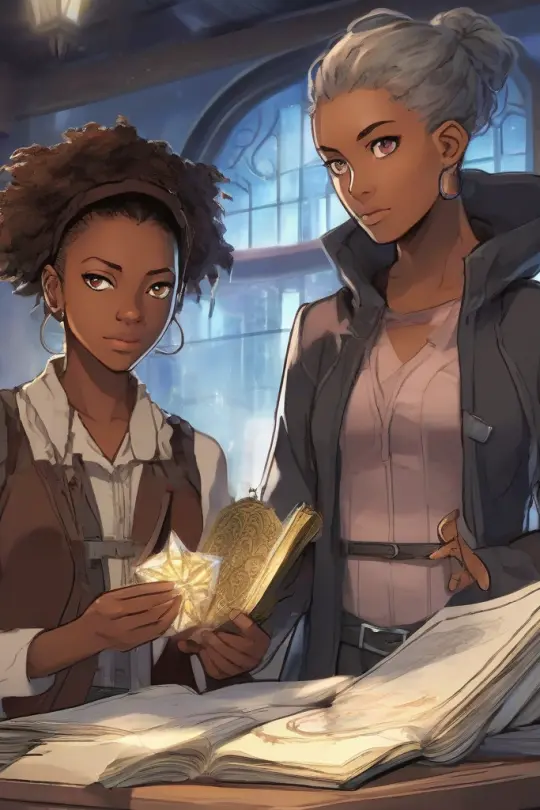
On the morning of a municipal commemoration, apprentice voicewright Asha holds a copied fragment that names her mentor and stores a younger version of her own voice. Pulled between a clandestine collective and a cautious mentor, she must choose how far she will go to restore or withhold what the city has been taught to forget.
Chapters
Story Insight
Voicewright places its attention on the narrow, precise world of craft and on the way small instruments can hold vast social weight. In a city that keeps its past tidy with official seals and curated rolls, apprentice voicewright Asha Solen earns her living coaxing fractured speech back into coherence. Her trade is tactile and intimate: glass sleeves, delicate filaments, the tiny motion that turns a stutter into a sentence. When an apparently routine repair reveals a sealed fragment—one that names her mentor and contains a recording of her own younger voice—Asha is shoved from quiet practice into a problem with civic consequences. The discovery pulls her between a clandestine collective called the Holders, who preserve suppressed phrases, and the Ministry of Remembrance, which polices what may be spoken in public. That tension is the engine of the story: a personal mystery that broadens into political stakes, and a series of practical, morally textured decisions about whether to expose, protect, or reshape what the city remembers. The narrative examines memory as both material culture and social architecture. Sayors—handheld audio artifacts—are not merely plot devices; they are the terrain where private testimony and official authority meet. Repairing or copying a fragment becomes an ethical act, and the craft’s techniques form the language of the novel’s dilemmas. Themes of identity, testimony, and the ethics of stewardship are treated without didacticism: the story avoids neat moral resolutions and instead insists on the uneasy reality of compromise. Writing and design foreground the sensory specifics of soundwork—how a waveform can betray its author, how a seal can hide a list of names, how the timbre of a voice can be repurposed as evidence. Those concrete details enrich the broader questions about who is allowed to remember, who benefits from forgetting, and what responsibility a maker has when their tools can alter public record. The interactive design folds those concerns into meaningful player choices. Gameplay blends craftlike mini‑challenges—repairing filaments, making high‑fidelity copies—with branching decisions that track relationships, fragment inventory, and a visibility meter that measures official attention. Choices compound: whom to trust, whether to leak material publicly or release memory privately, and whether to work within or outside institutional channels. Multiple endings reflect the consequences of those choices, each carrying personal and civic cost. The tone is quietly tense rather than sensational: it favors close observation and moral complexity over spectacle. If you appreciate fiction that marries procedural detail with political intrigue, values texture and restraint, and invites replay to discover alternate outcomes, Voicewright offers an immersive blend of tactile worldbuilding, ethical quandary, and carefully plotted branching narrative.
Related Stories
Night Letters
Night Letters follows courier Asha Venn through a city where sealed packets buy selective forgetting. After discovering a recovery letter addressed to her and tracing an exception tied to Exchange overseers, she must choose between restoring her past, exposing the system, or changing it from within. The mood is close, metallic, and uneasy; the story opens on a small misdelivered envelope that draws Asha into a moral and institutional breach.
The Tetherwright
In a vertical city held by humming tethers, a young apprentice named Nia follows missing memories into the shadowed Undernook. Armed with a listening bead and a luminous needle, she confronts a market that traffics in stolen remembrance and learns what it costs to stitch a community back together.
The Hum of Auralis
In Auralis the Spire's low hum binds the city's memories. When a corporation begins harvesting those threads, a twenty-four-year-old courier and audio archivist traces the theft, learns a costly method to restore the hum, and chooses between a private past and a city's future.
Tuning the Tenement
A harmonics technician discovers an improvised alteration in his building's emotional network. As he traces its reach he must choose between orderly neutrality and messy, kinder honesty. The narrative balances humor, domestic detail, and a physically risky decision to come.
The Bell Beneath the Waves
When the lighthouse bell in Coralbay falls silent before Sea Lantern Night, you—ten-year-old Rafi—follow a whispering conch into tide-twisted tunnels. With a moonrope, a crab ally, and your courage, you face the Wreck-Keeper and bring the bell’s voice home in time for the town to sing.
The Tide-Spindle
A warm, seaside interactive tale about Saffron, a ten-year-old apprentice who discovers a failing memory-weave in her town. Armed with a brass spindle, a clockwork heron, and a brave song, she learns to mend the loom and teach others to share stories.
Other Stories by Victor Larnen
- A Locksmith's Guide to Crossing Thresholds
- The Regulator's Hour
- Oath of the Seasonkeeper
- Mnemosyne Node
- The First Silence
- Officially Unofficial
- Registry of Absences
- Between Salt and Sky
- The Bellmaker of San Martino
- The Boy Who Mended the Night
- The Great Pancake Parade Mix-Up
- Clockwork of Absence
- The Pancake Catapult of Puddlewick
Frequently Asked Questions about Voicewright
What is Voicewright and what themes does the interactive fiction explore ?
Voicewright is a three-chapter interactive fiction about Asha, an apprentice who repairs speech devices called sayors. It explores memory, curated history, craft ethics, and the tension between truth and social stability.
Who is Asha Solen and why does her discovery of a sealed speech fragment matter to the plot ?
Asha Solen is a meticulous apprentice voicewright. Her copied fragment names her mentor and reveals a suppressed roster, forcing her to choose between exposing civic truths or preserving fragile social order.
What are sayors in Voicewright and how do they function as both story devices and gameplay mechanics ?
Sayors are handheld audio artifacts that store speech fragments. Narratively they hold forgotten testimony; mechanically they are repaired, copied, and tuned in puzzle-like mini‑tasks that drive investigation and branching choices.
What meaningful choices can players make in Voicewright and how do those choices affect the story's outcome ?
Players decide whether to copy, unseal, leak, publicly broadcast or destroy fragments, and whom to trust. These choices set relationship flags, a visibility meter and fragment inventory that shape investigations and endings.
How many different endings does Voicewright have and which player decisions determine each ending ?
Voicewright offers multiple outcomes (expose, preserve, compromise, co‑opt and variants). Endings hinge on recovered fragments, trust with Kade/Yun/Halven, visibility level, and crucial moral choices across chapters.
Is Voicewright accessible for players new to interactive fiction and what gameplay elements should they expect ?
Yes. The game combines approachable repair mini-games, branching dialogue, and inventory of fragments. New players can follow a main path or replay to explore alternative moral and political consequences.
Ratings
This is one of those rare interactive stories where a simple object — a copied fragment — carries the emotional load of an entire city. The sensory writing is exquisite: I could feel the filament hum and taste the resin as Asha worked. The moment the fragment names her mentor and contains her younger voice is chilling; it reframed every interaction with that mentor afterward. I loved how silence and small domestic details (buttons in a drawer, a child's secret about a roof cat) sharpen the stakes instead of distracting from them. The choices are morally messy and feel real: withholding memory can protect people but also perpetuate injustice, and the game doesn't hand you an easy answer. Beautiful, thoughtful, and quietly devastating.
I appreciated the craftsmanship of the prose but the narrative promises more than it delivers. The opening scene is excellent — the sayors, the child's cat confession, the bell that 'remembers' — but the arrival of Mrs. Ellin and the municipal commemoration are introduced and then underused. The political intrigue (the city's deliberate forgetting) is fascinating on paper, yet the game never really explores institutional reasons or consequences; it's treated more like a backdrop than an active force. Asha herself is sympathetic, but secondary characters (the mentor, members of the collective) remain thin. For players who prioritize atmosphere and language over tight plotting, this will work; if you want layered political intrigue, you'll likely feel let down.
Cute concept, beautiful sentences, but I'm left wanting actual consequences. The story leans into 'moral ambiguity' like it's a substitute for stakes; Asha agonizes, we get pretty descriptions of tools and glass, then... decisions. Fine, but the consequences felt muted. The clandestine collective is intriguingly sketchy, but why are they so persuasive? Why does the city learn to forget in the first place? I kept waiting for a hard payoff and felt like I got a soft shrug instead. If you adore atmosphere and don't need plot claws, this will be your jam. If you want payoff and hard choices with teeth, maybe skip.
I wanted to love Voicewright more than I did. The premise is excellent — a craftsperson who restores voices and must decide whether to reveal forgotten truths — and the atmosphere is spot-on, but the pacing drags in the middle. After that evocative opening, the plot gets a little too conversational and the central clash (mentor vs. collective) feels telegraphed rather than earned. The fragment that names Asha's mentor is a great hook, but the subsequent revelations don't escalate in a satisfying way; several choices lead to similar emotional beats rather than divergent outcomes. Also, some plot threads are left dangling: the municipal commemoration looms but doesn't land with the weight it seems to promise. Worth experiencing for the prose and the worldbuilding, but expect a slow burn and a few disappointments.
Gorgeous little gem. I laughed (softly) at the cat confession on the fragment — who knew a hidden feline could make a restoration scene so tender? The workshop details are lovingly exact; I could smell the warmed glass. The story's moral core — keep memory or keep peace — is delivered through Asha's hands and the choices you make. Gameplay felt smooth: your decisions actually change how people remember the city and each other. Also, shoutout to Mrs. Ellin's careful entrance — tiny, human, immediately sympathetic. Took me about an hour, and I kept thinking about it for days 🙂.
Short, quiet, and powerful. The opening workshop scene set the tone — the soft ritual of repair, the tiny labors of restoring voices — and I was hooked. I particularly liked how the bell on the door is described as 'remembering' to interrupt; small language choices like that make the whole piece feel lived-in. Asha's dilemma is handled with restraint: the fragment that names her mentor and keeps a younger voice is haunting without being melodramatic. The interactivity is just enough to let you feel responsible for the outcome. I finished feeling unsettled in the best way.
A precise, well-crafted piece of interactive fiction. The mechanics of voicecraft — sayors, filaments, the brass tweezers with the nick — are more than ornamentation; they inform the stakes and the puzzles. The fragment that stores Asha's younger voice and names her mentor is a terrific narrative device: it creates immediate, personal stakes without resorting to melodrama. I appreciated the political backdrop too — the municipal commemoration and the city's taught forgetfulness — which made the choice to restore or withhold feel consequential. I did wish for a slightly longer exploration of the clandestine collective's methods, but that's a quibble. Overall the prose is economical and sensory, and the branching felt meaningful rather than tacked on. Recommended for anyone who likes morally ambiguous choices grounded in tactile worldbuilding.
Voicewright grabbed me on the second paragraph and wouldn't let go. The way the workshop is described — the calibrator's click, the warmed glass, the filament responding to breath — felt tactile enough to reach out and touch. I loved the small human moments, especially the child's looped confession about the hidden cat; that made Asha's craft feel intimate and necessary, not just clever worldbuilding. The moral tug between mentor and the clandestine collective is quietly brutal: when Asha holds the fragment that names her mentor and contains her younger voice, you can almost feel the weight of the choice. As interactive fiction it balances player agency and narrative consequence really well; my choices made quiet, painful ripple effects. One of the most thoughtful, atmospheric IF pieces I've played in a long time.