
A Locksmith's Guide to Crossing Thresholds
Join the conversation! Readers are sharing their thoughts:
About the Story
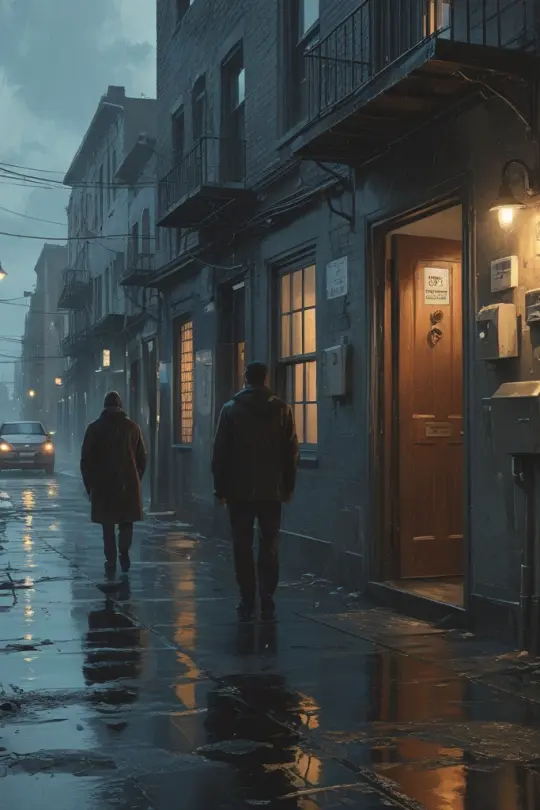
On a wet morning in a close-knit mid-rise, a locksmith named Sam navigates an urgent moral test: respect residents' privacy or use his unique skill to intervene. A child's locked bathroom forces a decisive, professional action that reshapes a neighborhood's rituals and Sam's place within them.
Chapters
Story Insight
A Locksmith’s Guide to Crossing Thresholds centers on Sam Calder, a locksmith whose work is both livelihood and lens. He navigates a compact mid-rise where everyday textures—citrus cleaner and tool oil in his van, a bakery that sends cinnamon-sweet smells down the block, a tabby in a knitted bow tie—anchor the story as firmly as the locks he tends. What begins as a routine call during a storm pulls Sam into an intimate moral knot: a muffled plea behind a stubborn door forces him to weigh respect for privacy against an immediate need to act. The narrative keeps its focus small and precise, leaning on tactile detail and domestic ritual rather than spectacle; a rubber duck in a plastic hard hat and a neighborhood key-decorating contest provide moments of absurd levity that humanize high-pressure scenes. The novella treats the locksmith’s trade as more than occupational color; it functions as metaphor and methodology. Locks become visible expressions of consent, trust, and the limits people set with one another, and Sam’s choices show how professional skill can intersect with ethical responsibility. The three tight chapters move from a carefully rendered establishing phase—introducing residents, quirks, and rhythms—to an escalation of rumor, suspicion, and urgent need, and then to a climax resolved by practical intervention rather than revelation. Actions are rendered with the authority of someone who understands craft: the description conveys the steadiness of a practiced hand and the economy of a tradesman’s motion, while deliberately avoiding technical instruction. The psychological momentum is subtle and authentic: Sam’s guarded solitude shifts incrementally toward selective openness, and community rituals—volunteer key rings, shared pastries, knitted oddities—become mechanisms for accountability and rapprochement rather than mere quaint detail. Stylistically, the story balances quiet psychological observation with concrete, often active scenes. Dialogue reveals relationships and habitual care more than it advances plot, and small absurdities relieve tension and keep the tone humane. The prose emphasizes sensory specifics—the clack of needles in a knitting circle, the smell of frying empanadas on the curb—so emotional stakes are experienced through bodily perception as much as thought. The climax deliberately privileges skillful intervention: the decisive moment is solved by Sam’s hands and professional judgment, underscoring the narrative’s interest in practical ethics. This is a work for readers who value close-scale psychological drama rooted in everyday life, who appreciate craft and moral nuance presented without melodrama, and who enjoy a blend of warmth, quiet humor, and ethical complexity. The story delivers a contained, thoughtful arc that pays attention to workmanship—both of locks and of living together—and models how small, deliberate acts can reconfigure the ordinary structures that hold a neighborhood in place.
Related Stories
Threads of Quiet
In a near-future city where people pin fragments of routine to a communal rail, a young cataloguer, tethered to habit and memory, searches for his sister's missing hum. Guided by a donor's spool, he follows knotted trades, confronts a tidy corporation, and learns the cost of reclaiming identity.
Fragments of Silence
A forensic audio engineer haunted by a childhood loss forces a municipal reckoning after anonymous recordings and suppressed clinical records reopen a sealed night. In a small city of quiet consequences, she gathers evidence and witnesses to demand that what was hidden be named.
Holding Patterns
Ava Mercer, a paper conservator whose nights once erased fragments of her pain, discovers notebooks that map those erasures and their collateral damage. As evidence accumulates and a mandate appears in her own hand, she must decide to stop, to confess, and to rebuild the ledger of other people’s days.
Floors Between Us
Jonah, an elevator technician in a close-knit apartment building, nudges the lift’s timing to coax small human connections. When a sudden blackout traps residents between floors, Jonah must use his trade to rescue them, while the building’s odd rituals and neighbors—dumplings, rooftop tomatoes, a rubber chicken—shape a night of absurd warmth and practical courage.
The Unfinished Child
A coastal psychological mystery about memory, identity, and repair. Nora Hale, a restorer of paintings, uncovers a suppressed familial secret when a portrait reveals layers of concealment. Her search forces a town to remember and reweaves lives altered by one stormy night.
Fractured Hours
A woman rebuilds authorship of her life after her memory is altered during recovery from an accident. In a quiet, tense atmosphere she confronts caregivers, gathers evidence, and chooses a slow, clinical path to reintegrate erased fragments while setting hard boundaries. The story explores memory, consent, and the labor of reclaiming self through small, deliberate acts.
Other Stories by Victor Larnen
Frequently Asked Questions about A Locksmith's Guide to Crossing Thresholds
What is A Locksmith's Guide to Crossing Thresholds about, and what central conflict drives the plot ?
A focused psychological novella set in a close-knit mid-rise. Locksmith Sam faces an urgent moral dilemma: respect residents' privacy or use his unique skill to intervene during an emergency.
Who is Sam Calder and how does his profession shape the psychological themes of the story ?
Sam Calder is a mid-30s locksmith whose trade acts as both metaphor and method. His hands, routines, and ethical code frame questions of consent, trust, and communal responsibility.
How does the story balance pressure and lightness—what role do humor and absurdity play in tense moments ?
Small absurd details—a rubber duck with a hard hat, a key-decorating contest—temper anxiety and humanize crisis, creating warmth and levity without undercutting emotional stakes.
Is the climax resolved by professional skill rather than revelation, and how is that handled narratively ?
Yes. The decisive moment is solved through Sam's practical locksmithing: steady technique, improvisation, and calm action. The narrative stresses craftsmanship over epiphany.
What role does the building community play in Sam’s emotional arc and the practical solution to the emergency ?
The mid-rise functions as a micro-society: neighbors' rituals, gossip, and volunteer systems both pressure Sam and provide resources. Community dynamics reshape his boundaries and choices.
What tone, pacing, and reader experience characterize this three-chapter psychological novella ?
Intimate, sensory prose with compact pacing. The story favors active, hands-on scenes, quiet humor, and psychological subtlety—grounded drama rather than melodramatic spectacle.
Ratings
A subtle, humane story that uses craft as character. I appreciated how the author never overstates Sam’s interior life; instead, it emerges through small rituals—the counting of keys, the way leather has learned the shape of his life, the rubber duck’s hollow punctuation. Those tiny, funny-tinged particulars make his later decision feel credible. The description of Fenwick Street and the building’s everyday economy (Tuesday discounts, a cafe that refuses to close, empanada trays) grounds the moral dilemma in real, messy community life rather than abstract ethics. The child’s locked bathroom becomes less a sensational episode and more a microscope for social norms: who has a right to intervene, when does professional duty override privacy, and how does one action ripple into common practice? The aftermath, where rituals are reshaped and Sam’s place is reconsidered, is handled with restraint and realism rather than tidy moralizing. This is psychological fiction that rewards close reading—quiet, precise, and unexpectedly moving. If you like stories where a single human skill changes the rhythm of a community, this will resonate.
Cute, atmospheric, and just quietly smug about its own sensitivity. The whole ‘gentle locksmith heals the neighborhood’ arc was… predictable. The child locked in the bathroom becomes an ethical test and Sam conveniently rises to the occasion, which reads less like a moral quandary and more like a checklist item: introduce problem, show conscience, resolve, tidy beatific community. Still, there are lovely lines—the bakery details, the rubber duck gag—and a few scenes genuinely made me smile. Not a bad coffee-read, just not the deep psychological probe the blurb promises. 😉
Short and sweet: I loved the voice. The author makes locksmithing poetic—Sam’s hands, the tactile language of torque, the absurdity of a rubber duck in a hard hat tapping like punctuation. The lobby clock scene and Mara Voss felt lived-in. The moral ambiguity around the kid’s locked bathroom is handled with restraint; it doesn’t shout its point, which I appreciated. A compact, thoughtful read that stayed with me.
There’s a lot to admire—lively vocabulary, sensory detail, and a protagonist with a memorable mini-universe of keys. But I struggled with how the story handled consequences. The child’s locked bathroom is presented as a major moral fork, yet the logistics and ethics of Sam’s intervention feel underexplored. How do other residents react in real terms? Were there any practical or legal repercussions? The suggestion that neighborhood rituals simply reshape itself felt a bit too neat. I also found the pacing uneven: long, beautifully observed passages about the van and the bakery give way to a resolution that rushes through community fallout. The imagery is excellent (the rubber duck, the clock in the oak frame, Mara’s needles), and the author is clearly capable of striking lines. But for a psychological story pivoting on a moral test, I wanted more grit and fewer soft-focus implications.
Beautifully written. The author captures neighborhood life in deft little strokes: a bakery that sells cinnamon buns like civic rites, a cafe that refuses to close, vendors setting out empanadas—these images do the heavy lifting of worldbuilding without losing the human core of the story. Sam himself is a quietly memorable protagonist; the details about his keys, the leather wallet shaped by use, and the humorous rubber duck lend him a warmth that balances his professional distance. The incident with the child’s locked bathroom is the kind of compact moral pressure that turns a mundane service call into a turning point. I loved how the aftermath didn’t dissolve into neat answers; instead the building’s rituals shift gradually, and Sam’s place in the community is reframed. There’s an understated humor here too—small touches like Sam tapping the duck until it sounds like punctuation made me smile more than once. If you appreciate psychological fiction that prefers suggestion to spectacle, this story is a small, satisfying gem.
I wanted to love this more than I did. The prose is often lovely—those sensory bits (citrus cleaner, rubber duck, bakery cinnamon buns) are vivid—but the central moral dilemma felt a little obvious. The child’s locked bathroom reads like a plot device designed to force a tidy ethical showdown; I kept waiting for a twist or deeper complication and it never arrived. Pacing was another issue: the opening lingers in texture and voice for a long time, which is pleasant, but by the time the moral test appears the momentum isn’t there to make the stakes feel urgent. Sam is intriguing but ultimately keeps too much distance from the reader; we admire his craftsmanship but don’t always feel his inner turmoil. Still: some wonderfully human moments (Mara’s shawl, the lobby clock, the rubber duck tapping) make it worth reading. Just don’t expect high drama—this is more meditation than revelation.
Measured, observant, and quietly philosophical. The author demonstrates real craft in how locksmithing becomes a metaphor for privacy and responsibility: Sam’s counting of keys, the leather wallet that has learned the shape of his life, even the rubber duck tapping as a small punctuation mark. I appreciated the micro-details—the citrus-and-tool-oil van, the Tuesday bakery economics, the lobby clock—and how they situate the mid-rise as a small ecosystem. The moral test around the child’s locked bathroom is handled mostly well. It never turns melodramatic; instead it makes you think about professional duty versus communal trust. The ending’s suggestion that rituals in the building shift because of Sam’s choice is satisfying without being heavy-handed. If you like quiet psychological fiction that focuses on technique and atmosphere, this hits the right notes.
This story is a slow, quiet pressure that becomes a moral pulse. I was hooked from the opening image—Sam arranging his keys like a “small, tidy commonwealth of metal” is such a perfect, humanizing detail. The rubber duck with the hard hat (love that absurd private joke) and the van that smells of citrus cleaner give Sam real texture. I loved how the neighborhood comes alive: the empanada vendors, the bakery’s cinnamon buns as civic rites, and Mara Voss with her shawl and needles in the lobby clock light. When the child’s locked bathroom shows up as the catalyst, the dilemma stops being merely professional and becomes communal. The author handles Sam’s moral test with nuance—the way his hands “speak a language of torque and patience” made me feel his restraint—and the choice he makes genuinely reshapes the building’s rituals rather than just resolving a plot point. That aftermath scene, where neighbors recalibrate boundaries and small rituals, felt earned and tender. A few passages slowed me down in the middle, but mostly this is a beautifully atmospheric, humane take on how one person’s skill can nudge a community. Highly recommend for readers who like quiet moral puzzles and character-driven fiction.