
Spanmaker
Join the conversation! Readers are sharing their thoughts:
About the Story
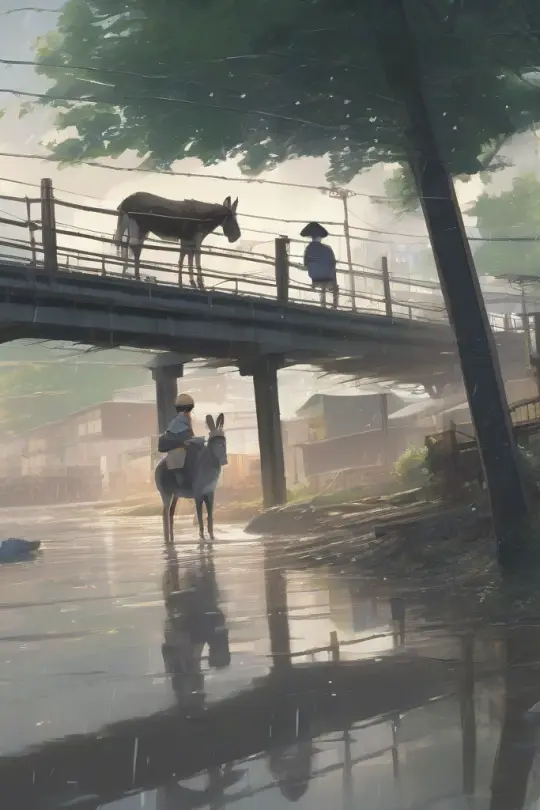
On a rain‑slicked riverbank, a practical bridgewright named Ada Whitcombe must use craft and grit when the town's new iron span fails during a flood. The atmosphere is wet, noisy and oddly comic—donkeys in bonnets, burnt festival buns—while hands, rope and wedges decide the first stakes.
Chapters
Story Insight
Spanmaker centers on Ada Whitcombe, a skilled nineteenth‑century bridgewright whose trade is both livelihood and language. Set in a compact riverside town, the story opens amid the salt smell of flood and the clamor of festival preparations, where an outsider contractor’s shiny iron span is chosen over local craft. Ada’s workbench — ropes, wedges, a well‑worn mallet — becomes the map of her life: practical, exact, and eloquent. When the river rises and the new iron structure proves vulnerable to scouring and current, the crisis forces a choice that is not rhetorical but mechanical. Ada must translate a lifetime of hands‑on knowledge into immediate action, improvising rigs, splices and temporary anchors to move people across water that refuses polite solutions. Small bursts of humor — a donkey with a bonnet, a temperamental lantern, Mrs. Bramley’s rescue tart — keep the narrative warm and human amid the physical urgency. The novel uses craft as a structural metaphor. Whereas many historical tales hang on grand political upheavals, Spanmaker makes the profession itself into a test of belonging and authority: who is allowed to speak about load paths and who is silenced by assumed expertise? Ada’s arc moves from practiced solitude toward the messy, reciprocal ties of community. Support characters are drawn with similar tactile fidelity: Tom, her eager cousin and comic foil, supplies inventions and levity; Master Crowther embodies respectful tradition and slow change; Hatherly, the contractor, carries the confidence of novelty that must be tempered by weather. The emotional trajectory emphasizes connection rather than triumph; pride, apology, and practical reconciliation are earned in the physical labor of repair. Technical detail is integral, not decorative — rope splices, gin poles, capstans and field‑shored piles appear as readable, authentic procedures that shape plot decisions rather than exotic jargon. Spanmaker’s voice balances precision with warmth. The prose privileges sensory detail — the weight of a hawser, the give of a plank, the cold bite of spray — so the story reads like an apprenticeship as much as a drama. Historical grounding comes through everyday textures: peat smoke, bakery scents, town rituals and the cadence of market life, which are described to build atmosphere rather than pad period gloss. The book resists melodrama and instead stages a pragmatic climax solved by skillful labor rather than revelation. The result is a compact, grounded narrative that will appeal to readers who value close attention to material craft, a female protagonist whose competence defines her authority, and a community portrait that keeps humor and domestic oddities in close company with danger. Spanmaker foregrounds the satisfaction of seeing a problem resolved by know‑how, and it rewards attention to small, vivid moments where hands, tools and weather determine the outcome.
Related Stories
The Millwright's Measure
Hannah Weiss, a skilled millwright in a 19th-century riverside town, redesigns her compact water regulator into a shared, repairable system after a public trial goes wrong. Through forging, teaching, and hands-on improvisation during storms, she turns private ambition into communal craft while a clockwork goose punctuates events with absurd levity.
The Cartographer of Saint-Malo
In mid‑18th century Saint‑Malo, Eloise Fournier, an apprentice mapmaker, must outwit smugglers who harvest wrecks by snuffing coastal lights. With a makeshift binnacle, an old surveyor, and a retired lieutenant, she turns instruments and ledger into proof, saving her town and earning recognition.
The Last Croft
In the waning days of the Highland Clearances, Aileen MacTaggart brings a fragile indenture to challenge an estate sale that threatens her family’s croft. Legal filings, a divided township, and a factor’s uneasy aid set a race for documents that will buy time and demand costly choices.
Saint-Laurent's Loom
In an early-industrial French town, Claire Moreau, a weaver’s daughter, hides a register of mutual aid after her father’s arrest. When authorities seize papers and begin rounding up workers, she makes a desperate decision to deny a list’s power — an act that reshapes the town’s bonds and the way care is kept.
The Last Ballad of Kinloch
Peat smoke and low clouds hang over a Highland glen where estate 'improvements' threaten roofs and songs. Eilidh, a singer and midwife, must decide whether to stay with her father and neighbours or to carry the community's melodies away to a city and its presses.
Sky Cloth of Timbuktu
In 1591, a young scribe in Timbuktu defies a new ban on moving books. Guided by a desert seamstress and a loyal dog, Zeinab smuggles manuscripts through sand and tricks a proud captain. She returns to rebuild a shaken library, teaching others to guard words with patience, wit, and courage.
Other Stories by Selene Korval
Frequently Asked Questions about Spanmaker
What is Spanmaker about and who is the protagonist Ada Whitcombe ?
Spanmaker follows Ada Whitcombe, a hands‑on 19th‑century bridgewright in a river town. When an iron span fails during a flood, her ropework and timber skills become the town's practical salvation.
How does Ada use her bridgewright skills to resolve the river crisis in the story ?
Ada rigs travelers, splices hawser lines, fashions gin poles and temporary anchors, and operates a capstan. Her expertise in knots, wedges and timbers enables fast, physical rescues under flood conditions.
Is Spanmaker historically accurate about ropework and bridgebuilding techniques ?
Spanmaker draws on period methods: splicing, belaying, timber shoring and simple capstan rigs. While fictional, the technical details aim to feel authentic to 19th‑century hands‑on craft.
What major themes does Spanmaker explore beyond the immediate flood and repair work ?
The novel examines craftsmanship as identity, social prejudice against a female craftsperson, community resilience, and how practical skill reshapes local status amid generational tensions.
Why are moments of humor and absurdity included in a historical rescue drama like Spanmaker ?
Humor—donkeys in bonnets, bumbling lanterns, festival buns—humanizes characters, eases tension, and highlights how ordinary quirks persist even during urgent, life‑saving labor.
Who will enjoy Spanmaker and what tone should readers expect from the story ?
Readers who like tactile historical fiction, practical heroism, and community drama will enjoy Spanmaker. Expect a grounded, warm tone with hands‑on action, modest wit, and vivid river town detail.
Ratings
Spanmaker is beautifully written in places but a bit frustrating overall. The craft scenes (splicing the rope, feeling the spar's grain) are convincing and sensory, yet the human dynamics are flatter. Tom comes off as a comic foil but lacks depth, and the town’s social prejudices mentioned in the description never fully translate into the story’s conflicts. I wanted the flood sequence to force a clearer reckoning — between Ada and the town, or between tradition and the new iron span — but the resolution felt more practical than dramatic. Recommended for those who like atmosphere over emotional complexity.
Cute but cloying. I appreciated the craft detail, but the whole piece leans so hard into quaintness — bonnets on donkeys, burnt festival buns, the dramatic-but-impractical lantern — that it began to feel like a caricature of historical small-town life. The flood stakes never really landed because the narrative keeps winking at the reader with comic asides. Ada deserves a grittier problem to sink her teeth into; instead we get vignettes of domestic charm. Not terrible, but not my cup of tea. 🙃
This had potential but stumbled in execution. The setting and prop work are vivid — half-turned spar, coil of new hemp — yet the plot feels oddly thin. The crisis of the iron span reads like a vignette rather than a fully developed emergency: why is the new iron span failing so soon? Where are the town authorities? There are narrative holes about timing and logistics that the affectionate descriptions don’t cover. Also, Tom’s ornamental lantern and the donkey-in-a-bonnet gags sometimes feel too whimsical, as if the story can’t decide whether to be serious or quaint. Ada is likable but underexplored beyond her competence. Characters, plot, and stakes needed firmer bolstering.
I wanted to like Spanmaker more than I did. The opening is lovely — I could smell the sap and the bakery — but after a while the focus on craft details became repetitive rather than deepening character. Ada is clearly competent, but I never got a strong sense of her inner life beyond skill and practicality; the social prejudice tag in the blurb suggested there might be sharper conflict or emotional stakes. The comedic touches (Tom’s lantern, Bunting the donkey) occasionally undercut the peril of a failing span during a flood; I wanted the flood to feel more dangerous. Good scenes, just not quite the depth or tension I hoped for.
Spanmaker is a deft little study of workmanship and social texture. The author demonstrates an obvious affection for tools and technique: the splice sequence, the feel of grain under a palm, the way wedges and rope become actors in the drama. Ada is compelling because she’s believable — not a mythic heroine but a practical woman whose expertise becomes the town’s salvation. The comic bits (lantern that refuses to burn, donkey in a bonnet) are handled with a light touch that keeps the tone buoyant even as the flood threatens. I appreciated the balance between atmosphere and mechanics; both are integral to the story’s emotional logic.
Spanmaker made me nostalgic for small, stubborn communities and the people who keep them together. Ada’s workshop is one of those rare spaces in fiction that feels like a living thing — rope hanging like patient animals, timber warm with memory — and the prose honors that world. I was particularly struck by the quiet humor threaded through moments of crisis: Tom cradling his ornamental lantern, Bunting the donkey snuffling under the high window, the image of burnt festival buns drifting into the floodlit chaos. When the iron span fails, it’s not a spectacle; it’s a test of accumulated know-how and stubborn courage. The scene where Ada coaxes a turn into a braid — "living negotiant that promised to hold under load" — is one of those lines that nails both craft and character. The story doesn’t need fireworks; it’s moved by human hands and small, essential choices. Beautifully done and gently powerful.
Delightful little gem. The craftsmanship detail is deliciously specific — I found myself mentally learning to splice rope alongside Ada — and the mix of wet danger and oddball humor (donkeys in bonnets, Tom’s pathetic lantern) is pitch-perfect. The moment when the town’s iron span gives out and everyone must be practical instead of heroic made me grin: hands, rope and wedges deciding the first stakes is such a grounded way to build tension. Highly recommended if you like historical fiction that smells faintly of sap and bakery fat. 😊
Short and sweet: I adored the atmosphere. The rain-slick riverbank, the bunting-donkey, the bakery’s caraway — it's sensory storytelling at its best. Ada is a quietly heroic protagonist; the scene where she sets her palm against the spar felt intimate and authoritative. The story balances humor and danger well. I wanted more of Ada’s past, but what’s here is satisfying and beautifully crafted.
As someone who enjoys historical detail and technical accuracy, Spanmaker hit the sweet spot. The prose trusts the reader with specifics — thumb under, tail tucked, hard pull — and those rope-splicing instructions are not just decorative: they build character. Ada’s competence is embodied in her hands and workshop: the half-turned spar, the pegboard of rope, the smell of sap and smoke. I also appreciated how social prejudice is threaded subtly through the town’s response to the failing iron span; it never becomes a lecture but informs the practical heroism on display. The comic elements (Tom’s ornamental lantern, the donkey in a bonnet) lighten the tension without undercutting the flood crisis. Atmospheric, well-researched, and emotionally earned.
Spanmaker quietly charmed me. Ada Whitcombe felt like someone I could visit on a wet afternoon — her hands, the way she knows the grain of a spar, are written with such affection that I could almost feel the rasp of timber. I loved the small, vivid touches: the coil of new hemp, the lantern that "only refuses to burn in principle," and Bunting the donkey snuffling beneath the window. The scene with the footbridge — the loose handrail and that plank that "sounds like a trapped goose" — made the stakes tangible without melodrama. It’s a story about craft and community, told with a warm, slightly comic touch (burnt festival buns!!). A lovely, humane historical slice.