
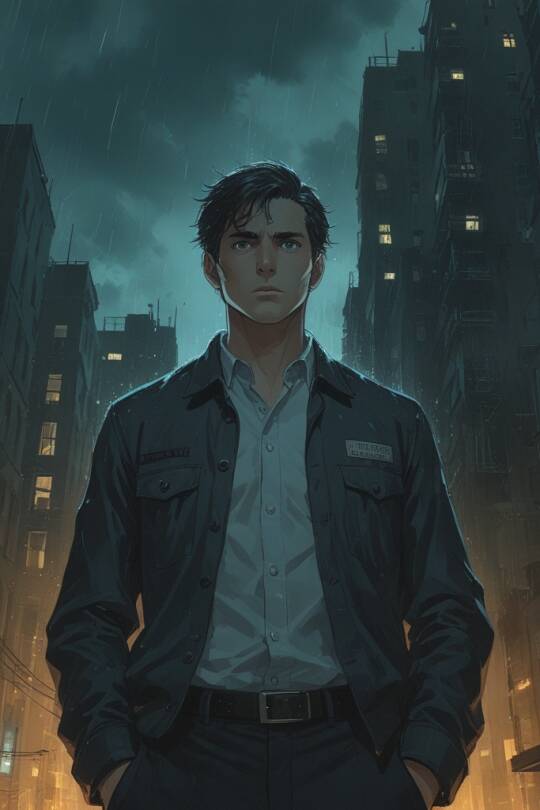
Night Shift at Hollowwell Towers
Join the conversation! Readers are sharing their thoughts:
About the Story
On a rain-slate night, elevator technician Owen Hale confronts an uncanny presence in an aging high-rise. With neighbors who juggle absurd rituals and practical courage, Owen uses mechanical expertise — ballast, clamps, manual brakes — to trap what lurks between floors. The climax is a hands-on, technical gambit that risks his body and the building’s elevator to bring them through night.
Chapters
Story Insight
Night Shift at Hollowwell Towers opens on a rain-slicked, near-empty lobby where Owen Hale, a solitary elevator technician, answers a late-night service call that quickly refuses to stay ordinary. The building’s small domesticities — rooftop tomato gardens, a kettle that never seems to stop, an eccentric hat club and a parrot that mimics inspection codes — frame a claustrophobic problem: the elevator car and its shaft have begun behaving as if the building holds extra rooms between floors. Objects disappear and reappear, delicate seams of wallpaper bloom on concrete, and a child’s voice echoes where it should not. Owen is introduced not as a detective or a mystic but as a tradesman whose language is torque, splice, and timing. The immediacy of the hazard forces neighbors who ordinarily keep to themselves to become a makeshift crew; humor and absurd rituals — a hat offered for luck, a knitted flag, a parrot’s comic timing — ripple through the dread, keeping the characters human and the tension taut. The story treats profession as metaphor and method. Where many horrors hinge on revelation or cosmic explanation, this tale stages its climax as a technical operation: a deliberately timed manual override, ballast adjustments, clamps and splices staged like instruments in a rescue. The arc moves Owen from practiced detachment to reluctant responsibility, and the emotional trajectory runs from isolation to a fragile, earned connection with his neighbors. Themes of community, the ethics of immediate intervention, and the domestic uncanny are explored through tactile, sensory detail — the smell of oil and lemon cleaner, the rasp of guide rails, the weight of a harness — so that the uncanny never feels abstract but rooted in the lived environment of a city building. Humor and absurdity are not put in for relief alone; they become tools of survival, humanizing the crisis and giving the characters small rituals that keep them anchored while they work. This four-part novella-sized arc will appeal to readers who like horror born from ordinary infrastructure and human workmanship rather than spectacle. The prose leans on practical specificity: wrench-and-wrenching scenes, believable diagnostic steps, and hands-on solutions that make the protagonist’s actions feel earned. Expect a slow-burn build into claustrophobic, mechanical set pieces and a finale resolved by skill and bodily action rather than revelation. The result is an intimate, craft-forward horror that foregrounds the grit of night-shift labor, the eccentric warmth of a tightly packed community, and an atmosphere where the mundane becomes uncanny — a story that lingers because it renders both dread and neighborliness with equal fidelity.
Related Stories
The Ninth Toll
Ava discovers her father’s note demanding a sacrifice to stop a bell that erases people. Confronting the stitched book’s rules, she chooses to answer so her daughter will remember. The town steadies as absences halt, while one witness keeps a stubborn, private memory alive.
The Fifth Door
Evelyn makes the final, terrible exchange with the house that keeps people behind small doors. She charges tokens with the most intimate memories of her sister and watches Lina re-enter the world as the town’s records smooth to accommodate it. The recovery is exacting: every memory surrendered erases the ways Evelyn knew Lina, and the house balances its ledger in the quietest, most intimate currency — the sensory details that make a life recognizable.
The Seam of Kerrigan Isle
A young field recordist travels to a remote island to investigate a tape that erases memory. As sound turns predatory, she must trade a cherished memory to save others and seal the thing beneath the sea. A moral, sensory horror about listening and loss.
Shadows of Wren Street
Nora returns to her aunt’s house to settle an estate and discovers a house that collects small, precise losses of memory. As jars and ledgered remnants surface, the community confronts a failing chest that demands a living anchor. Tension rises as memories return while something in the corners hungers.
The Hollow Ear
A young sound designer enters the stairways of an old tenement to rescue her vanished friend and confront a creature that feeds on voices. Armed with a listening stone, a salvaged spool, and fragile courage, she must bind hunger with sound and choose what to sacrifice.
The Quiet Below
A conservator of photographs unearths an album that eats memory. As faces return to prints, something in the city grows hungry. To stop it she bargains with an old seeing glass, and pays a private price. A horror about what we keep and what we lose to save others.
Other Stories by Selene Korval
Frequently Asked Questions about Night Shift at Hollowwell Towers
What is the premise of Night Shift at Hollowwell Towers and who is the central character ?
A late-night elevator technician, Owen Hale, answers a strange service call in an aging high-rise. Objects vanish between floors and neighbors band together as he uses mechanical skill to confront the uncanny.
Is Night Shift at Hollowwell Towers more supernatural horror or technical thriller in tone ?
It blends both: uncanny, possibly supernatural occurrences unsettle the building, but the story resolves through hands-on mechanical tactics, giving it a technical, grounded climax.
How important is Owen’s profession to the plot and themes of the story ?
Owen’s trade is essential—both metaphor and method. His diagnostics, splices, brakes, and timing drive the plot and explore duty, practical courage, and reconnection with community.
Does the story include community and humor despite its horror elements ?
Yes. Eccentric neighbors, a parrot that mimics inspection codes, and a hat-club’s absurd rituals add warmth and comic relief, making the threat feel intimate and the rescue collective.
Will the elevator be the main source of danger, and is there physical peril for characters ?
The elevator shaft is the primary locus of menace. Characters face genuine physical risk during rescues and manual overrides, with tension grounded in bodily, technical action.
Is the ending resolved through action or revelation, and does it leave room for lingering unease ?
The climax is resolved through Owen’s mechanical actions—ballast, clamps, and timed braking—not an explanatory revelation. The outcome has tangible consequences and a quiet lingering unease.
Ratings
Right off the bat I was hooked by how tactile and alive the writing is — that rain described as "sheeted, sideways insistence" stuck with me. Owen feels like a real person: practical, a little weary, and wholly believable when he treats his toolbox like a talisman. I loved the way the story balances the mechanical and the uncanny; lines about sockets and snap-locks sit next to the parrot nearly saying "Hold fast! Hold—" and it creates this eerie, domestic creepiness that works so well. The community details are gorgeous: the rooftop tomatoes and heated sauce debates, hallways that smell differently on different days, the ridiculous patched hat and the woman with a tray of glasses. Those little slices of life make Hollowwell Towers feel lived-in so the horror doesn't come from an abstract void but from a place that people actually care about. And the premise — an elevator tech using ballast, clamps, and manual brakes to trap something between floors — promises a hands-on climax that's both tense and inventive. 🔧 The prose is sharp and sensory, and the pacing in the excerpt gives me confidence the full story will marry human warmth with genuine dread. Enthusiastically recommended to anyone who likes urban horror with heart and clever mechanics.