
About
Philosophy and simple storytelling dance together in ways that constantly surprise me. Teaching through fables feels more honest than lecturing with abstract theories. I learned long ago that readers remember a well-crafted parable far longer than any philosophical argument, no matter how elegantly constructed. The ancient wisdom of folk tales and moral stories continues to resonate because they speak to universal human experiences.
Pinned Stories






Latest Reviews

Megan Ward
11 August 2026This book made me weirdly happy in the best way. Brassfall feels lived-in right away — the iron-bread carts, the children banging spoons on tins, the ferries and ovens all keeping their own little schedules — and then Kest shows up with his oily hands and his “the world needs a stutter” philosophy, and i was in. He’s such a satisfying oddball: not some chosen-one wizard, just a guy who knows how to talk a stubborn machine into behaving. What really worked for me was how the tension comes from doing the job properly, not from random explosions. The regulator tooth problem feels specific and physical, and when the story gets into ropes, rivets, the tower work, and the crew having to trust each other, it actually feels dangerous. Tel is a great apprentice too; he’s eager without being annoying, and I liked seeing him learn that competence is partly courage and partly not panicking when your hands are shaking. Mina also adds a nice blunt energy whenever the guild starts getting precious. It’s got that rare thing where the city itself feels like a character without turning into a poem about bricks. The ending lands on a really satisfying note too — not everything fixed neatly, but enough changed that you believe Brassfall can keep going. Honestly, just a very good time if you like craft, strange little machines, and people solving big problems with bruised hands.
on The City's Pulse and the Hoursmith's Hands
Chloe Bennett
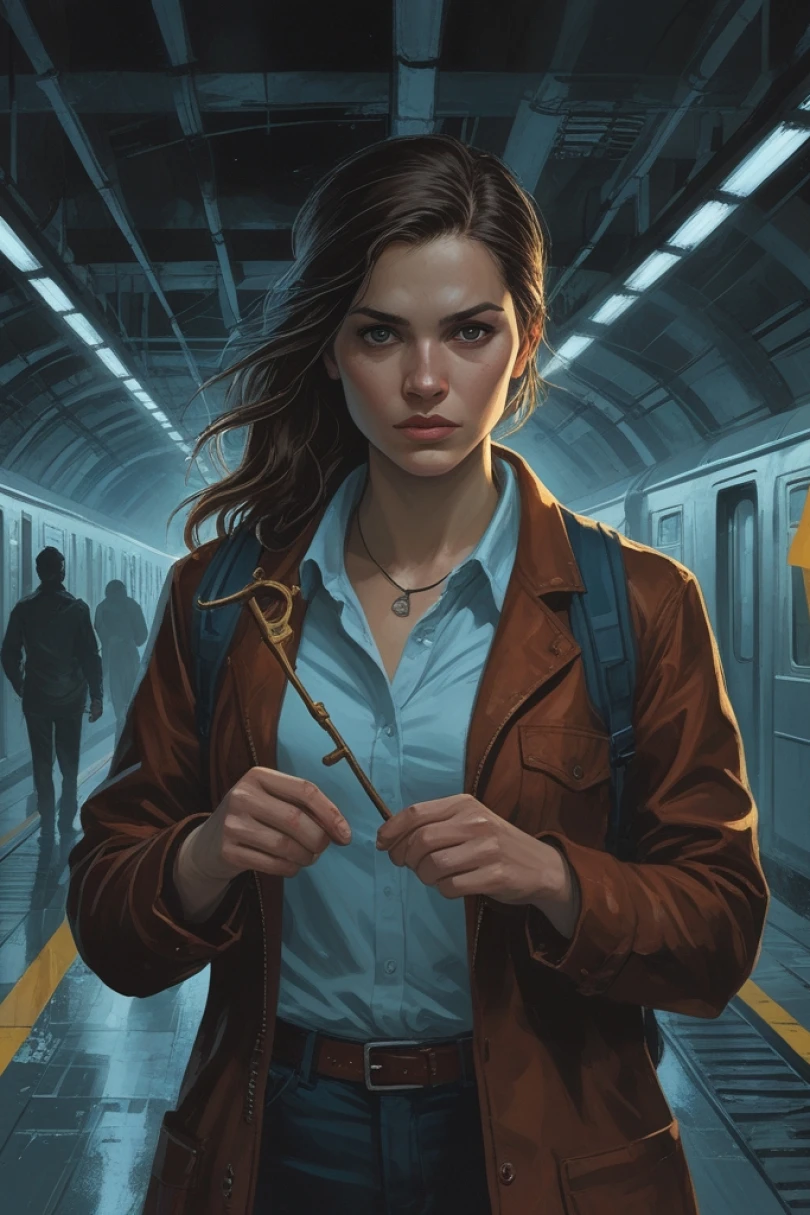
4 July 2026The subway setting is cool, but the story keeps tripping over its own setup. By the time Maya is following blue arrows through Serafim and listening for secret hums in the rails, the whole thing starts feeling less like a thriller and more like the book is showing off its own tricks. Every time the plot gets stuck, Hydra or Mr. Stoica's tuning fork conveniently points her in the right direction, so there’s never much room for actual suspense. That really hurt the tension for me. Petya’s disappearance should be the emotional core, but it gets buried under maintenance tunnels, hidden doors, and a smuggling ring that never becomes as interesting as the scenery around it. Even the “cold leader” comes off as generic — stern, mysterious, and basically there to stand in a shadow and be ominous. I kept waiting for a sharper twist or a messier consequence when Maya got too close, but the book plays everything pretty safely. Also, the pacing is weirdly flat. It rushes through some big reveals, then lingers too long on tunnel navigation and sound cues. I liked the opening chapters a lot more than the payoff, which is frustrating because the atmosphere is genuinely strong. It just never turns into the kind of thriller it thinks it is.
on Echoes in the Fourth Rail
Thomas Avery
4 July 2026This one got under my skin in a good way. The first thing I noticed was how physical everything feels — the salt in Wrenmoor, the iron stink, the wetness of the underways, even the bone-lanterns sounding like they’re barely holding themselves together. That whole setup is so unsettling without being loud about it. Eira worked for me because she’s not written like some chosen one with instant answers. She’s just trying to do her job, trying to keep moving, and then everything goes sideways when Rourke disappears and that lantern starts acting wrong. The little details hit harder than the big ones: the girl selling eel-strings, the “don’t oil the seam with grief” line, the way Eira lies by habit because it’s easier than explaining herself. It all makes her feel lived-in. I also really liked the clockwork fox. It could’ve been a gimmick, honestly, but it ends up feeling eerie and kind of sad, like it’s reflecting pieces of Eira she’d rather not look at. And the Warden feeding on memory? genuinely creepy. Not just “monster in a hole” creepy — more like that awful feeling that something can take what you are and leave you standing there anyway. The whole book has this quiet ache to it, but it never gets dull. It’s grim, yes, but there’s enough tenderness in the small mercies to keep it from just wallowing. I finished it feeling a bit haunted, which is exactly what I wanted.
on The Lantern of Wrenmoor
Megan Holloway
4 July 2026This one got me in the soft spot pretty fast. Lina coming back to Marrow Bay after Aunt Meret dies could’ve been pure sad-girl fare, but it doesn’t stay there — it turns into this really nice story about people showing up when life gets messy. I loved the setting immediately: the blue fish knocker, the old inn smelling like tea and lemon peel, the sea air hitting Lina the second she gets off the train. It all felt so specific that I could basically see the place. What made it work for me was Lina herself. She’s not some shiny perfect heroine; she’s tired, grieving, and clearly a little out of practice with letting people in. The way she goes from city pastry precision to trying to save her aunt’s inn feels believable. And the whole baking angle is used well — not just cute food talk, but actual work, pressure, and pride. I also liked that the romance didn’t feel rushed. The stubborn baker energy, the old friend coming back, all of it gives Lina different kinds of tension instead of just one obvious love interest floating around. By the time the town starts pulling together, it earns the warmth. Honestly, I finished it feeling weirdly comforted.
on Where the Dough Meets the SeaLatest Comments
Nina Caldwell
27 July 2026Yes! That contrast between precise pastry timing and the mess of real life hit hard. Also, Aunt Meret’s house already feels like a character — I’m really curious what’s in those folded scraps of paper in the secret cabinet.
on Where the Dough Meets the SeaTessa Wilford
27 July 2026Okay, the line about the sea changing the air before it even appears is *so* good. I also loved how Lina’s city life is measured in oven timings, then Marrow Bay pulls her into this slower, grief-soaked rhythm. The foreclosure notice landing on top of Aunt Meret’s tea, lemon peel, and lavender mess was brutal in the best storytelling way.
on Where the Dough Meets the Sea
Hannah Whitaker
27 July 2026I’m weirdly obsessed with how grounded this feels—the market bell, the peat cakes, the child in the paper crown—while the threat underneath is so serious. Silas acting like a man who’d rather wrestle a bad hinge than admit he needs help is such a good fit for a frontier blacksmith. And Ada showing up with that hub feels like the story quietly saying: this is where a private trade turns into public survival.
on Anvil at Fen's EdgeHelen Price
4 July 2026Yes! The raven is such a clever little signal device, and I love that it’s also just a neighborhood oddity. The story makes the city feel communal instead of abstract, which makes the regulator-tooth crisis hit harder.
on The City's Pulse and the Hoursmith's Hands