
The Tollkeeper
Join the conversation! Readers are sharing their thoughts:
About the Story
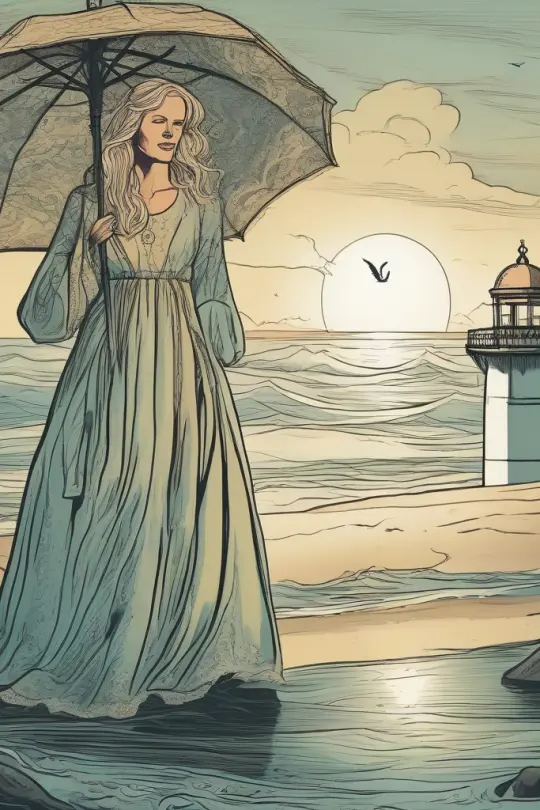
A bereaved woman returns to inherit a coastal bell’s duty and uncovers a dangerous bargain: the town trades memories for safety from a tidal intelligence. As she traces her brother’s token to the sea’s origin, she must negotiate with the thing beyond the shore and sacrifice a private memory to alter the bell’s nature.
Chapters
Related Stories
Between Stops: A Service Call
A late-night service call becomes an ethical, hands-on crisis when Amara Li, an elevator technician, discovers a building's car making impossible half-stops that trap residents between moments. She must override modern safeguards and retune the machinery with her trade, while a neighborhood's small rituals and absurdities orbit the night.
The Unremembered Room
On her grandmother's property, Evelyn Hart discovers a hidden chamber that answers with echoes of the dead but takes back pieces of the town's memory. Facing a moral calculus, she will either reclaim one life or protect the many. The attic asks for a price, and the town gathers to hear it named.
Barter of Names
A coastal town’s Remembrance House offers brief returns from the dead at the cost of living memory. Mara, an apprentice haunted by her missing brother, trades for Finn and watches the city pay in vanishing knowledge. When the House’s appetite spirals, she volunteers a final, impossible sacrifice to stop it.
Unclaimed Hours
A watchmaker binds herself to a liminal archive that keeps missing hours to stabilize her town. In the final chapter she chooses a binding ritual that steadies the community’s fractured days but exacts a private toll: the loss of fine-grained memories and the acceptance of living as the town’s hinge. The atmosphere is close and tactile—brass, lemon oil, winter air—while friendship, absence, and precise craft quiet the edge of grief as the city reorders itself around a new, uneasy balance.
Stitching the Vertical City
In a stacked city where elevators stitch lives together, a solitary elevator technician becomes central to a neighborhood’s survival. Rory moves from routine repairs to leading a community-led safety network when shafts begin to misalign, blending grease-soaked craft with unexpected companionship.
The Undertide
A coastal town confronts a tide that returns people at the cost of pieces of memory. When Evelyn’s brother Jonah becomes a composite of others’ lives, the community gathers at a hollow in the rock to offer anchors, tell their stories, and face a final ritual that will demand a living conduit.
Other Stories by Julien Maret
Frequently Asked Questions about The Tollkeeper
What is The Tollkeeper about ?
The Tollkeeper follows Iris Calder as she returns to inherit a coastal bell and discovers the town trades memories to placate a tidal intelligence. The plot mixes mystery, supernatural ritual, and a personal search for a missing brother.
Who is Iris Calder and why is she central to the plot ?
Iris Calder is a practical, grieving woman who becomes the bell’s keeper after her grandmother’s death. Her mechanical skill and emotional drive push the investigation into the bell’s mechanics and the moral choices behind the town’s bargains.
How does the bell exchange memories and what makes the "last toll" dangerous ?
The bell mediates trades: ringing can restore a memory to one person while erasing another’s fragment. The "last toll" functions as a binding stitch that seals an exchange, so reversing it risks erasing or displacing other lives’ recollections.
What role does the sea or the Unmoored play in the bargain ?
The Unmoored is a tidal intelligence beyond the boundary that accepts offerings of memory. It enforces the original bargain: keep certain memories forgotten and the shore remains calm. It responds to disturbances and demands proportional payment.
How does Iris try to rescue her brother Rhett and what sacrifice does she make ?
Iris traces a carved token to a drowned beacon, tests a careful reversal, then negotiates directly with the sea. To rework the bell into a vessel that safely returns memories, she voluntarily gives up her last clear memory of Rhett.
What is the ending like and how does the town change after the bargain is altered ?
The ending is bittersweet: the bell is transformed into a regulated vessel that releases memories slowly with witnesses and rules. The town begins communal, measured recoveries—some reunions happen, other losses remain irrecoverable.
Ratings
Nice atmosphere, but I have some issues. The whole "town trades memories for safety from a tidal intelligence" thing is a great idea, but here it comes off a little on-the-nose and under-explained. We get the funeral, the key in the palm, the foggy harbor — all evocative — but not enough connective tissue. Why does a bell need to be altered by sacrificing a private memory? Is the tidal intelligence sentient or just a spooky force? The scene where faces turn away as if afraid of being seen felt clichéd rather than chilling. I like Iris well enough, but by the end of the excerpt I felt like I’d been primed for a payoff that hadn’t arrived. A good setup, but please give me rules and consequences next time.
I wanted to love this because the premise is fantastic, but the excerpt left me frustrated. The slow, atmospheric opening does build tone — the foggy harbor, the leaning sign, the church steps — but it sometimes feels like atmosphere for atmosphere’s sake. The ritual of the bell and the memory-exchange is intriguing, yet I found myself wanting more concrete rules: how often are memories traded? What counts as a private memory versus a communal one? The bit with Mrs. Hallow handing over the iron key felt symbolic, sure, but it also read like a convenient plot handoff rather than earned trust. Iris’s grief is handled sensitively, and the Jonas hug is a nice human beat, but the story risks meandering without delivering a satisfying explanation or escalation. If the rest of the novel answers these questions and tightens the pacing, it could be excellent; for now it’s promising but incomplete.
Short but powerful. The atmosphere is the real star: fog, leaning houses, the cold key, and that quiet town-watchfulness. Iris is a sympathetic protagonist and the premise — memory for safety — is both creepy and poignant. Left me wanting the rest immediately.
What stood out most to me was the moral complexity. The town isn’t simply evil for trading memories — it’s doing what it thinks will keep people alive — and Iris is pulled into a duty that’s both sacred and savage. The author handles this ambiguity well: small domestic details (a mended coat, sensible shoes) sit alongside the uncanny (the bell’s demand, the sea’s intelligence). The scene where Mrs. Hallow presses the iron key into Iris’s palm is a masterclass in how to make an object feel laden with history and obligation. I appreciated the restraint in revealing the mechanics of the bargain; it leaves space for dread and imagination. A thoughtful, eerie read.
Really enjoyed this. Feels like Neil Gaiman by the sea but with its own voice — moody, a little salty, and quietly cruel. The twist that the town trades memories for safety is creepy as hell, and I was hooked by the image of the key handed over at the church steps. Iris’s grief is believable (the funeral scenes, the way faces turn when the tide of conversation allows), and the tug-of-war with the tidal intelligence promises an intense finish. Great blend of mystery, ritual, and character. Would read more from this author. 🙂
This is the kind of story that feels like salt on the tongue. The writing is lyrical without being precious: "houses leaned toward the sea, roofs and chimneys bowing like old backs" is a sentence I keep thinking about. Iris’s grief is the engine — small daily motions made urgent — and the town’s bargain with a thing beyond the shore is hauntingly original. I loved the tactile moments: the iron key wrapped in oilcloth, the coldness of it in her palm, the way people turn away as if afraid of being seen. The moral dilemma — giving up a private memory to alter the bell’s nature — is devastating and intimate. This is folklore that feels lived-in, human, and very sad in the best possible way.
A measured, finely crafted supernatural tale. The pacing in the excerpt teases rather than overwhelms: small concrete details — the oilcloth, the leather thong, the leaning town sign — build a believable place before the myth fully arrives. The central conceit (a bell that demands memories in exchange for safety from a tidal intelligence) works both as an eerie plot device and as metaphor for grief and what communities hide to survive. I appreciated how the ritual elements are introduced through action — Mrs. Hallow’s key, Jonas’s hug — rather than heavy exposition. If the rest of the story maintains this balance of atmosphere and moral ambiguity, it will be memorable.
I tore through this in one sitting. The opening — the road narrowing, gull-salted air, and that fog that smeared the harbor lights into bruises — set the mood so perfectly I felt cold reading it. Iris is written with such brittle tenderness: her hands on the wheel because the rest of her is fragile, Marta’s funeral watched by the town, and then that quiet exchange when Mrs. Hallow presses the iron key into her palm. That small, chilly object carried more weight than a hundred expository paragraphs. The idea of a town trading memories for safety is eerie and heartbreakingly vivid, and the moral choice Iris faces (sacrificing a private memory to change the bell) lands hard. I loved Jonas’s presence too — the hug that was familiar but weathered felt real. Atmospheric, elegiac, and quietly terrifying. Highly recommended for anyone who likes grief + folklore done with tenderness.