
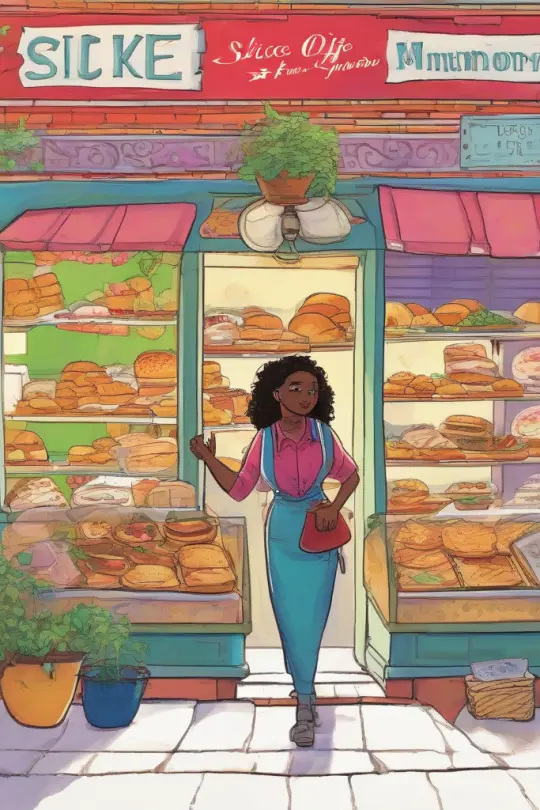
A Jar on the Windowsill
Join the conversation! Readers are sharing their thoughts:
About the Story
Maya returns to her mother's bakery to help with a short-term need only to find overlapping pressures: a job offer from the city and a building viewing that could displace the shop. The third chapter follows the open morning meant to demonstrate the bakery’s worth, the negotiations that ensue with an investor and with her employer, and the small, pragmatic compromises that weave career and belonging into a viable plan.
Chapters
Related Stories
Porchlight Mornings
Nora returns to her small hometown to help run her aunt’s café and finds the business threatened by outside offers. Torn between a city career and community commitment, she helps mobilize locals, forms a cooperative, and navigates repairs, governance, and family ties as the café seeks a sustainable future.
The Clock on Alder Street
A young watchmaker fights to save an old street clock and, in the process, discovers what it means to belong. This slice-of-life tale follows small repairs, stubborn neighbors, and a community that counts its days by a single steady hand.
Porchlight Café
Porchlight Café follows Maya Bennett as she returns to her grandmother’s neighborhood coffee shop and faces a developer’s offer. In a textured urban corner, she must marshal volunteers, mend a fragile building, and ask neighbors to bet on a shared, everyday place.
Between Repairs
Amara inherits a modest neighborhood repair shop and must choose whether to sell or keep it. Set among lemon oil and solder, she negotiates a fragile balance between a part-time office job and afternoons at the bench, building a repair circle and a community that keeps the shop alive.
Marigold Mornings
After inheriting her aunt’s small neighborhood café, Maya returns home to find the place tangled in unpaid bills, repair notices, and a tempting buyout. As she navigates community memory, storm damage, and a tense investor offer, neighbors rally to form a cooperative that fights to keep the Marigold’s mornings alive.
Shelf Life
A burned-out marketer returns to tend her aunt’s bookshop-café during recovery. As she reopens routines and stages a neighborhood event, a city job offer and an outside buyer force June to decide whether to move on or help the community marshal small, practical resources to keep the shop.
Other Stories by Edgar Mallin
Frequently Asked Questions about A Jar on the Windowsill
What is the central conflict in A Jar on the Windowsill ?
The central conflict balances Maya’s career opportunity in the city with the immediate need to protect her mother’s small bakery from potential sale. It’s a quiet, practical dilemma about belonging, timing, and responsibility.
Who are the main characters and what roles do they play in the story ?
Maya is the protagonist torn between ambition and home; Ruth is her mother and the bakery owner; Tom is a dependable neighbor; Leo runs a nearby modern bakery; Mrs. Alvarez represents longstanding community memory.
How does the open morning affect the bakery’s future in the plot ?
The open morning gathers community support, provides evidence of regular foot traffic, and convinces a potential buyer and owner’s rep to consider a short-term extension tied to measurable performance.
Can Maya keep her city job while helping at the bakery ?
Yes: Maya negotiates a hybrid arrangement. She secures a remote-start role with defined overlap hours and monthly in-person weeks, allowing her to document bakery metrics while onboarding at work.
What themes does the story explore that appeal to slice-of-life readers ?
The story examines themes of belonging versus mobility, daily rituals, community economics, intergenerational care, and the small compromises that shape adult life and local civic resilience.
How does the windowsill jar function as a symbol in the narrative ?
The jar symbolizes memory, preservation, and practical continuity. It anchors family rituals and becomes a visible token of intention when Maya and Ruth relabel it to mark their shared plan.
Ratings
I wanted to love this more than I did. The writing is pleasant and there are nice moments — the jar on the windowsill, the commuter train detail — but the chapter leans a little too heavily on familiar tropes: returning home to save a family business, the benevolent community rallying for an open morning, a reasonable investor-looking-for-genuine-roots. The negotiations feel tidy in ways that real-life deals seldom are; major practical hurdles get resolved by convenient conversations rather than substantive conflict. Maya’s dilemmas (job offer vs. bakery) are set up well but the emotional stakes aren’t pushed far enough; the compromises at the end read like a compromise for the reader rather than one earned by character strain. In short: pretty, cozy, but a touch predictable and safe.
This chapter felt like a warm afternoon spent in a familiar kitchen — comforting but with edges of real anxiety. The details are what made it sing: the old station air that ‘tasted of rain that had not yet arrived and something warm and yeasty,’ the towel over the mother’s shoulder, the thin bell, the tiny ceramic dish for lost aprons. Those images ground Maya’s interior life and make the stakes emotional as well as practical. The open morning sequence was my favorite moment: you can almost hear the clinking cups and the nervous, hopeful chatter as the community shows up. Negotiations with the investor and with Maya’s employer are handled with a realism I appreciated — compromises are messy and pragmatic rather than romantic solutions. I also liked how the story threads career ambitions and belonging together: Maya doesn’t choose one over the other so much as stitches them into a livable plan. It felt honest about what adults actually do when faced with impossible-sounding choices. A tender, smart slice-of-life that respects its characters.
Cute, warm, and full of crumbs of realism — in the best way. Loved the bell-as-secret-handshake bit and the stubborn umbrella detail (why do I feel personally judged by imaginary umbrellas?). The investor scene could’ve been a full-on boardroom thriller but opts for a slow-burn charm offensive, which fits the story’s mood. Also, the jar on the windowsill is basically peak symbolism and I’ll allow it. 😉 If you want sunshine and gentle life math about where to live and what to keep, this nails it.
I finished this chapter with a small, satisfied smile. The prose is gentle and observant — the platform feeling smaller because Maya has expanded into other shapes is such a lovely line. Scenes like the hug that’s ‘careful familiarity’ and the jar on the windowsill give the story its heartbeat. The open morning felt authentic: messy, hopeful, full of small volunteers and awkward conversations that nevertheless reveal community support. The negotiations that follow are neither villainous nor idealized; they show how real people make small pragmatic compromises. I especially liked how the author avoided a sweeping, tidy ending and instead offered a practical plan that feels earned. Very good writing.
A thoughtful little piece with strong attention to ordinary detail. The storytelling here is economical; the author prioritizes atmosphere and small moments (the chipped tin for wooden spoons, the umbrella that’s been kept for years) over melodrama, which suits the slice-of-life category perfectly. Structurally, the third chapter does a good job of juggling multiple pressures — the building viewing, the investor, and Maya’s job offer — without feeling cluttered. The negotiation scenes are understated but convincing: you get the sense that everyone is trying to balance money, memory, and viability. My one nitpick is that the investor’s motivations could be sketched a bit more distinctly; they read a touch functional. Still, the emotional logic of the compromises resonated. If you enjoy quiet, adult reckonings with home and career, this is worth your time.
This was a warm, quiet read that landed in all the right places. I loved the opening — Maya stepping off the commuter train with the stubborn little umbrella and that first waft of yeasty air. The scene at the door, the bell's thin domestic ring and her mother's floury efficiency, felt so lived-in. The jar on the windowsill with the faded label made me ache in the best way: tiny objects carrying entire histories. The chapter’s focus on the open morning and the negotiations that follow was balanced and humane — I appreciated that the resolution was about practical compromises, not a dramatic last-minute miracle. Short, intimate, and full of small comforts. Highly recommend if you like character-driven slice-of-life stories.