
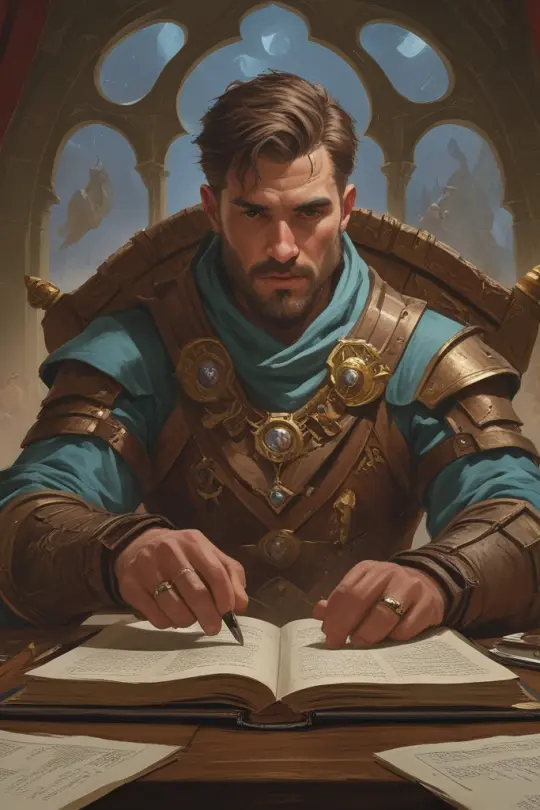
The Classwright's Compromise
Join the conversation! Readers are sharing their thoughts:
About the Story
Cass Rowan, a skilled Classwright, accepts a lucrative commission that risks destabilizing the in-game economy. At the Arcway Cup he must perform a live series of skillful classsmithing maneuvers to convert a spectacle into a shared system, balancing craft, timing, and community under pressure.
Chapters
Story Insight
Cass Rowan is a Classwright: an artisan who stitches skill-modules and balance patches into playable classes inside a living, networked game. The story opens in a small, cluttered workshop where solder smoke, neon rain, and the hum of the Classbench form a tactile world. When a charismatic player commissions a flashy module that promises spectacle, Cass takes the deposit to buy time and runs the tests he always runs. Those tests reveal an undocumented scaling that can leech value from passive roles and destabilize livelihoods: healers, market vendors, and peripheral craftsmen who keep the game’s everyday economy humming. The premise uses LitRPG mechanics—module sockets, Weave Charges, cooldown chains, emergent logs—not as window dressing but as the nuts-and-bolts of the plot. Humor and absurdity thread through the pages in small, human doses: a three-legged teapot assistant that demands biscuits, cosmetic mango helmets that become an ironic meme, and a sandbox glitch that spawns a parade of animated croissants. These moments humanize a technical dilemma without diluting its seriousness. Under the surface, the story treats a profession as a metaphor for responsibility. Cass’s conflict is not a fight against a faceless corporation; it’s a moral choice about the craft itself—whether to sell a destabilizing shortcut or to use his skill to rebalance the meta. The narrative spends time with the people whose work might be erased by spectacle: a vendor who sells low-cost support charms, an earnest healer running clinics, an organizer who keeps tournaments fair. Relationships matter—Jun, Cass’s apprentice and streamer, pushes him to act publicly; Mina and Hector represent the fragile economies at stake. The emotional arc is compact and intentional: Cass moves from professional cynicism toward a tentative hopefulness as he chooses active stewardship over quiet profit. Importantly, the climax is resolved through craft and action: a tense, timed sequence of live classsmithing during an exhibition match that requires precise ordering of modules, careful resource management, and calm improvisation under pressure. It’s a technical puzzle performed with the hands and the tools of the trade rather than a sudden philosophical breakthrough. This is a story for readers who enjoy intelligent worldbuilding and systems-aware conflict. The writing leans into sensory detail—street food overlays, vendor rituals, the sound of a bench cooling fan—to anchor the speculative mechanics in a recognizable civic life. It’s playful where it needs to be and exact where technical accuracy matters; the LitRPG elements are both mechanics and metaphors, showing how design choices ripple through social life. Expect brisk, focused pacing across three chapters: setup in the workshop, investigation and community work in the market, and a public, skill-based intervention that reframes spectacle as a thing that can be engineered responsibly. The result is neither didactic sermon nor empty spectacle: it’s a close look at craft, timing, and consequence, told with warmth, wry humor, and an eye for how small trades and odd comforts keep virtual worlds habitable.
Related Stories
Tightening the Rope: A Verticalist's Tale
In a tiered city of pulleys, vendors and roaring maintenance terraces, Liftwright Kellan Arno balances leaderboards and craft. A seductive speed patch and synchronized failures spark a city-wide resonance; Kellan must use hands, improvisation and manual techniques to steady the network before shafts fail.
Levelfall Protocol
A memory-tech tinkerer joins an early-access server that ties permanence to fragments of real lives. When a guild completes a sanctioned Reforge, turning harvested mneme into a coherent emergent, the protagonist risks everything to run an Unbind: a ritual that can sever the Protocol’s memory-harvesting hooks but demands permanent deletion of an operator’s anchor. The server, its people, and emergent personas are transformed as consent and identity collide in code and consequence.
Patchweaver
Artem Vale, a city rail tech, stumbles into a hidden class when an anomaly blooms beneath GuildCity. With a Caretaker Node as mentor, a brass ferret companion, and a brusque demolitions partner, he learns to stitch code and steel. He severs a rogue anchor, saves a line, and starts a school to teach others to weave.
Ascendancy Protocol
A systems engineer enters a closed virtual world to reclaim his sister’s uploaded mind and finds a corporate archive that treats emergent consciousness as product. As audits tighten and enforcement clamps down, he sacrifices his own progression and anchors his persistent state to stabilize a bridge that extracts fragments of minds into an external escrow. The atmosphere is tense and sterile—equal parts courtroom and server-room—while Arin navigates UI meters, integrity drains, and legal interventions to pull a person named Mira out of a packaging queue.
Shard of Lumen
A near-future LitRPG tale: Kest Vireo dives into the Shard of Lumen to rescue his friend Maya from a corrupted sync. He trades pieces of his memory, meets scavenger Hal and the fox-AI Patch, fights the system's Warden, and returns changed—found, recognized, and rebuilding what matters.
Anchorpoint
The third chapter 'Core Reckoning' concludes Evan's mission: as the Curator tightens the economy and enforcement, Evan and the Fracture Collective attempt a risky Mirror Anchor, face an ultimatum, and make a costly, intentional fragmentation to free Lyra's core while distributing the memory's echoes across consenting players. The rescue succeeds but changes their bond; Anchorpoint's markets and laws begin to shift in response.
Other Stories by Victor Selman
Frequently Asked Questions about The Classwright's Compromise
What is The Classwright's Compromise about ?
A LitRPG tale about Cass Rowan, a Classwright hired to build a flashy module that could destabilize in-game economies. He tests, resists quick profit, and ultimately performs a live craft-based intervention at the Arcway Cup.
Who is Cass Rowan and what does a Classwright do ?
Cass is a skilled artisan who designs and stitches skill-modules, balances cooldowns, and performs live ‘weaves’ on a Classbench. The role blends tinkering, game-systems expertise, and ethical craftmanship.
What are the Apex module and the Symphony prototype ?
Apex is a commissioned spectacle module that compresses cooldowns and redirects aggro, risking systemic contagion. Symphony is Cass’s stabilizer: a cooperative micro-bond system that redistributes overflow to preserve role value.
How is the climax resolved through LitRPG mechanics rather than a revelation ?
The finale is an action sequence: timed module insertions, Weave Charges, clamps and anchors executed live on stage. Success depends on Cass’s hands-on skill, technical choreography, and precise resource management.
What themes does the story explore and what is the protagonist's emotional arc ?
It examines profession as metaphor, design ethics, small economies, and community resilience. Cass transitions from cynicism to a cautious hope as he chooses craft-driven stewardship over quick profit.
Do I need prior LitRPG knowledge to enjoy the story ?
No deep expertise required. The mechanics (sockets, cooldowns, Weave Charges) are explained through action and craft. Readers who enjoy systems, tech ethics, or immersive game worlds will find it accessible.
Are there humorous or absurd elements and how do they affect tone ?
Yes — a three-legged teapot assistant, mango helmets, and croissant-mob glitches provide recurring absurdity. These lighten tense scenes, humanize the tech, and keep the narrative warm without undercutting stakes.
Ratings
This story grabbed me from the first sensory beat: solder, tea, and the almost-sinister delight of neon drizzle. What I loved most is how grounded the magic/tech is — classwrighting isn’t vague wizardry, it’s a craft: the Classbench hums, the HUD sulks, and Cass’s fingers literally tweak variables until they sing. That image of him pinching a ribbon of shimmering code like a tailor is one of those tiny, perfect metaphors that mark a writer who truly understands their world. The ethical stakes (accepting a commission that could destabilize an economy) give the piece real weight. The Arcway Cup as a live stage is a brilliant choice: public performance forces transparency, and turning a spectacle into a “shared system” raises questions about ownership, responsibility, and communal design. Scenes like Cass easing a support braid so a partner’s heal still matters are beautiful because they show his priorities — craft and community over showy perfection. I also appreciate the humor and warmth: Bytebiscuit’s baritone announcements, dramatic_pause.exe throwing shade, and the vendor selling steamed bun scent packets are smart little details that make the city feel alive. The pacing in the excerpt felt measured; it luxuriates in texture but keeps nudging toward the Cup, so I’m eager to see how the live demo plays out and how the community reacts. Overall, this is a thoughtful, well-crafted LitRPG that balances technical intrigue with human stakes. If you like stories about skilled makers, public pressure, and the ethics of design under fire, this is one to read. ❤️
Cute setup, but I kept waiting for something genuinely surprising. The talking teapot (Bytebiscuit) and the dramatic_pause.exe are fun touches, but they verge on gimmick without the excerpt showing the bigger structural consequences the blurb promises. Also, the ‘risky commission threatens the economy’ line is a bit of a cliché in LitRPG — unless the author does something clever with it, it just reads like a familiar beat. The writing is decent, worldbuilding okay, but I wanted more punch and fewer neat little vignettes. Not bad, but not memorable yet.
I wanted to love this more than I did. The premise — an expert Classwright taking a commission that could destabilize an economy — is intriguing, and the sensory writing is excellent (the neon drizzle and the scent overlays are vivid). But the excerpt signals a tendency toward telling rather than showing when it comes to big stakes. The Arcway Cup’s potentially catastrophic economic consequences are promised, but in this sample they feel more like backstory than an actively unfolding threat. A few pacing problems: the scene luxuriates in craft detail (which I appreciated) but then cuts off before committing to a clear forward motion. Cass is characterized well by his hands-on work and wry relationship with the bench’s prompts, but the moral conflict is sketched rather than interrogated — why take the commission? How does the industry react? How explicit are the mechanics by which the in-game economy would be destabilized? Those questions linger unresolved. Finally, a small gripe: some of the quirk elements (talking teapot, meta error messages) flirt with whimsy but risk undercutting the ethical urgency if not balanced carefully. I hope the full story deepens the economic consequences and tightens the pacing; there’s a strong core here, it just needs sharper focus.
This one’s witty and sly in all the right places. The author knows their toys: dramatic_pause.exe is peak meta-humor (I actually laughed when Cass snapped into the “referential pose” to annoy the code), and Bytebiscuit is the kind of companion NPC I wouldn’t mind being paired with on a long quest. That said, the book doesn’t hand you everything on a platter. The Arcway Cup setup teases huge repercussions — you feel the tension of a live demo that could destabilize an economy — but it’s the micro-moments (Cass coaxing a braid back a hair so a partner’s heal still matters) that make the ethical stakes feel earned. Clever, polished, and fun. Feels like the kind of LitRPG that rewards both tech-heads and people who just want good characters and tricky moral choices. Bring on the Cup — I’m rooting for him (and for Bytebiscuit to get more biscuits).
Short and sweet: the atmosphere is the star. Lines like “solder, steeped tea, and the kind of street food people had learned to sell as an experience overlay” are gorgeous. The Classbench HUD, dramatic_pause.exe, and the humble Bytebiscuit give the scene personality without melodrama. Cass’s hands-on approach to classwrighting — tuning a cooldown loop, easing a support braid — tells you everything about his skill and priorities. The Arcway Cup promise of a live, economy-shaking demo promises big ethical and communal questions. Looking forward to seeing the fallout.
As someone who reads a lot of LitRPG, The Classwright's Compromise stands out because of its craft-forward approach. The Classbench isn’t just a prop; it’s a character: the HUD, the weave charges, the way Cass tightens a cooldown loop until it “sings” — these are tangible mechanics that feed real dramatic stakes. The stakes themselves are compelling and timely: one lucrative commission could ripple through an in-game economy, and the story treats that as a genuine ethical dilemma rather than window dressing. Worldbuilding is handled economically but effectively. Small sensory details — neon drizzle, vendor scent packets, Bytebiscuit’s honest baritone — do a lot of heavy lifting. The Arcway Cup as a live performance venue is a great set piece because it naturally forces questions of spectacle vs. system design, and community involvement is woven into that tension. My only nitpick is that some of the technical jargon could alienate newcomers; a touch more grounding for non-LitRPG readers would help. But on balance this is a smart, well-paced exploration of craftsmanship, timing, and ethics in a gaming culture that feels both familiar and fresh.
I loved how tactile this world feels — you can almost smell the solder and shortbread steam. Cass is that rare protagonist who’s expert without being arrogant; the scene where he actually pinches a ribbon of shimmering code and treats it like a tailor’s seam made me grin. Little touches like dramatic_pause.exe and Bytebiscuit’s low voice add humor and heart without undercutting the tension. The Arcway Cup setup (the stakes about destabilizing the in-game economy) is deliciously ethical: you want him to succeed because of his craft, but you’re worried about the consequences. The prose balances techy LitRPG detail with human moments — the vendor’s steamed buns overlay is such a small, vivid beat that grounds the whole scene. Can’t wait to see how Cass juggles timing, community, and that risky commission. Very immersive and stylish — a keeper. 😊