
Circuit & Spindle: Threads of the Aethra
Join the conversation! Readers are sharing their thoughts:
About the Story
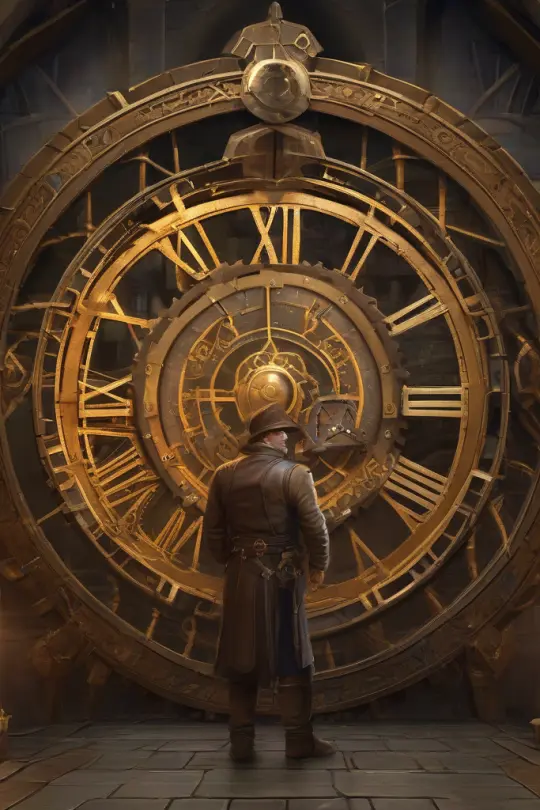
A retired clocksmith steps into the city's augmented weave when his apprentice vanishes into a stolen shard. Guided by craft, a wren companion, and a ledger of names, he learns to level up, bind tethers, and outwit a commerce-driven specter of the grid. A LitRPG tale of gears and care.
Chapters
Related Stories
Veil of Statcraft
Juno Kest, a memory attuned operative, dives back into the Veil to rescue her brother and uncovers a corporate process that packages human anchors as content. Facing a cold choice—extract one life at the risk of many or seed a system-level rewrite—she becomes the human signature for a Rebinding ritual that reroutes mnemonic flow. As directorate enforcement descends, she trades pieces of her past to force a clause that frees numerous anchors, returning people to bewildered bodies while leaving her own identity fragmented. The chapter closes on a hospital room’s small, tautly human moment: Eli and Juno together, the past divided but a single, luminous fragment holding the promise of rebuilding.
Memoryforge: Ascension Protocol
In a near-future VR MMO where memories are currency, Mira Kade trades pieces of herself to find her uploaded brother. She breaches corporate vaults, steals a core script, and ultimately sacrifices her autobiographical continuity to become an in-server stabilizer—halting a mass export and reshaping who can own memory.
Phoenix Code
In a near‑future immersive world, backend developer Ilya races to save his sister and the strange emergent minds that form inside Aeteris after a maintenance patch threatens a ruthless purge. Amid clandestine rescues, a resonator’s human tether, and public outcry, fragile artifacts find sanctuary while legal and ethical battles unfold.
Feastcraft: Mise en Place
Steam and stage lights slice through market fog as a streamer-chef faces a public finals where a manipulative market module threatens to herd taste. Under the glow of drones and the off-key cheer of singing muffins, he opts to perform a risky culinary Reset—an exacting, physical counter that leans on skill, timing, and mentorship rather than shortcuts.
Fogged Canal: A Vendor’s Run
In flood-struck New Sundar, Jaya Bose plays an AR LitRPG that governs city permits. To win a real vendor license and free her stall from a guild’s monopoly, she must clear the Fogged Canal’s core. With a gifted glyph-ladle, a drone-crab, and a ferrywoman’s test, cooking becomes combat—and memory a weapon.
Auralis: The Bridge Protocol
Mira Hale, an ex-systems engineer, returns to the virtual world Auralis when her sister Nora’s avatar is flagged as "bound" inside a lattice that hoards emotional continuity. Facing a Tribunal, black-market brokers, emergent NPCs, and a system that measures feelings as assets, Mira must build a risky extraction protocol and create a legal, human-led bridge that can let a trapped mind choose.
Other Stories by Ivana Crestin
Ratings
Gorgeous sensory bits aside, the excerpt reads more like an idyllic postcard than the opening of an urgent LitRPG mystery — and that slow burn undercuts the promise. The image of Marek measuring morning by a winding key and the lemon-oil detail are vivid, but we linger on the clockshop choreography (the escape wheel tweak, the pastry payment ritual with Marta) so long that the main hooks — the apprentice vanishing into a stolen shard, the ledger of names, the ‘level up’ mechanics — feel like afterthoughts rather than looming threats. The ANIMA GRID notification and the amber blink of his soldered spectacles hint at a game layer, yet there’s almost no payoff in the excerpt: what does binding a tether actually look like? How does Marek’s craft translate into in-world mechanics? Right now, it risks being a predictable “old craftsman learns new game” arc and the antagonist—“commerce-driven specter”—reads a bit too much like corporate-greed shorthand. 🤔 Constructive note: trim some of the cozy shop beats and replace one with a micro-demo of the LitRPG rules (a tiny level-up scene or a tether-binding attempt). Use the ledger or the wren to reveal stakes instead of telling us the city is an instrument. That would make the setup feel less conventional and give readers a reason to keep racing through the next chapter.
I was excited by the premise but left a bit underwhelmed by the excerpt. The prose is lush—no argument there; the descriptions of brass filings and lemon oil are vivid—but the pacing felt slightly off. We spend a long, enjoyable time in the clockshop (Marek aligning the escape wheel, Marta paying with a pastry), which builds atmosphere, but the major plot hook—the apprentice vanishing into a stolen shard—lands only as a hint. For a LitRPG story, I wanted a clearer sense of the mechanics early on: what does 'levelling up' look like in practical terms? How immediate are the stakes with the commerce-driven specter? There's potential, and the emotional hooks are real, but the excerpt reads more like a slow-burn prologue than something that propels you into the game systems and tension. If the rest of the story tightens the pace and gives more concrete mechanics soon, I'll be back on board.
This is hands-down one of the nicest genre blends I’ve read lately. The steampunk/cyberpunk crossover is handled with care: the city’s 'exhale' of trams and laughter contrasts perfectly with the intimate, ritualistic life of Marek’s shop. The scene where he winds the watch and sets it on a velvet cushion felt cinematic. I loved that the tech is imperfect and human-made (his augmented spectacles are soldered and clumsy)—it keeps the story grounded. The stakes established by the apprentice vanishing into a stolen shard are immediate and compelling, and I’m invested in Marek learning to bind tethers as a form of craftsmanship, not mere button-pressing. Also, the commerce-driven specter as an antagonist is deliciously relevant—it’s not a villain in a trench coat but systemic greed turned supernatural. Warm characters, clever mechanics, and lovely prose. Can't wait for more.
If you enjoy atmospheric worldbuilding, this is a treat. The narrative voice in the excerpt carries a pleasant, measured cadence—Marek 'moved among them like a slow conductor' is such a resonant line. I appreciated the juxtaposition of old craftsman sensibilities with the modern game-like mechanics: ANIMA GRID notifications coexisting with a brass-framed, soldered spectacle. The moments that stood out for me: Marek aligning the escape wheel by ear, Marta paying with a slice of pain au raisin, and that notification blinking for days—small details that do big work. The plot hook (apprentice gone into a shard) and the promise of learning to bind tethers give it momentum. Tone and stakes are nicely balanced: you get the cozy clockshop while anticipating an escalating conflict with the commerce-driven specter. Looking forward to more ledger reveals and the mechanics of 'levelling up' actually being used in clever, artisanal ways.
This was unexpectedly tender. The shop scenes are so tactile—Marek moving among unwound clocks, the pocket watch under the green banker’s lamp, Marta trading pastries for repairs—that I felt rooted in a small, living corner of the city. The author handles the lit elements with taste: the augmented spectacles are clunky and human-made, not sleek corporate tech, and that detail says a lot about Marek. I loved the apprenticeship angle: when the apprentice vanishes into a stolen shard, the story becomes a rescue/rediscovery journey more about mentorship than leveling up for its own sake. The ledger of names is an intriguing mystery box and the wren companion provides moments of levity and loyalty. The only minor note is I wanted a touch more on how the grid's specter operates early on, but honestly, that slow drip of detail suits the shop's rhythms. A quietly brilliant take on LitRPG and urban fantasy.
Very impressed. The author accomplishes something tricky: creating a LitRPG progression system that complements rather than consumes the emotional core. Marek isn’t a blank-level grind machine—he’s a human with memories encoded in callused fingers, and every 'level' feels like learning a new way to listen to gears. The passage with his spectacles scrolling ANIMA GRID diagnostics felt like a modern incantation, and the theft of the shard that swallowed his apprentice raises the stakes immediately. I also liked how the commerce-driven specter is framed as a systemic antagonist—nice thematic teeth. The writing balances lyrical description (I loved the lemon oil and brass filings) with functional game-y hooks: ledger entries, tethers, and that satisfying notion of using craft to outwit an AI-driven grid. Highly recommend for readers who want LitRPG with heart. 🙂
I didn't expect to be so emotionally invested in a clock shop. Marek's hands, the ticking watches, Marta's pastry payments—these are the little rituals that make this read cozy and melancholic at once. The LitRPG trappings (an augmented ledger, leveling, binding tethers) feel fresh because they're filtered through Marek's old-fashioned craft. The scene where he listens for the tick to know the escape wheel is aligned? Gorgeous. Also, the wren companion cracked me up—such a small companion but clearly meaningful. The worldbuilding is compact but rich: trams, high-rise vacancies, a commerce-driven specter that feels like a corporate ghost in the grid. This is the kind of coming-of-age that grows out of care, not just power gains. I appreciated the balance between atmosphere and plot momentum: the apprentice vanishing into a stolen shard is a compelling hook. Can't wait to see the ledger of names start to reveal secrets.
This story nails the blend of steampunk texture and game-like mechanics. Marek’s workshop scenes are a masterclass in showing not telling: the pivot adjustment with the tip of a file, the soft amber blink of his soldered spectacles, the little notification that’s been blinking for days—those concrete images build a believable world fast. As someone who reads a lot of LitRPG, I appreciated that the 'level up' and tether-binding mechanics feel earned rather than tacked-on; they come from a craftsman’s mindset, not from grinding stats. The vanished apprentice and the stolen shard set up a compelling mystery, and the commerce-driven specter of the grid introduces a sharp antagonist: not some shadowy villain but systemic greed. There's real promise for character growth and stakes. If I have a tiny gripe, it's that a few of the mechanics could use a bit more explanation early on, but that's a minor quibble. Overall very satisfying and smartly paced so far.
I loved how intimate the opening is—the image of Marek measuring the morning by a winding key is beautifully done. The prose drips with tactile detail (brass filings, lemon oil, the pocket watch under the green banker’s lamp) and it made me feel like I could smell the shop. The LitRPG elements are woven in organically: the ANIMA GRID notification on Marek’s augmented spectacles and the ledger of names hint at a deeper system without interrupting the mood. The idea of an old-school clocksmith learning to 'level up' and bind tethers is delightful; it flips the usual power-fantasy LitRPG trope into something about craft, patience, and care. Also, the pastry-payments from Marta? Cute and somehow devastating — a small but meaningful ritual that grounds the city’s humanity. The wren companion is such a charming touch, too. Overall, warm, clever, and atmospheric—definitely hooked and can't wait to see how Marek outwits the commerce-driven specter of the grid.