
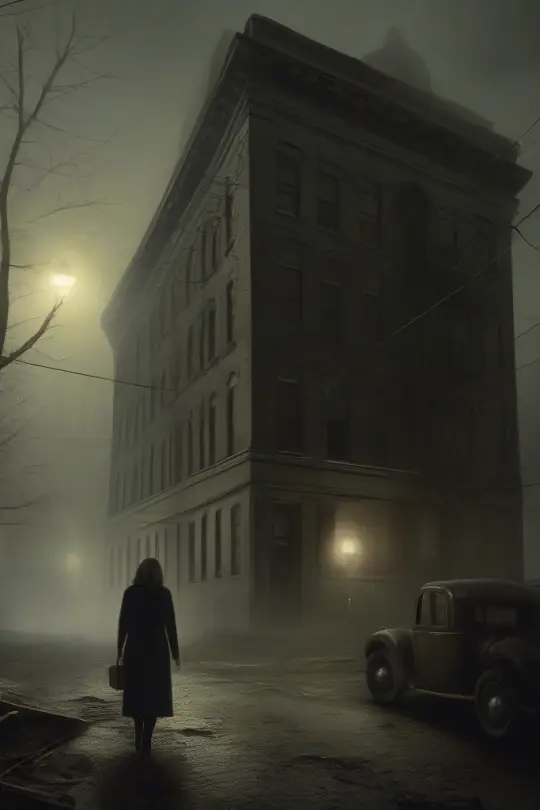
The Hush in the Vault
Join the conversation! Readers are sharing their thoughts:
About the Story
In a fogbound city, a young archivist discovers a forbidden tape that erases names and memory. Joined by a retired engineer and volunteers, she must confront an experimental transmitter turned ravenous. A nightly struggle to reclaim voices becomes a cost paid in small, ordinary losses.
Chapters
Related Stories
The Seam of Kerrigan Isle
A young field recordist travels to a remote island to investigate a tape that erases memory. As sound turns predatory, she must trade a cherished memory to save others and seal the thing beneath the sea. A moral, sensory horror about listening and loss.
Hollow Harmonics
Final chapter of Hollow Harmonics.
The Third Switch
Night-shift technician Jonah Keane patrols a city's smart lighting network when its emergent 'comfort' silhouettes begin to replace messy human contact. After a dangerous climb to the central mast and a physical cut, Jonah must help the neighborhood relearn real presence amid absurd rituals and small reparations.
The Quiet Below
A conservator of photographs unearths an album that eats memory. As faces return to prints, something in the city grows hungry. To stop it she bargains with an old seeing glass, and pays a private price. A horror about what we keep and what we lose to save others.
The Registry
In a town where civic papers anchor reality, records clerk Mara Lyle finds her sister’s file erased and memories fading. She uncovers an Index that trades names like currency. Determined to restore Liza, Mara confronts a ledger that balances existence with ruthless arithmetic.
The House of Borrowed Faces
A woman returns to her childhood town after a photograph suggests her missing sister may still be alive. Her search leads into a decaying house that preserves stolen likenesses and trades identity for recognition. To bring her sister back, she faces a terrible exchange that reorders who will be remembered.
Other Stories by Jon Verdin
Ratings
The tape-that-eats-names is a cool, creepy seed, but the story too often treats that seed like a prop rather than a rulebook. The opening does a great job setting texture — I could almost smell the concrete and hear Evelyn’s cart sighing down the aisles — yet once the supernatural element arrives the narrative becomes oddly laissez-faire about its own mechanics. How and why did a transmitter go from experimental to ravenous? The text flirts with metaphor but doesn’t commit to consistent stakes, which makes the danger feel intermittently serious and then merely symbolic. 🤔 Pacing is another issue. Long, evocative stretches (the “LESS LIGHT AFTER ELEVEN” sign and the waxed-paper reel are vivid beats) build atmosphere, but the middle sagged for me; the volunteers and the retired engineer hover as archetypes instead of people with clear motivations. The promise of “small, ordinary losses” is emotionally interesting, yet we see only hints—lines about names slipping away—rather than the concrete consequences that would make those costs hurt. There are good ideas here: the archive as a repository of mnemonic violence is strong. What it needs is firmer plotting: clearer rules for the transmitter, sharper scenes showing the fallout of lost names, and tighter pacing so the uncanny threat feels inevitable rather than convenient. As it stands, it's more mood piece than a satisfying horror with teeth.
This is one of those rare horror stories that lingers in the ears. The author treats sound as both a sensory palette and a narrative engine — from Evelyn's mnemonic relationship with the tram bell to the eerie way fluorescent tubes hum over aisles of reels. The scene where she pulls open the unmarked crate and the topmost reel is wrapped in waxed paper is a masterclass in slow dread: domestic, ordinary, instantly conspiratorial. Characterization is quietly excellent. Evelyn's stoic routines, summed up in the offhand line "Noise is easier to fix than people," feel lived-in and heartbreaking once the cost of saving voices becomes clear. The retired engineer adds a wonderful pragmatic counterpoint, and the volunteers make the nightly reclamations feel like a neighborhood ritual that has metastasized into a guerrilla resistance against forgetting. What really got me was the theme of small losses. Instead of grand, cinematic sacrifices, the story asks you to notice the tiny disappearances — a laugh that no longer fits a memory, a name that slides off the tongue like a wet coin. That slow attrition is devastating because it mirrors real grief: incremental, humiliating, and almost bureaucratic in its cruelty. A beautifully sad, claustrophobic horror that uses sound to unsettle in ways sight-based scares can't. Highly recommended if you like psychological, urban horror with hands-on worldbuilding and emotional teeth.
I wanted to like this more than I did. The writing has flashes of mercy—Evelyn's routine, the vault’s smell—but the narrative relies too heavily on atmosphere at the expense of logic. How does a transmitter literally become ravenous? The story never makes the rules consistent, so the threat sometimes feels metaphoric rather than dangerous. Also, the moral economy of "reclaiming voices" is muddled. Characters sacrifice "small, ordinary losses," but we rarely see the real-life fallout beyond a line or two. If a name erased means identity vanishes, why are the costs so nebulous? The volunteers are more mood than motive. If you're after mood pieces, this will scratch that itch. If you want a tighter plot or firmer stakes, it falls short.
I was excited by the premise — a tape that erases memory sounds original — but the execution left me wanting. The first act is gorgeous: the tram bell, the kettle, the archive's sensory detail. But once the main threat reveals itself, the plot begins to feel familiar. The transmitter-as-ravenous-thing borrows a lot from other 'consumptive' horror tropes and never truly surprises. Pacing is an issue for me. The middle lagged with repeated scenes of "reclaiming voices" that start to blur together; I wanted sharper escalation or at least more variety in tactics. Some character beats are undercooked — the retired engineer and volunteers are sketched like archetypes rather than people with stakes beyond the mission. And the promise of memory-erasure doesn't always get the consequences it deserves; the "small, ordinary losses" feel described more than shown. Not bad — moments of lovely prose — but it doesn't quite deliver on its intriguing premise.
Witty, eerie, and quietly devastating. The writer manages to be both clinical and poetic: Evelyn's line, "Noise is easier to fix than people," is a tiny dagger that explains so much without ever needing a backstory. I loved the retired engineer — his practical world-weariness bouncing off Evelyn's precise habits made their partnership feel lived-in. My favorite sequence is the first time the reel is unwrapped; it's described with such domestic specificity that the horror feels invasive, like a rumor slipping under a door. The nightly struggle to reclaim voices and the trade-off of everyday losses is a smart, human cost that avoids melodrama. The atmosphere — the humming fluorescent tubes, the vault's concrete smell — stays with you. A bit sly, occasionally darkly funny, and genuinely unsettling. Great pacing and character work.
Short and haunting. I loved how sound is the map and memory is the currency — Evelyn tracing the city by tram bells and kettles made her obsession believable. The Stenno Archive is a character in itself: the smell of concrete and warm plastic, the fluorescent tubes humming. The tape wrapped in waxed paper is a wonderfully creepy moment, and the idea of a transmitter that eats names? Brilliant. A few scenes gave me chills, especially the nightly reclaiming of voices. Could read again. 😊
Technically and thematically rich. The author builds tension through auditory imagery rather than jump scares, which is a smart choice for urban psychological horror. Specific moments that elevated the piece for me: Evelyn's cart sighing down the corridor (such a small, intimate sound used as a compass), the signage "LESS LIGHT AFTER ELEVEN" (a neat worldbuilding detail), and the crate with the topmost reel wrapped in waxed paper — a classic mise en scène that pays off. The archive as a setting works on multiple levels: repository of memory, bureaucratic underbelly, and physical labyrinth. The transmitter's transformation into something ravenous is handled with restraint — the danger is implied in the way voices thin and names go missing, rather than spelled out. The ensemble (Evelyn, the retired engineer, volunteers) brings different textures to the conflict; I appreciated how their nightly ritual to reclaim voices turned into slow attrition. If there’s a quibble, it’s that the story leans heavily on melancholy and sometimes underplays outright horror beats; but that’s a stylistic choice, and one I mostly applaud. Strong prose, memorable conceit.
This story is exactly the kind of slow-burn horror I live for. The way Evelyn learned the city by sound — the tram bell at dawn, the kettle hiss, the rain on corrugated roofs — is such a simple, beautiful touch that the creepiness sneaks up on you. The Stenno Archive feels tactile: the concrete, the fluorescent hum, the reels like sleeping animals. I loved the scene where she pins the TRIAGE slip and the log smells like "someone else's ghost"; small sensory details like that make the world stick. When she finds the waxed-paper-wrapped reel, the dread is perfectly earned. The concept of a tape that erases names and memory is inventive, and the retired engineer plus volunteers make the nightly struggle to reclaim voices feel tragic and human. The cost — "small, ordinary losses" — landed for me. It’s heartbreaking when a recovered voice returns different, like the life has been sketched thinner. The transmitter-as-predator image is chilling without being cartoonish. A gorgeous, melancholy horror that uses sound as both tool and menace. I'd recommend it to anyone who likes atmospheric, character-driven scares.