
The Gearwright's Grace
Join the conversation! Readers are sharing their thoughts:
About the Story
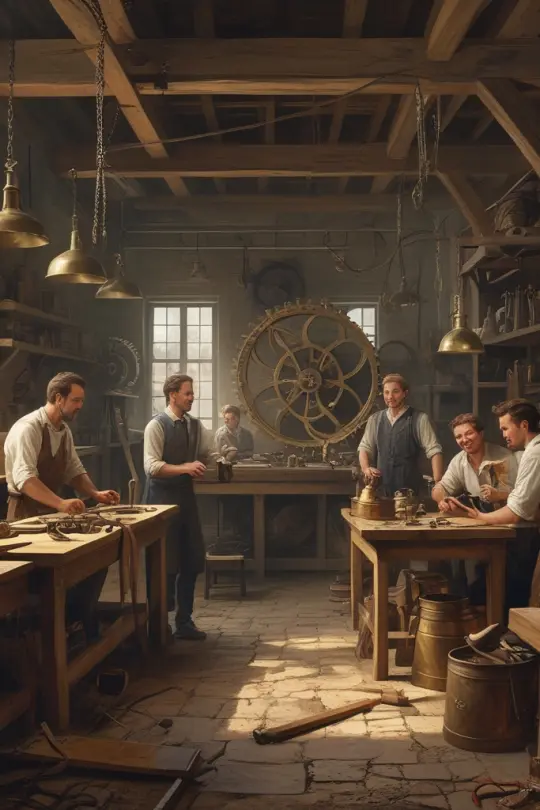
In a mid-19th-century town, a skilled gearwright faces a choice between crafting a singular showpiece for fame and scaling a practical design to restore many lives. The workshop hums with brass, laughter and small crises as hands, apprentices and a mischievous brass parrot reshape the measure of success.
Chapters
Story Insight
The Gearwright’s Grace opens in a mid‑19th‑century workshop where the small, exacting gestures of a craftsman shape the lives of a provincial town. Jonas Meret is a gearwright whose day is measured by the lathe’s whir and the bite of a file; his work ranges from clockwork finesse to prosthetic wrists and fingers. When a celebrated veteran offers him a public commission—an ornate, showpiece hand for the theatre’s opening—Jonas faces a practical and moral dilemma: pour his skill into one celebrated object, or adapt his methods into a simpler, repeatable design that could restore agency to many injured townspeople. The story is full of tactile, historically grounded detail—the hiss of forged steel, the geometry of a ratchet, the composition of stage ropes—balanced with human warmth and light absurdity. Margot, his irreverent apprentice; Sister Beatrix, the infirmary’s pragmatic head; Pascal, the theatre stagehand; and an insistent brass parrot that interrupts solemn moments with recipes and applause all populate the shop and the plot with distinct, grounded life. Scenes linger on craft as practice: tempering plates in a brick trough, setting dies at a stamping press, improvising a friction brake from leather and a bolt. Those specifics give the narrative an experienced, hands‑on feel rather than abstract moralizing. At its heart, the book explores how a profession can be a moral compass. The central conflict is a personal, technical choice rather than a courtroom or political battle: whether innovation serves spectacle or sustenance. The emotional arc moves from hungry ambition toward a steadier acceptance of belonging and responsibility; humor and absurdity undercut the pressure—like a prototype finger that hilariously snatches an opera program or a parrot applauding at inconvenient moments—so the drama never becomes merely grim. A sharp, practical crisis—staged as a sudden theatre fire—forces decisions to be settled by action. The climactic moments hinge on application of mechanical knowledge: block and tackle logic, carefully braked lifts, and emergency bracing using the very modules intended for prosthetic use. Those sequences are rendered with clear, confident technical insight, giving the resolution weight and plausibility without reducing it to spectacle. This four‑chapter tale will appeal to readers who enjoy intimate historical settings, vivid descriptions of making, and moral questions that are answered by doing as much as by thinking. It treats tools and trade as language: every hinge, tooth and rivet communicates a choice. The prose is attentive to texture and rhythm—metal under heat, the smell of coal and lavender, the social life of a small town—so the reader experiences craft as both material and metaphor. The book balances quiet, instructive passages on technique with moments of communal humor and rescue, offering a humane portrait of apprenticeship, community, and what it looks like to turn skill into service. For anyone curious about how everyday ingenuity can transform ordinary lives, this story delivers a grounded, believable journey through skill, obligation and the small, stubborn work of making things that matter.
Related Stories
The Engraver of Thorne Hall
In 1840s England an apprentice engraver uncovers a rubbed heraldic seal and a child's token that point to a missing heir and a quiet conspiracy. With a small band of helpers, an eccentric lensmaker and a retired captain, he fights to restore a name and a house using craft, courage and stubborn proof.
Embers on the Left Bank
In spring 1871, a seamstress on Paris's Left Bank turns her craft into concealment when a packet of urgent papers arrives. As bombardment and smoke sweep the streets, she must shelter testimony inside garments and decide what to save when the barricades fall—an intimate portrait of survival in a city undone by conflict.
The Hands That Deliver
In rain-soaked Little Bramble a midwife faces a rupture that won't wait for a city surgeon. Nell Finch marshals skill, improvisation and the messy humanity of a household—goat and goose included—to staunch bleeding, deliver a child and stitch a life back together, while an apprenticeship offer waits like a coin in her pocket.
The Cartographer of Saint-Malo
In mid‑18th century Saint‑Malo, Eloise Fournier, an apprentice mapmaker, must outwit smugglers who harvest wrecks by snuffing coastal lights. With a makeshift binnacle, an old surveyor, and a retired lieutenant, she turns instruments and ledger into proof, saving her town and earning recognition.
The Last Croft
In the waning days of the Highland Clearances, Aileen MacTaggart brings a fragile indenture to challenge an estate sale that threatens her family’s croft. Legal filings, a divided township, and a factor’s uneasy aid set a race for documents that will buy time and demand costly choices.
The Hook Above the Counter
London, 1666: as fire spreads from Pudding Lane, Eliza Hart, a candlemaker’s daughter, seizes a firehook and the river’s help to fight for her street and her future. With a shipwright’s guidance and a waterman’s oars, she faces an alderman’s obstruction, rescues neighbors, and returns to rebuild—claiming her own name in a city remade.
Other Stories by Liora Fennet
Frequently Asked Questions about The Gearwright's Grace
What is The Gearwright's Grace about and which central conflict drives the plot ?
The Gearwright's Grace follows Jonas Meret, a mid‑19th‑century gearwright torn between crafting a single ornate prosthetic for public acclaim and developing a practical, repeatable design to help many townspeople.
Who is Jonas Meret and what role does his craft play in the story ?
Jonas Meret is a seasoned artisan whose technical skills with gears, ratchets and tempering anchor the plot. His workshop practice provides both the story's moral dilemma and its practical resolutions.
Is the historical setting in The Gearwright's Grace based on real mid‑19th‑century technology and culture ?
Yes. The narrative uses believable period details—clockwork escapements, rope blocks, hemp rigging, stamping presses and tempering methods—rendered with tactile specificity rather than modern anachronism.
How does the story resolve the moral dilemma between making a showpiece and building accessible prosthetics ?
Resolution comes through action: a theatre fire forces Jonas to improvise lifts, friction brakes and modular braces. His hands‑on solutions demonstrate how craftsmanship can scale to save lives, not merely impress.
What tone and emotional arc can readers expect from The Gearwright's Grace ?
Expect an intimate, grounded tone that balances technical detail with warmth. The emotional arc moves from ambition and hunger for renown toward steady acceptance, community responsibility and quiet pride.
Are there elements of humor or absurdity in the book, and how are they balanced with the drama ?
Yes. Comic beats—like a brass parrot reciting recipes or a prototype finger seizing an opera program—punctuate tense scenes, humanizing characters while keeping the focus on practical stakes and moral choices.
Ratings
I wanted to love this more than I did. The setting and descriptions are lovely — the bakery smell, the lathe’s hiss, the swarf curling — but the central moral conflict feels a touch too tidy. From early on it’s pretty clear which path Jonas will take, so the tension never quite lands; the big choice is foreshadowed to the point of predictability. Characters are likable, especially Margot and her brass parrot, but they sometimes feel like archetypes rather than fully realized people. The parrot’s antics (the town crier interruption in the library) read as charming the first time but then verge on gimmicky, undermining the more serious moments—like Marek’s wrist joint, which the prose treats with reverence but without enough emotional build-up. Pacing is uneven: exquisite attention is paid to craft details but the broader plot beats skim by. For readers who delight in atmospherics and technical descriptions, there’s a lot to enjoy. If you want a story with sharper dramatic surprises, you might find this one a little safe.
Charming, warm, and full of brass-scented affection — this one stuck with me. The workshop scenes are my favorite kind of cozy industrial drama: not romanticized smoke-and-iron grit, but the honest, greasy joy of making things right. Margot’s banter ("I’ll tune it into a funeral march") is comic gold, and that little brass parrot is a brilliant piece of mischief — the scene where it blares the town crier mid-sermon and everyone drops their knitting had me grinning for a good while. 😂 What really sells the book is its moral center. The choice Jonas faces between a showpiece that would make him a name and a pragmatic design that could restore countless lives is handled without shouting. You can feel the stakes in the hum of the lathe and the way apprentices watch, learning hands-first. The ending (no spoilers) felt earned, not manipulative — it respects the reader and the workmanship alike. If you love slow-build character work, mentorship, and a community that feels real, this is an absolute treat.
Short and lovely. The opening paragraph actually made me slow down and breathe; it’s rare to find prose that renders routine work as almost liturgical. Jonas’s attention to the wrist joint for Marek is affecting without being overwrought, and Margot’s spark keeps things human. The brass parrot is a perfect, whimsical touch. Overall, a quiet, humane story about what it means to build a life (and a machine) well.
Beautifully observed and satisfyingly tactile. The prose earns its subject: passages about the lathe, the hiss of the file, and the ribbon of swarf are full of wonderful specificity and show a real love of mechanics. I appreciated how the author uses small domestic details—the baker’s cart, the library lady’s dropped knitting—to ground the larger ethical choice Jonas faces. The moral dilemma is handled with restraint. The temptation of the showpiece is convincing because we see the world that wants it: fame, notice, a single perfect object. But the quieter option—designing something that restores people like Marek—carries weight because of the characters invested in it. Margot is a delight (her banter and practical tinkering make the workshop feel lived-in), and the brass parrot is a clever recurring motif that both lightens the tone and highlights how artifice can have consequences. If you like historical fiction that privileges craft and community over melodrama, this is a lovely, thoughtful read.
I adored this — quietly perfect. The workshop is written so sensorially that I could smell the clove and butter, feel the warmth of the lathe, and hear the tiny ribbon of swarf curl away. Jonas is the kind of protagonist who lives in his hands: the scenes where he wakes the lathe and listens to the metal are small and holy. Margot steals nearly every scene with that one-eye grin and the way she improves the brass parrot’s ‘lung’ (that bit where the parrot pipes the town crier in the middle of the library lady’s sermon had me laughing out loud). What really got me was the moral heart: the tug between crafting a singular showpiece for glory and scaling a humble device to restore many lives. The wrist joint for old Marek—measured, broached, shaped—felt like the soul of the whole book. The author balances craft, mentorship, and community so deftly; you believe the apprentices, the small crises, the laughter. A warm, precise story about what success should mean. Highly recommended. 😊