
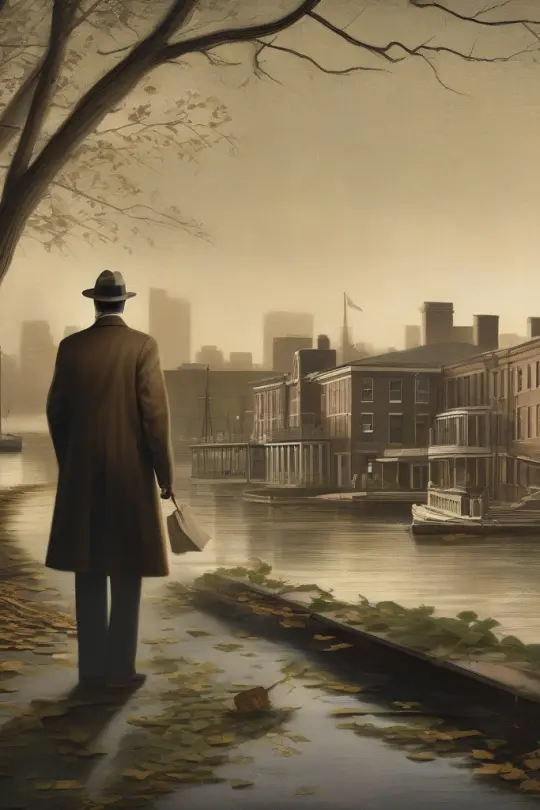
The Archivist's Cipher
Join the conversation! Readers are sharing their thoughts:
About the Story
Detective Claire Archer investigates the suspicious death of a municipal archivist and discovers a missing ledger leaf tied to waterfront redevelopment deals. A web of donors, consultants, and municipal figures is revealed through microdots, microfilm, and forensic conservation, forcing legal and personal reckonings.
Chapters
Related Stories
The Record Keeper
Detective Nora Vale investigates the death of an archivist and uncovers a web of transfers tied to a 1999 collapse; a timed archive release and coordinated legal action expose municipal collusion and powerful developers. The public release forces accountability while revealing complicated family legacies.
Shadow on the Pier
Fog hangs over the harbor when an archivist is found dead clutching an old photograph. Former investigator Elena Morozova follows brittle ledgers, damaged footage and a brother’s secret letter. In a small coastal town, each recovered document pulls a dangerous past back into view.
The Worn Wedge
A forensic restorer discovers a typographic signature linking missing-person flyers to a redevelopment conspiracy. Tracing ink, paper and a customized press, he gathers evidence, confronts danger, and forces a city to answer—revealing names meant to be erased.
The Memory Birds
In Grayhaven, an ex-investigator with an uncanny ability to read memory through scent must unravel a cluster of disappearances tied to wooden carriers and a perfumer-scientist’s attempt to bottle lost lives. A detective story about grief, ethics, and the small things we keep.
Keywork
Elliot Nyland, a locksmith-turned-investigator, moves through a city heavy with kiln smoke and fried fish stalls to a service corridor where a jury‑rigged device threatens to seal a studio. Confronting the culprit in a cramped elevator shaft, he uses his craft to neutralize the trap, protect an innocent, and anchor his place in the neighborhood.
The Fifth Witness
A homicide detective uncovers a decades-old cover-up when an archivist is murdered and witnesses connected to a 1999 accident are silenced. As audio evidence, a hospital bracelet, and tampered depositions surface, investigations reach into City Hall and powerful families, bringing arrests, public hearings, and fragile reckonings.
Other Stories by Roland Erven
Frequently Asked Questions about The Archivist's Cipher
Who is Detective Claire Archer and what role does she play in The Archivist's Cipher ?
Claire Archer is a forensic-minded detective with book conservation knowledge. She uncovers a missing ledger leaf, linking an archivist’s death to municipal corruption and leads the investigation.
What is the missing ledger leaf and why is it central to the plot of The Archivist's Cipher ?
The missing leaf contains coded entries tying donors to waterfront parcel reassignments. Its removal hides evidence of covert deals, making it the key motive and forensic focus.
How do microdots, microfilm and conservation forensics drive the investigation in the story ?
Microdots point to hidden storage, microfilm reveals archived transaction records, and conservation forensics matches tool marks and adhesives to actors, forming admissible links.
Which institutions and characters are implicated in the Harbor Light redevelopment scandal ?
The scandal involves the Municipal Archives, the Harbor Light Foundation, contractors, donors, Director Lydia Merritt, and Councilman Jonah Everest, all tied by financial and access trails.
How does The Archivist's Cipher balance legal procedure with personal stakes for the protagonist ?
The narrative weaves legal subpoenas, raids, and forensic authentication with Claire’s family ties—her sister the planner and her father’s conservator legacy—raising ethical costs.
Is the resolution of the archivist’s death definitive in The Archivist's Cipher and are loose ends left for readers ?
The legal outcome brings arrests and reforms, but the story leaves a final scrap hinting at deeper mysteries—closure on prosecutions, yet archival secrets remain.
Ratings
The opening is atmospheric — Claire arriving before dawn, the scent of old paper, Thomas Hale slumped at the table — but the central mystery unravels itself too eagerly. Once the ledger’s missing leaf is revealed, the plot quickly becomes a checklist of expected municipal-thriller beats: quiet pressure from the director, an obliging cop who knows “which elbows to rub,” and the inevitable microdot/microfilm reveal. It felt less like discovery and more like ticking off clichés. Pacing is the main problem. Rich, tactile details about archives and conservation promise depth, but many pages stall in procedural description while the actual stakes and character motivations remain undercooked. For example, the coroner’s rapid “accidental fall” ruling and the ledger’s cleanly torn leaf are treated as obvious red flags, yet the narrative never makes the forensic timeline plausible — who missed the missing page until Claire happens along? How did microdots survive routine handling without anyone noticing? Those gaps force the reader to accept coincidences rather than be convinced by them. I also wanted stronger consequences. The teaser of legal and personal reckonings at the end feels inevitable but thinly justified; the emotional payoff doesn’t land because the relationships and power dynamics weren’t fully earned. Good atmosphere, interesting procedural tools, but the mystery itself plays like a map you can see too clearly from the start. Tighten the motive work, fix a few plot conveniences, and this could have real teeth.
Not bad, but felt a bit like reading municipal red tape with a magnifying glass. The archivist’s death is moody—love the image of Thomas Hale on the floor with his ledger—but after that the story gets lost in microfilm minutiae and meetings where people say things like ‘avoid unwarranted headlines.’ I get the critique of corruption, but the villains are more ‘system’ than individual, which is fine except the payoff is underwhelming. Felt predictable: missing ledger leaf -> hidden donors -> redevelopment scandal. No real twists I didn’t see coming. That said, the writing is competent and the archival details are neat. Fans of procedural realism will enjoy it. Me? I wanted sharper edges and a less polite ending.
I wanted to love this more than I did. The premise—an archivist’s suspicious death and a missing ledger leaf tied to waterfront redevelopment—is promising, and the forensic details about microdots and conservation are interesting. But the pacing felt uneven. The opening is strong, but the middle slows into exposition about donor lists and municipal bureaucracy that often reads like an academic paper rather than a thriller. Scenes that should crackle—like Claire deducing the significance of the torn leaf or confronting the director—are handled a tad too politely, losing emotional punch. There are also a few conveniences: a perfectly timed discovery in a conservation lab, a revelation that ties too neatly to a single suspect. I didn’t feel the moral reckonings land as hard as they could have. If you prefer slow-burn, detail-heavy mysteries, you’ll appreciate it; if you want a propulsive whodunit, this may leave you wanting more.
Atmosphere is the real star here. From the fluorescent hum of the municipal vestibule to the hush of the oak-lined vault, the author builds a space that feels lived-in and a little hostile. Claire Archer’s methodical reading of physical objects—the ledger’s torn leaf, the way a ladder is left—makes for a detective story that’s tactile rather than flashy. I liked the slower reveals: microfilm reels turned over in a dim conservation lab, microdots revealed under magnification, and the discreet pressure the director applies to keep things quiet. The legal and personal consequences at the end are satisfying because they grow organically from the evidence rather than from melodramatic confession. A thoughtful, restrained detective tale that lingers after you finish.
Okay, this one hooked me fast. That line about the civic center calling itself “transparent civic service” and Claire thinking it sounded bitter—chef’s kiss. Love a book that’s quietly angry. The scene with Thomas Hale—glasses askew, a ladder jammed under the table—is so cinematic I could see it like a short film. The ledger missing a final leaf is delicious: simple, tactile, and screaming coverup. Also, microdots. Microfilm. Forensic paper conservation. I yelled at my book (in a good way) when Claire finds the tiny dot that unravels a donor’s name. The municipal players reading like satin suits who smile while they bleed the waterfront redevelopment project dry? Perfect. Snarky, smart, and with real heart—plus a detective who refuses to let an archiving system keep secrets. Would read more in this setting. 😊
An engrossing procedural with a civic conscience. I appreciated how the story treats archives as characters in their own right: the Special Collections room, the smell of glue and dust, the battered green ledger with a torn final leaf—these are not mere set dressing but the mechanisms of the mystery. Claire’s investigative instincts are portrayed with clarity; the moment she notes the ledger opened to the end and the missing leaf is a believable turning point. The inclusion of technical elements—microdots hidden in donor records, microfilm reels, and forensic conservation exams—lends authenticity. The subplot about waterfront redevelopment and the tangle of donors and consultants feels very timely, and the author resists easy villains, exposing instead a system that incentivizes opacity. This is detective fiction that rewards attention to detail and patience. Highly recommended for readers who like their mysteries grounded in procedure and civic complexity.
Measured, atmospheric, and satisfying. The author does an excellent job avoiding melodrama; the opening—Claire arriving before dawn, the coroner’s “accidental fall” and Thomas Hale’s ledger missing its final leaf—is economical but evocative. I appreciated the restraint in the prose and the procedural accuracy around archival practice: the oak shelving, the way microfilm and microdots are handled, and the forensics of paper conservation. Those details anchor the bigger conspiracy about waterfront redevelopment and municipal donors without bogging down the narrative. Characters are well-drawn in small strokes—Ryan Cole’s weary pragmatism, the director’s protective stance over civic reputation, and Claire’s quiet insistence on facts. Pacing tightens as clues accumulate, and the legal/personal reckonings that follow feel plausible. If you want flash, this isn’t it; if you want a smart, craft-forward detective who reads the margins as well as the headlines, this one delivers.
I couldn’t put this down. The Archivist’s Cipher reads like a love letter to archives and a cold-blooded municipal thriller all at once. Claire Archer’s first steps into the Special Collections room—before the morning light, the smell of old paper, the ladder abandoned mid-fall—are described so vividly I felt the dust in my throat. The missing ledger leaf is such a beautifully simple but devastating clue: that tiny absence changes everything. I loved the forensic details (microdots, microfilm, conservation work) — they add real texture and make the plot feel earned, not just contrived. The scene where Claire pieces together donor names with redevelopment maps had me whispering, “Of course,” and the moral reckonings at the end felt inevitable and human. Ryan Cole’s quiet deference and the director’s plea to avoid headlines created a tense political backdrop that made every small discovery matter. Emotional, smart, and quietly furious about corruption—exactly what a detective story should be.