
Squeegees and Skylines
Join the conversation! Readers are sharing their thoughts:
About the Story
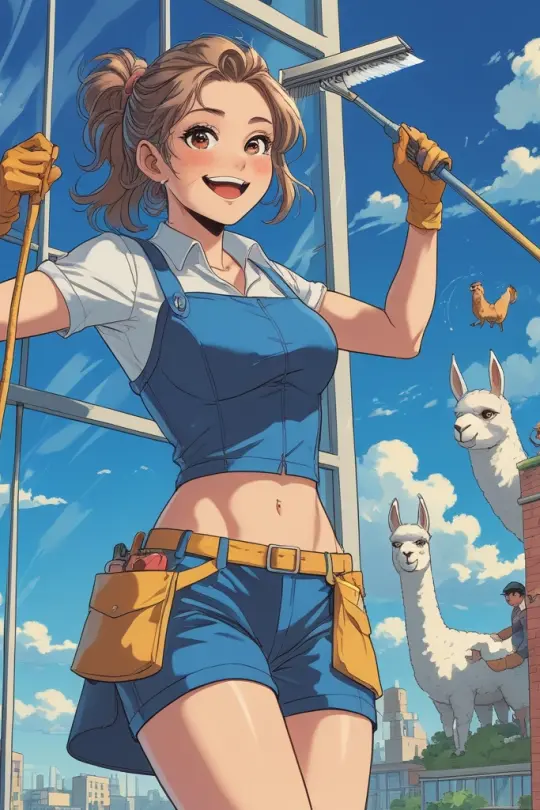
On a sunlit morning a high-rise window cleaner captures a viral-ready moment: an inflatable llama, a child’s salute, and a private exchange. Pressured to post, she instead uses her ropework and timing to save stranded neighbors and turn spectacle into a messy, communal celebration.
Chapters
Story Insight
Squeegees and Skylines follows Juno Tate, a high-rise window cleaner whose work leaves her literally suspended between people’s private moments and the city’s public life. On a bright morning she captures a fleeting scene — an escaped parade inflatable, a boy’s earnest salute, and a quiet exchange on a balcony — and her friend urges her to post the clip. What begins as a charming urban vignette escalates into a debate about attention, consent, and community when the footage drifts beyond their block. The novel uses Juno’s job as more than a setting: the rituals of harnesses, knots, and squeegee strokes become a practical and symbolic vocabulary that shapes how she sees others and how she intervenes. The comic elements are frequent and affectionate: an inflatable llama that gets theatrically lodged, a pigeons’ picket with tiny cardboard signs, Mr. Alvarez the accordionist who treats every stairwell like a stage, and a communal cat named Sir Marmalade with clear opinions. These touches give the city a lived-in texture — dumpling vendors with shouted specials, neighbors who line rooftops for sprinkler tests, and the small, domestic choreography of a block learning to look after itself. This short, sharply observed tale blends light absurdity with grounded emotional stakes. The plot pivots around a moral knot — whether to monetize the private slice of life or protect the dignity of the people captured — and it keeps the tension focused on everyday decisions and craft-based solutions rather than grand conspiracies. The writing balances quick, physical comedy with quieter moments of care: Juno’s hands tightening anchors, checking bolts, or explaining harness straps to a buoyant child; her voice is pragmatic, wry, and quietly compassionate. The story’s structure moves deliberately through setup, complication, and resolution in three intimate chapters, each one built around a clear dramatic purpose. The decisive moment in the story resolves through action that follows from Juno’s professional skill set: ropework, timing, and practical ingenuity. That resolution is staged with attention to technical detail without becoming a how-to manual — the mechanics feel authentic and they serve the emotional arc, making the climax satisfying and credible rather than arbitrary. If you enjoy urban comedies that pair human-scale dilemmas with a dose of surreal humor, this story offers a fresh angle. It tends toward warmth and optimism, tracing an arc from personal reserve to small communal connection while refusing to sentimentalize the compromises people make under public scrutiny. The prose privileges sensory detail and physical action over lengthy exposition, so the pleasures come from observing behaviors, listening to neighbors’ banter, and feeling the friction of rope on carabiner. Supporting characters — a savvy building manager, a publicity-minded friend, an enthusiastic kid, and a theatrical accordionist — are sketched with affection and contribute to the lively social ecosystem. This is a compact, well-paced read for those who appreciate comedy rooted in craft, carefully handled ethical tension, and a city that sings odd, memorable songs.
Related Stories
The Laughing Seed Heist
When a communal rooftop’s tiny Laughing Seed disappears, 23-year-old Mina leads an improbable, music-and-scones-fueled campaign to get it back. Brass kettles, robot cats, and an eccentric botanist collide in a comedic, heartfelt fight to save a home’s memory.
June Tiddle and the Bureau of Misplaced Things
A comedic urban-fantasy tale about June Tiddle, a barista with a sock puppet and a red spool of thread. When a municipal bureau starts cataloguing beloved small objects, June unravels a patchwork of policies, performs a public protest with paper birds, and helps the town reclaim the tenderness of ordinary things.
The Kindness Lumen Caper
A comedic urban caper about Cass, a young elevator-fixer with grease on her hands and a knack for softening edges, who must retrieve the city's stolen kindness beacon. With a motley crew, a talking cat, an old engineer, and a coaxer that rewards sincerity, they restore warmth to a city flirting with efficiency.
The Great Pancake Parade Mix-Up
When a new pancake machine and a pinch of experimental yeast turn breakfast batter into a friendly, wobbly blob, ten-year-old Nell Pepper must save Butterbell Bay’s Pancake Parade. With a listening whisk, a puffin named Pip, and the whole town, she flips chaos into comedy and pancakes into a triumph.
The Great Grin Heist
A light-hearted caper in the city of Grinbridge where a young repairman, a knotter, and a whistling teapot reclaim stolen laughter from a faceless corporation. A comedic tale about community, small inventions, and the odd jobs of keeping joy alive.
Leo Kettle and the Town Without Taste
Ten year old Leo loves cooking at his aunt’s diner, until a mysterious Advisor turns Puddleford’s food bland. With a talking cat, a pun loving friend, and enchanted kitchen tools, he quests for Laughing Yeast and Whispering Peppercorns to foil a flavor stealing machine and restore Soup Day with laughter.
Other Stories by Hans Greller
Frequently Asked Questions about Squeegees and Skylines
What is Squeegees and Skylines about ?
Squeegees and Skylines follows Juno, a high-rise window cleaner, who captures a viral-ready moment. The story balances comic absurdity with a tense choice about privacy, attention, and how craft can repair a messy public moment.
Who is Juno Tate and why is her job central to the story ?
Juno is a pragmatic window cleaner whose ropework and timing shape the plot. Her profession provides practical solutions, physical comedy, and an outsider’s vantage on neighbors’ lives, turning skill into narrative power.
How does humor function in the novella ?
Humor arises from absurd urban details—an inflatable llama, pigeons with protest signs, a balcony brass band—and from character interactions. Comedy softens stakes while highlighting human quirks and neighborhood rituals.
What is the main conflict in the plot and how does it escalate ?
The conflict centers on whether to post a private, viral-ready clip. Pressure from social media escalates into a public spectacle that endangers neighbors, forcing a practical, hands-on rescue and community reckonings.
Does the climax resolve through action rather than revelations ?
Yes. The climax depends on Juno’s professional skills—rigging pulleys, anchoring lines, and timing rescues—so the resolution is earned through physical expertise and decisive problem-solving, not an explanatory twist.
What themes and atmosphere can readers expect from this story ?
Expect a warm, urban atmosphere with tactile city details—street food, sprinkler tests, rooftop gatherings. Themes include privacy vs publicity, craft as community glue, and the shift from solitude to neighborhood connection.
Ratings
I wanted to like this more than I did. The premise — a window cleaner faces a viral moment and instead turns it into a rescue and celebration — is cute, and there are some lovely lines (the harness that “hummed like an obliging insect” is nice), but the story leans a little too hard on charm to cover narrative thinness. The inflatable llama and the child’s salute are amusing in isolation, but the pivot to a full-scale rescue happens with surprisingly little tension; Juno’s ropework reads like a montage shortcut rather than a scene that earns suspense. A few practical details feel glossed: how exactly she times the ropes, how the neighbors coordinate afterward, and why social-media pressure dissolves so cleanly. There are fun character touches (Mr. Alvarez’s polka-horn, Sir Marmalade), yet they sometimes feel like set dressing rather than integrated beats that advance the plot. In short: enjoyable little moments, but I wanted more grit or complication. It’s pleasant, not particularly memorable.
Charming and detailed. The narrator’s eye for small urban rituals — Mr. Alvarez waving a rehearsed handkerchief, Sir Marmalade deciding roof days — makes the building a character in itself. Juno’s mix of playfulness (the squeegee with mood swings) and competence (checking the anchor twice) gives her real depth. I loved the absurd bits — the llama! the helmeted toddler! — but what made the story stick was its heart: choosing real connection over clicks. Felt like a cozy, slightly chaotic love letter to city life.
I’m still thinking about the moment when Juno decides not to post — that tiny act felt radical. The author resists the easy gag of instant fame and instead lets the protagonist’s craft be the turning point: ropework as moral practice. The prose is observant and tactile; simple details like the vendor flipping dumplings “with the obsession of a chess player” and the oranges with toothpick flags build a neighborhood that feels curated without being twee. The rescue scene is paced well. It’s immediate — you feel the hiss of the harness, the tug of the line — yet it’s anchored in quotidian competence rather than spectacle. I loved the communal payoff: neighbors who were once background performers become active participants in the aftermath, turning potential viral fodder into a messy, human celebration. That inversion is the story’s smartest move. If anything, I wanted a touch more on the aftermath — a sentence or two about the morning after — but that’s just me wanting more time with these characters. Overall, a clever, warm, and funny piece that honors work, craft, and neighborhood solidarity.
This story hit my soft spot for absurd, neighborhood-scale chaos. Juno and her squeegee? Iconic. The visual of an inflatable llama bobbing across balconies while a toddler in a helmet salutes is the kind of weird that made me grin aloud. 😄 I appreciated that the conflict didn’t dissolve into social-media grandstanding; instead, Juno uses her rope chops to actually help people. The rescue + the messy block-party vibe that follows felt earned and joyful. Also, tiny shoutout to Mr. Alvarez and his dramatic handkerchief moves — absolute mood. If you want a story that’s equal parts goofy and heartwarming, this is your pick.
Such a warm, funny slice-of-life. I loved how the narrator treats windows as “confessionals and theater seats” — it’s such a smart, metaphorical way of showing Juno’s intimacy with the building’s inhabitants. The inflatable llama and the kid’s salute are absurd in the best way, and the choice not to post the clip felt refreshingly resistant to social-media easy wins. The ropework rescue is exciting without being melodramatic; the attention to small details — the shoelace, the humming harness, Mr. Alvarez’s handkerchief — makes everything vivid. Felt like an affectionate love letter to blue-collar artistry and urban community.
Squeegees and Skylines is a small, nimble delight — an ode to craftsmanship disguised as a comedy about a viral moment. The author writes with a craftsman’s attention to detail: the squeegee is almost a character (the “sensible, opinionated pet”), Mr. Alvarez’s practiced salutations, Sir Marmalade’s roof-day decisions, even the bus driver practicing polkas. Those touches create a city that feels like a stage of human rituals. What really works is the pivot: the setup of a ready-made spectacle (inflatable llama, child’s salute) and the protagonist’s decision to refuse commodification. Juno’s skill with ropework isn’t just action set dressing; it’s symbolic of work-as-craft — she uses her expertise to save people and transform spectacle into community. The rescue is tense but believable because it’s grounded in routine checks (“She checked the anchor twice…”) and practical details. The ending — a messy, communal celebration instead of a polished viral clip — is satisfying and earned. If I have a quibble, it’s that a few transitional beats between the setup and the rescue felt slightly compressed, but that’s a minor note in an otherwise charming, well-observed piece. A lovely, humane story that makes you root for the people who keep cities running.
I loved this. Juno’s morning ritual — the harness that “hummed like an obliging insect,” the duct-taped squeegee with a shoelace — felt so lived-in that I could smell the city. The scene with the inflatable llama and the child’s salute is pure cinematic delight: funny on the surface but tender underneath. When Juno chooses not to post the clip and instead times her ropework to rescue stranded neighbors, the story flips from a potential viral moment into a messy, communal triumph. That private exchange on the balcony (you know the one) felt quietly consequential — like everyone in the building learned to be seen without being exploited. The tone balances absurd humor and warmth perfectly; I laughed, I teared up a little, and I wanted to hang out with these people. A playful, humane comedy that respects craft and community.