
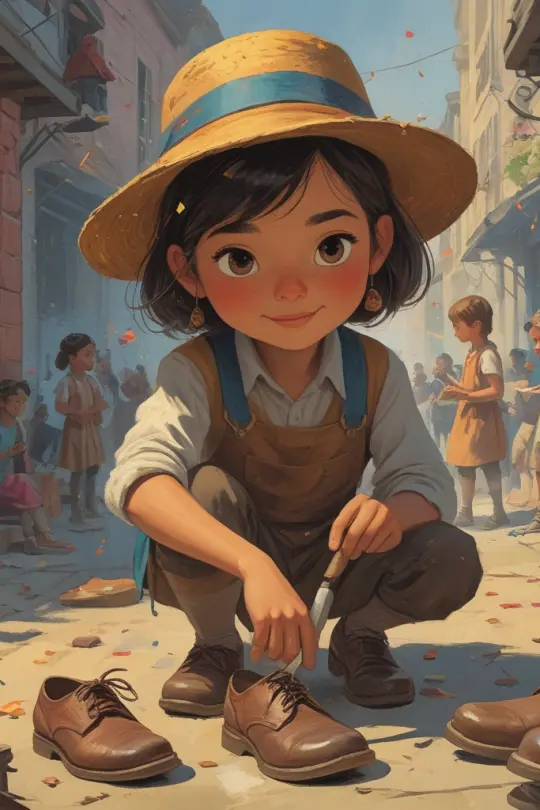
How Asha Stitched the Town Together
Join the conversation! Readers are sharing their thoughts:
About the Story
Asha, a young apprentice cobbler, prepares for Steps Day when flashy shoes begin behaving oddly across town. As drums roll and confetti pops, she takes her tools to the street, retuning soles and teaching small hands to mend, working against spectacle with steady craft and quick hands.
Chapters
Story Insight
How Asha Stitched the Town Together follows a small, tactile mystery in a town that feels made of ordinary magic. Asha is a young apprentice cobbler whose workbench sits beneath an awning where the bakery’s honey‑pear buns and the lamplighter’s habit of winding unused lamps form the backdrop to everyday life. The inciting moment arrives when a pair of parade shoes, bought for the town’s Steps Day, arrive restless—hiccuping confetti, practicing march steps, and otherwise refusing to be merely decorative. That quirkiness swells into a gentle crisis as more footwear begins to insist on its own personality: rainboots that recite poems, sneakers that giggle, and spring shoes that ask for applause. The story opens at Asha’s bench and follows the practical, hands‑on path she chooses: leaning into the skills she has learned from her grandmother, noticing small imbalances, and taking her tools out into the street. The prose privileges sensory detail—lemon‑scented water, the click of an awl, a kettle that whistles different tunes—and it pairs those details with moments of warm humor and absurdity so that the world feels lived in and consistently surprising without tipping into chaos. Thematically, the book uses profession as a metaphor: cobbling becomes a way to explore how craft creates connection. The conflict is social rather than ideological—novelty and spectacle are tempting, and attention often follows shine instead of steady care—so Asha’s challenge is to show usefulness through action rather than argument. The emotional arc moves from quiet isolation to communal belonging; the relationships—Nana Sima’s dry wit, Otis’s mischief, and Juno’s public flair—are revealed through dialogue and cooperative work rather than didactic pronouncements. Structurally the narrative is compact and deliberate: a setup in which the problem is observed, an escalation as misbehaving shoes multiply and the town’s rhythm wobbles, and an active climax resolved through skillful repair and improvisation in public. The climax is practical and earned—Asha’s interventions are visible, mechanical, and rooted in real, tactile procedures such as balancing soles, adjusting linings, and tying stabilizing knots—so resolution arrives through doing, not revelation. This book is suited to readers who enjoy sensory storytelling, gentle absurdity, and protagonists whose competence matters. The language is designed to be read aloud or savored on the page: action scenes move with short, precise verbs while quieter moments linger on texture and ritual. Humorous beats—boots that hiccup confetti, a pair of ballet flats that keep pirouetting on a windowsill—keep the tone light even when stakes rise, and the community scenes give the book a social warmth that complements the central metaphor of mending. Craft details are accessible rather than technical; they give the story authority without alienating younger readers. Overall, the narrative offers a compact, well‑made children’s story in which hands‑on work, steady attention, and small acts of care knit a town back into step.
Related Stories
Wren and the Jellylight Midnight
When the jellyfish lights that guide a seaside town begin to fade, nine-year-old Wren sets out across the Grey Shoals. With a listening shell, a stubborn kite, and a small, soft friend, she learns why the lights were taken and how to bring the songs back.
Tess and the Brightling Grove
A shy new neighbor discovers a tiny, fading creature in a willow hollow and learns that the small everyday stories people tell keep the little Brightlings bright. As Tess gathers ordinary objects and honest memories, a pale mist that steals forgotten moments grows. Tess must find her voice and recruit friends and neighbors to share their small truths so the hidden world beneath the tree can be saved.
Lumi's Little Light
Lumi, the littlest lighthouse on Pebble Isle, worries her small beam won't matter as a storm bites the harbor. When Old Beacon is damaged and a tiny kitten and boat are lost in the dark, Lumi learns to guide a rescue with small, steady lights and a village's teamwork.
Penny Stitches and the Button Bridge
Penny, an apprentice tailor, faces a choice when the town’s old footbridge collapses days before the Button Parade. She must decide whether to use her precious golden buttons for a prize outfit or to anchor the bridge so everyone can cross together. A warm tale about craft, community, and belonging, with a pinch of absurd humor.
Marlow and the Moonstring
When the Moonstring that holds dreams to a small seaside town begins to fray, eleven-year-old Marlow sets out with a glow-stone, a thinking-paper bird, and a thimble to stitch the night back together. He meets a lonely fox, an old mender, and learns that mending often needs kindness more than force.
Otis Rain and the Songwheel of Tallpalm
A gentle children's adventure about Otis, a young fixer who sets out with a mechanical gull and a glowing spool to recover missing notes from his harbor's Songwheel. He learns to listen, trade kindness, and mend both machines and lonely hearts. A warm tale of community, courage, and small brave deeds.
Other Stories by Hans Greller
Frequently Asked Questions about How Asha Stitched the Town Together
In How Asha Stitched the Town Together what is the central conflict and how does Asha’s cobbling profession drive the story ?
The conflict centers on flashy shoes that misbehave and disrupt the town’s parade rhythm. Asha’s cobbler skills—balancing soles, adjusting linings, tying tune-knots—provide practical, hands-on solutions and propel the plot.
Who is the target age group for this children’s story and what reading level suits it best ?
The book fits younger middle-grade readers and older picture-book audiences, roughly ages 6–10. Language is sensory and accessible, with clear action verbs and scenes suitable for read-alouds or independent early readers.
What themes and emotions does the book explore beyond the shoe mystery, and how are they presented ?
Themes include craft, belonging, and community. Emotions shift from quiet isolation to connected warmth, shown through tactile details, cooperative dialogue, and scenes of practical repair rather than moralizing speeches.
How much humor or absurdity is in the story, and what form does it take within the town setting ?
Humor is gentle and whimsical: hiccuping confetti boots, giggling sneakers, and a lamplighter who winds unused lamps. Absurd moments add levity while keeping the town grounded in everyday rituals like baking and market trades.
Is the climax resolved through action or revelation, and how do Asha’s skills specifically solve the parade crisis ?
The climax is resolved through action: Asha physically retunes shoes on the move—adding whisper-pads, tempo-bands, and tune-knots—balancing springs and redistributing weight to restore collective rhythm.
Can this story be used for classroom activities or read-aloud sessions, and what lesson-focused exercises work well ?
Yes. Use it for hands-on craft lessons, rhythm and movement activities, and group problem-solving. Simple exercises: pretend mending stations, rhythm drills with drums, and discussions about cooperation versus spectacle.
Ratings
I wanted to love this more than I did. The premise — flashy shoes acting up and a humble cobbler saving the day — has charm, but the execution felt a little too tidy and predictable. The Steps Day spectacle is vividly described (drums, confetti, chaos), yet the resolution arrives almost immediately: Asha takes out her tools, teaches kids to mend, and the town is fixed. There’s little tension about how widespread the problem is or why the shoes started behaving oddly in the first place; it reads like a series of pleasant vignettes rather than a story with stakes. Also, while the bench and Nana Sima are nicely drawn, some characters remain thin — I wanted more backstory on the market cobblers or the mayor who presumably organizes Steps Day. On pacing, the middle feels rushed: once the shoes act up, events zip by so fast there’s no real build-up. It’s a cozy read with lovely images, but adults looking for deeper plot or emotional progression may come away wanting more.
I found myself grinning like a fool reading this. The comedic image of flashy shoes behaving badly during Steps Day is a delight, especially when paired with Asha’s no-nonsense cobbling toolkit. The story balances humor and warmth — the confetti and drums make a great foil for the close-up work of a burnisher and an awl. I also liked how the narrative celebrates teaching: the scene of Asha showing little hands how to stitch felt honest and uplifting. Tiny details (the jingling fasteners, the toast of spiced plum jam) add texture and make the town feel lived-in. A fun, cozy read — kids will love the chaos, adults will love the craftsmanship. 🙂
Short and sweet: this is the kind of children’s tale I’d read aloud every year. The language is lyrical without being showy — that line about the bench fitting Asha ‘as if it had been carved to the shape of her palms’ gave me chills. I laughed at Nana Sima’s kettle that whistles different tunes (so cute) and loved the scene when Asha teaches small hands to mend — visual, empowering, and quietly feminist. The pacing shifts between the noisy Steps Day spectacle and the calm of the cobbler’s bench are handled well; the calm wins, which I appreciated. Would recommend for classrooms and bedtime.
I appreciated how the author used sensory detail to build a community around craft. The awl with a nick in the handle, the moonstone-like burnisher, Nana Sima’s different-weather whistle — those are the kinds of specifics that make children’s fiction memorable. The plot is simple but effective: flashy shoes malfunction, town panics, Asha reels it back in with practical know-how and patience. The Steps Day sequence is nicely staged — drums, confetti, and the sudden comedic chaos of shoes running riot — then the quieter, satisfying beats as Asha retunes soles and teaches kids to mend. The theme of passing down skills (grandmother to apprentice, apprentice to neighborhood kids) feels hopeful and earned. My only tiny nitpick is that the ‘why’ behind the shoes’ behavior stays a touch mysterious, but honestly, for a children’s story that celebrates community repair, the ambiguity lets the metaphor breathe.
This story felt like a warm hug for anyone who loves small, steady acts of care. The opening image of the bench that ‘knew every secret stitch’ hooked me immediately — I could almost feel the worn wood under Asha’s palms and smell the lemon-glazed buns from the bakery. Asha’s patient stitching and Nana Sima’s humming made the shop feel like a living character. I loved the contrast between the town’s flashy, misbehaving shoes and Asha’s deliberate, useful craft: when the shoes began to act up on Steps Day, the drums and confetti felt loud and frenetic, and Asha’s quiet mending felt revolutionary. The scene where she tongs the leather and chooses not to use the market knots was such a lovely, specific detail that says everything about her values. Charming, gentle, and full of heart — perfect for kids and adults who want a reminder that steady work and teaching others can outshine spectacle.