
The Night Tinker of Puddle Lane
Join the conversation! Readers are sharing their thoughts:
About the Story
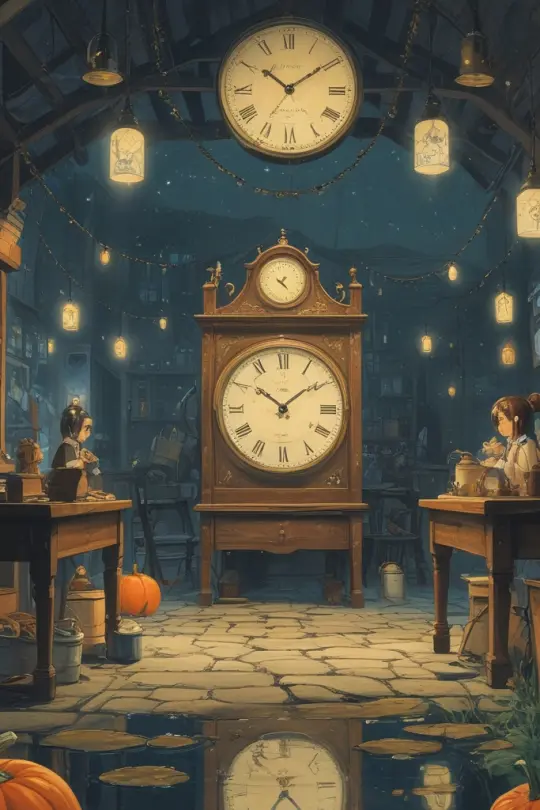
In fog-soft Puddle Lane, solitary clockmaker Nola mends tiny household timepieces. When the town’s rhythms falter, she chooses hands-on repairs over a prestigious solo commission. Leading a communal workshop, she and her neighbors build a festival clock that carries the lane’s voices into the square.
Chapters
Story Insight
The Night Tinker of Puddle Lane centers on Nola, a quiet and meticulous clockmaker whose workshop smells of lamp oil and lemon peel. Set in a fog-soft lane of small domestic customs—bakers’ star biscuits, lantern vendors, a hedgehog apprentice named Pip—the story begins with a simple, human dilemma: a council offers Nola a prestigious commission to craft a festival clock, while a peculiar stoppage disrupts the neighborhood’s nightly rhythms. Clocks and timers across the lane begin to falter in the same delicate way, and Nola must decide how to use the life she has built at her bench. The narrative is warm and cozy in tone, anchored by concrete sensory detail and small, comic absurdities: a joke-telling alarm, a teapot-clock that insists on compliments, and a mechanical bird with domestic priorities. These touches lighten the stakes without undermining them, making the book a gentle but purposeful bedtime read. At its heart the story treats craft as a form of ethical action. Repairing mechanisms becomes analogous to tending relationships: careful, repetitive work that restores rhythm and trust. The central conflict is an intimate moral choice—between a rare opportunity for recognition and the immediate, hands-on need of neighbors—resolved through practical skill rather than revelation. The book leans on plausible mechanical detail: the diagnosis of an errant escapement, the improvisation of a counterweight from common objects, the delicate filing of a pallet’s face. Those scenes read with the confidence of someone familiar with small machinery, and they give the climax satisfying, tactile momentum: the problem is solved by patient technique and physical improvisation. Humor and community ritual are woven into the repair work, so the technical steps are never dry; they live amid biscuits, songs, and the conspiratorial generosity of neighbors. For readers who appreciate cozy, hands-on stories with a slow emotional arc, this tale offers a comforting combination of practical ingenuity and neighborhood warmth. The pacing favors quiet scenes of careful labor and domestic exchange rather than dramatic spectacle. Emotional payoff grows from the accumulation of modest acts—mending a bell, braiding rope, soldering a joint—so the final harmony feels earned. The narrative avoids heavy sentimentality while valuing ordinary kindness; its unique appeal lies in presenting a craftsperson’s life as both a literal skill set and a metaphor for belonging. Anyone drawn to small-scale, sensory fiction that celebrates communal repair, soft absurdities, and the steady satisfaction of making things right will find this story engaging and pleasantly restorative.
Related Stories
Mira and the Tidal Lantern
A gentle bedtime adventure about Mira, a nine-year-old in a seaside village who finds a glowing pebble and, with a clockwork owl and quiet courage, learns to bring back the small lights stolen by a lonely night-weaver. Warm, calm, and full of seaside wonder.
The Lantern on Willow Hill: A Bedtime Tale
A gentle bedtime adventure about Tove, a nine-year-old apprentice who mends a Dream Lantern when a thread of sleep goes missing. With small gifts, quiet courage, and unlikely friends, she faces the Hollow of Quiet and brings a new light back to her town.
The Moon's Missing Button
Etta wakes to a seamed night and follows a soft-lit sprite to return a misplaced piece of moonlight. Climbing a ladder of light under the elm, she fits the button back into the moon and carries a new, gentle steadiness home with her.
Song for a Lantern
In a seaside town wrapped in gentle fog, a boy named Niko listens to the wind and loves the lighthouse’s golden beam. When the guiding light falters, he seeks a Wind Key from a kite maker, meets the fog’s keeper, and helps mend the lantern. With songs, kindness, and courage, Mistral Bay finds its way home.
The Pillowboat’s Hush-Song
Mira can't sleep in the new room: the noises are unusual, the shadows live in their own way. At night, her bed turns into a soft boat, and the Wisp moth leads her along the corridor, garden, and cloud bridge. Meeting the clock and Lalla the fox, Mira gathers "notes of silence" for a future lullaby.
Ivy and the Moon's Missing Lullaby
A gentle bedtime tale about nine-year-old Ivy who discovers a missing piece of the town's lullaby. With a patchwork fox and a silver thimble, she climbs moonlit steps, meets the keeper of quiet, and mends what was lost so the town can sleep again.
Other Stories by Felix Norwin
Frequently Asked Questions about The Night Tinker of Puddle Lane
What is The Night Tinker of Puddle Lane about, and who is Nola the protagonist ?
Nola is a solitary clockmaker in a fog-soft lane. When household clocks and evening rituals falter, she chooses hands-on repairs over a solo festival commission, setting the story’s gentle conflict in motion.
How does the story balance cozy bedtime tone with an unfolding plot about repairing the town's rhythms ?
Warm sensory detail and small domestic rituals keep the tone cozy, while concrete mechanical problems and improvised fixes provide clear stakes. Humor and neighborly banter thread through practical repair scenes.
Is the climax resolved through character action and craftsmanship rather than a sudden revelation ?
Yes. The story’s turning point is practical: Nola climbs the tower, diagnoses the escapement, crafts a counterweight, and physically re-tunes the mechanism using her clockmaking skills.
What role does community play in the festival clock project and Nola's decision ?
Neighbors contribute parts, hands, and stories; the commission becomes a collaborative build. Community support shifts Nola’s choice from solitary ambition to shared creation and ongoing maintenance.
Are there humorous or whimsical elements like anthropomorphic clocks or animal sidekicks ?
Light absurdity is constant: a joke-telling alarm, a teapot-shaped clock that demands compliments, a mechanical bird, and Pip the hedgehog apprentice add charm and warmth without derailing the plot.
What themes and emotions does the story explore for readers seeking a comforting bedtime read ?
The tale explores craft as care, the shift from loneliness to connection, small moral choices, and steady hope. It’s tactile, gentle, and satisfying for readers who enjoy hands-on solutions and neighborly rituals.
Ratings
I wanted to love this more than I did. The setting and small details (lamp oil, carriage clock with a pride problem, hedgehog with a toolbelt) are undeniably charming, but the plot moves exactly where you expect it to: gifted artisan faces a prestigious commission, chooses community work instead, and everyone learns the value of togetherness. It’s all a bit too tidy. Pacing feels uneven in places — the excerpt lingers lovingly over tiny mechanical adjustments, which is nice, but the emotional beats (why the town’s rhythms falter, how the festival clock will technically ‘carry’ voices) are sketched rather than shown. The concept of a clock that carries the lane’s voices into the square is evocative but not sufficiently explained; it reads as a metaphor more than a realized magical element, which is fine — except that other parts of the story treat the physical mechanics with such specificity that the magic feels like a missed opportunity. Also, a hedgehog apprentice is cute, but it verges on gimmick when it’s relied on for charm rather than character development. If you want a soothing, sugary bedtime read, this will do the job. If you want more complexity or surprise, it may feel a touch safe and predictable.
Tiny, perfect bedtime story. I loved the festival clock idea — the image of neighbors’ voices carried into the square felt so warm and hopeful. The hedgehog apprentice and the joke-telling alarm added just the right touches of humor. Read it aloud to a kid or to yourself before sleep 😊
I didn’t expect a story about clocks to make me feel this warm, but here we are. The carriage clock that insists on compliments is peak delight — I want one of those in my house now. The way Nola files a tooth until the click matches a heartbeat is both oddly precise and quietly poetic. The book walks a nice line between whimsy and sincerity, and it never tips into saccharine. Honestly, I came for the hedgehog and stayed for the sense that building something together can change how a place sounds. Nicely done — clever, comforting, and oddly moving.
This felt like getting wrapped in a soft shawl. The opening image of the shop smelling of lamp oil and lemon peel set the mood immediately — comforting, a little melancholic. Nola is one of those rare protagonists who is brave in a small, everyday way: fixing an alarm so a child wakes giggling instead of offended, or convincing a carriage clock to strike with a compliment. I was particularly touched by the communal aspect. The idea of neighbors gathering, hands dirty, to make a clock that carries their voices is the sort of collective tenderness that stuck with me all evening. Pip the hedgehog is an adorable bonus. Great for kids at bedtime or adults who want a soft, human story to end the day with.
Nicely done. The author leans on tangible, tactile imagery — the pinion, the tiny screw, the file shaving a gear tooth — to make the mechanical world feel intimate. Nola’s work is almost a meditation; the technical details are just enough to be credible and to underscore her connection to the town. I appreciated the restraint: the story doesn’t have to shout its themes. The workshop/community choice is woven into character rather than dumped as moralizing plot. Good bedtime material: quiet and satisfying.
I found The Night Tinker of Puddle Lane to be a quietly lovely exploration of craft, community, and the small everyday acts that stitch a place together. The prose is sensory without being florid: details like the lamp oil and lemon peel, the carriage clock that needs a compliment, and Pip’s absurdly earnest apprenticeship build a lived-in setting where the stakes are human and immediate. What elevates the story is its thematic restraint. The central dilemma — a prestigious solo commission versus a town whose rhythms are failing — could easily tip into melodrama, but Nola’s choice feels inevitable and earned. She doesn’t reject recognition for lofty reasons; she prefers hands-on repair because it aligns with how she listens and works. The communal workshop sequence (as framed in the excerpt and description) promises a satisfying culmination: the festival clock that literally carries Puddle Lane’s voices into the square is a beautiful, slightly magical metaphor for civic belonging. There’s gentle humor throughout (Mrs. Wren’s lace and lavender, the alarm’s goose jokes), and the pacing supports its bedtime category: calming, leisurely, and warm. This is not a plot-heavy page-turner, but as a slice-of-life bedtime tale it’s near-perfect — a book to read aloud or to savor under a blanket lamp.
Sweet and whimsical! Pip the hedgehog with a toolbelt stole the show for me — that image is stuck in my head and I want a soft plush version. The scene with the child’s alarm telling goose jokes is laugh-out-loud funny and then instantly tender when Nola fixes it to wake the kid gently. Also, the lamp that “hummed like a satisfied insect” is a line I’ll repeat to friends. A delightful small world to get lost in for twenty minutes. 😉
Cozy and well-made. The little bits — a carriage clock that refuses to strike unless you compliment its brass, an alarm that tells jokes about a goose and a hat — are charming without feeling twee. I especially liked Mrs. Wren’s flour-dusted shawl and the way Nola reassures her: teaching punctuality without removing humour says so much about the tone of the book. Puddle Lane itself is almost a character, the fog and cobbles keeping secrets in their seams. Perfect bedside reading if you want something that soothes and makes you smile quietly before sleep.
Subtle, meticulously observed, and very gentle. The excerpt’s sensory details — lamp oil and lemon peel, the lamp that ‘hummed like a satisfied insect’ — do a lot of heavy lifting in creating atmosphere. Nola is drawn with a craftsman’s clarity: from her stained fingers loosening a pinion to her approach to Mrs. Wren’s joke-telling alarm, the character’s methodical care reveals her values without needing heavy exposition. Structurally the story hinges on a single, effective contrast: the prestigious commission versus the immediate needs of Puddle Lane. Choosing the communal workshop is both thematically satisfying and believable given the way the town’s rhythms are set up. The festival clock as a communal voice is a lovely metaphor for belonging and craft. A polished bedtime story — calm, thoughtfully paced, and rich in small pleasures.
I finished this tucked-up little tale with a stupid grin on my face. The writing is exactly the kind of warm lamp-lit thing you want before bed — the shop’s smell of lamp oil and lemon peel is such a vivid touch that I could almost feel the wool fog outside the window. Nola is quietly heroic: I loved the scene where she files a tooth until the click matches her heartbeat — that line stuck with me. Pip the hedgehog with a tiny toolbelt is pure delight and made me laugh out loud when he pretended to inspect her work. The choice Nola makes — turning down a solo commission to lead the community in building the festival clock — is quietly moving without being showy. The idea that the lane’s voices literally carry into the square is adorable and felt like a perfect, cozy payoff. This is the kind of bedtime story that leaves you calm and a little hopeful. Highly recommend for anyone who wants a gentle, handcrafted read.