
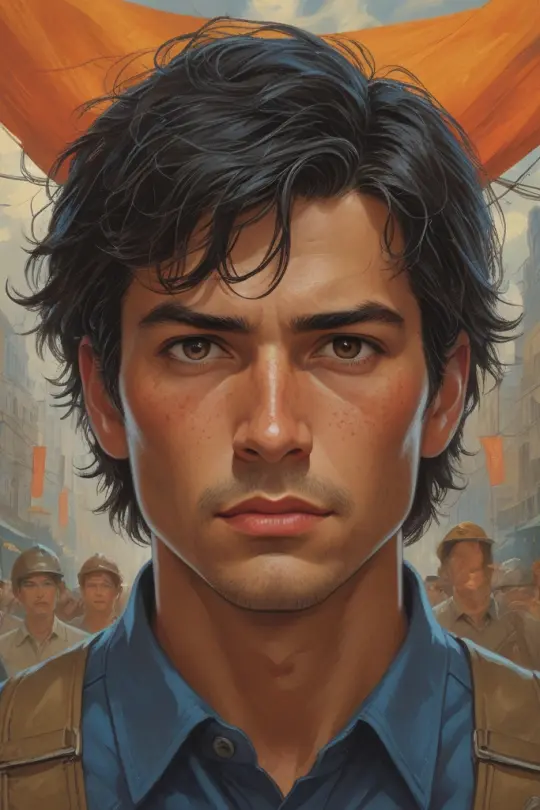
Holding the Line
Join the conversation! Readers are sharing their thoughts:
About the Story
Kade Reyes, a seasoned rigger, must physically stop a series of coordinated sabotages at a city's parade. As anchors fail and a central truss threatens the crowd, Kade uses hands-on splicing and improvisation to reroute loads under extreme pressure. The climax resolves through his professional action amid odd, human moments—and the aftermath reshapes how his community cares for spectacle.
Chapters
Story Insight
Holding the Line puts a hands-on profession at the center of its stakes: Kade Reyes, a seasoned rigger who makes a living keeping performers aloft, finds his craft turned into a weapon. During a festival rehearsal a structurally compromised truss almost collapses; Kade’s quick work averts catastrophe, but a razor-cut signature and a folded note with an old knot symbol point to deliberate sabotage. The opening moves fast from a technician’s detailed checks to an escalating pattern of interference, and the city around Kade—vendors selling honeyed squid and saffron doughnuts, children with painted river maps on their faces, and an oddly charming ferret named Tether—colors the action with ordinary life. Rather than treating danger as abstract, the plot grounds peril in believable mechanics: splices, pulleys, ratchets, and human haulers become the language of suspense. Humor and absurdity puncture the tension—an inflatable mascot gone rogue, Jun’s chaotic livestreams—so the narrative never loses its human texture even in high-pressure set pieces. At the story's core sits a compact moral dilemma. A former mentor, Raf, has begun staging “wake-up” scares—purposeful failures meant to frighten the public into paying attention to spectacle and safety. Kade must choose between exposing Raf publicly and risking the industry’s descent into clandestine, unsafe performances, or hardening the parade’s rigging and protecting lives more quietly. The book keeps that dilemma front and center while escalating to an explicitly kinetic confrontation: announced release points on a children’s parade force Kade and a ragged crew of volunteers to rehearse emergency hauls and build redundant anchors, then perform live splices and improvised load transfers under real, violent stress. The way the climax resolves—through the protagonist’s professional skill and physical ingenuity rather than an exposé or moralizing speech—gives the action an earned, tactile quality. Alongside technical tension, the narrative explores trust, responsibility, and the cost of isolation; Kade’s arc bends from guarded solitude toward a tentative, practical community as the people he protects become the people who hold the line with him. This story will appeal to readers who prefer action that feels earned by craft rather than spectacle alone. Its strength is the combination of precise, well-rendered technical detail and an empathetic focus on the crew that keeps public displays safe: volunteer haulers, retired aerialists with band-aids as badges, and a stubborn acrobat who refuses helmets. The writing privileges concrete verbs and bodily problem solving—climbing, splicing, hauling—so tension is physical and immediate. Themes of workmanship versus performative shock, the ethics of spectacle, and communal accountability run through the plot without turning the book into a lecture; instead, the stakes are practical and everyday, tied to children’s satchels, vendor rhythms, and the smells and rituals of a particular urban neighborhood. The blend of authentic procedural knowledge, brisk pacing, and occasional wry humor makes Holding the Line a compelling read for anyone interested in action grounded in real skill and human connection.
Related Stories
Tide of Reckoning
A near-future action novella: Mara, a 22-year-old courier in a coastal megacity, fights Umbra Corp after a stolen package reveals a plan to control the tidal grid. With a ragged crew, a hacked drone, and a salvage captain's help, she exposes the conspiracy, rescues her community, and rebuilds the harbor's future.
Crosswire Protocol
Jaxon Hale and Kade Mercer mount a high-risk assault on Vale's Pulse Tower to sever the master relay of the Crosswire protocol and rescue Nadia Holt. Inside Vale's server vault they face Valkyrie-precision security, a public narrative engineered to frame Jaxon, and a desperate digital gambit that forces splintered choices. As Kade deploys a kill vector to isolate the master and Jaxon wrestles the relay loose, the building convulses with alarms and a fatal scramble for control.
Sky Stitchers
In a rain-slicked city festival, rope-access technician Cass Hale must physically reroute a failing skywalk's load to save a crowd. Tense rigging, gusting winds, and absurd obstacles—an inflatable mascot and a rubber-duck drone—complicate the rescue as Cass uses her skills to stitch a new lifeline and, in doing so, begins to let others in.
Pulse of the City
When a live node goes missing and an engineer disappears, a former operative drags old debts into a conspiracy that weaponizes the city's infrastructure. She must race networks and men to rescue her brother and stop a manufactured crisis before a reserve node tears the city open.
Skyline Tides
In a storm-lashed coastal metropolis, rooftop runner Mai races to deliver an AI patch to the city’s seized desalination plant. With gecko gloves, an amphibious drone, and help from a silver-haired radio tinkerer, she threads canals and catwalks to outmaneuver mercenaries in a high-stakes sprint for water.
Razor Line
Former courier Elias Kade wakes framed for violent theft after a midnight drop goes wrong. Chased through rail yards, corporate vaults, and a city wired for control, he races to expose a private security magnate’s plot to weaponize infrastructure while protecting his sister and choosing how to pay the cost.
Other Stories by Helena Carroux
Frequently Asked Questions about Holding the Line
What practical rigging and rescue techniques does Kade use to avert disasters in Holding the Line ?
Kade relies on hands-on skills: quick and long splices, running belays, block-and-tackle setups, human-haul systems, ratchets and improvising anchors. The climax hinges on his ability to splice and reroute loads under live tension.
How realistic are the rigging details and festival procedures depicted in the story ?
The story emphasizes plausible techniques and workflow: preflight checks, redundant anchors, load calculations and rehearsed emergency hauls. Technical terms are used accessibly to keep scenes authentic without excessive jargon.
How does the parade setting shape the stakes and emotional tension of the plot ?
A busy urban parade concentrates risk: families, children and dense crowds raise moral and tactical stakes. The route’s archways, floats and vendor stalls become literal anchor points, making every sabotage attempt both technical and deeply personal.
What moral or interpersonal themes does Holding the Line explore alongside its action sequences ?
The narrative examines trust, responsibility, craft versus spectacle, and the cost of isolation. It foregrounds how practical skill becomes a communal ethic—people learn to pass weight and protect each other rather than rely on lone heroes.
Is there humor or absurdity in the story, and how does it affect tone during tense scenes ?
Yes. Small absurd moments—an inflatable mascot gone rogue, Jun’s livestreaming antics, and Tether the ferret—diffuse tension and humanize the crew, keeping the action grounded in real people and unpredictable life.
Who will most enjoy Holding the Line and what reading experience does it offer ?
Readers who like kinetic, craft-driven action and realistic technical problem solving will enjoy it. The story balances procedural detail, community dynamics and tight pacing for a visceral, hands-on thriller.
Ratings
Pretty, but a bit too neat for my taste. The writing shines in sensory moments — the sea air threaded between buildings, Jun's coil slapping the noodle sign — and the technical bits about splicing feel authentic. But the story reads like a short film where the villain's who and why are conveniently offscreen so the hero can look heroic. I also had pacing gripes. The setup lingers lovingly over tools and rituals (which is nice), then the action happens so fast you barely get time to register who Brett and Laila are before they're ordered into position and the truss is falling. The climax, while tense, leans on the trope of the lone skilled worker improvising to save everyone; it's satisfying in a popcorn way but not intellectually satisfying. And the aftermath — the community 'reshapes' how it cares for spectacle — happens too quickly; it's declared rather than shown. If you want a warm, craft-focused adrenaline hit and don't need deep plotting or surprises, this will work. If you want moral ambiguity or a clever antagonist, look elsewhere. 🤷♂️
I wanted to like this more than I did. The premise — a seasoned rigger saving a parade from sabotage — is promising, and there are flashes of strong writing (the noodle stall and the spoon ritual are cute), but overall the story leans a little too hard on familiar tropes: the grizzled expert who single-handedly fixes everything under pressure is a well-worn archetype. Plot-wise, things move predictably. You get the calm build, the technical checks, the sudden sabotage, the tense hand-splicing climax, and then the tidy aftermath where the community learns a lesson. It reads like a checklist of beats rather than something that surprises. Some moments felt underexplained: who coordinated the sabotages and why? The narrative skirts that and focuses almost exclusively on Kade, which is fine, but it leaves a frustrating gap. Stylistically it's competent — the rigging details are convincing — but I wanted more complexity in motivation and a few twists to make the tension pay off fully. As it stands, a solid, if somewhat conventional, action piece.
Beautifully written and exact in its details. The author leans into the specificity of the trade — every splice, ratchet strap, and hawser movement is described with affection and authority. I appreciated the early morning sensory writing; the orange slices on toothpicks and the noodle vendor's ritual made the setting ring true. Kade is quietly heroic in a way that feels authentic rather than manufactured. His order, 'No improvisation without my nod,' stuck with me because it captures how rules and rituals exist to protect people in dangerous work. The sequence where anchors start to fail and he has to reroute loads by hand is tense and technically satisfying. The aftermath, where the community changes how it cares for spectacle, lends the story a moral warmth without being preachy. A really accomplished action short that respects its subject and its characters.
This story hit me in a weird emotional spot. I came for the rigging action and stayed for the small human details — the vendor's ritual spoonful of broth, Jun's awkward livestream, the way Kade's commands land like tool clicks. There's a gorgeous intimacy in how the author describes hands-on work: the hairline abrasion on the splice, the tactile check of a shackle, the rhythm of tightening anchors. Those are the moments that make the big rescue believable and earned. The climactic scene felt frantic without being chaotic — Kade's improvised splicing under a failing truss is both nail-biting and honorific to skilled labor. I especially liked the community payoff: it's not just about one man's heroics but how the festival and neighbors learn to value safety and care for spectacle differently after the crisis. If I had to quibble, some secondary characters could be fleshed out more (Brett and Laila mostly carry out orders), but that doesn't dilute the core emotional arc. For readers who love detailed, human-scale action, this is a lovely story.
Tight, kinetic, and respectful of the craft. 'Holding the Line' is the kind of action story that trusts the reader: it doesn't rely on explosions for excitement but on competence under pressure. The scenes where Kade checks shackles and splices rope are surprisingly cinematic — you can feel the weight shifting as he reroutes loads. I liked Jun as a foil: the livestream joke and his gadget pack add levity without undercutting danger. The pacing hums — the buildup through the festival's morning smells and small rituals (the noodle stall's spoon is a nice touch) makes the eventual sabotage feel personal. The climax is visceral; the description of Kade jamming a carabiner and barking orders while improvising a splice had me imagining the strains on his fingers. Plus, the aftermath where the community reassesses how it handles spectacle gave the story more heart than a typical one-shot action yarn. Minor nitpick: I wanted a bit more on the saboteurs' motives. But overall, a smart, well-executed action piece for readers who appreciate craftsmanship.
I loved this. Kade Reyes felt like a real person — weathered, precise, quietly heroic — and the opening image of the city at dawn (frying oil, motor grease, citrus slices on toothpicks) hooked me immediately. The author writes the language of tools so well: when Kade thumbs the threads for burrs or finds that hairline abrasion on the splice, you feel the stakes as clearly as you would if you were hanging off a truss yourself. The action scenes are tactile and suspenseful. The moment Jun's coil slaps Kade's hip and they trade that small, human beat of banter before disaster ramps up was perfect; it grounded the technical heroics in friendship. And the climax — Kade physically rerouting loads with hands-on splicing while the central truss threatens the crowd — had me biting my knuckles. There's real craft here, both in the rigging details and the quieter aftermath where the community actually changes how it treats spectacle. If you like action that's earned through skill and attention to detail rather than CGI theatrics, this story is a gem. The atmosphere, the small rituals (the noodle vendor's spoon! ❤️), and the protagonist's competence make it unforgettable.