About
Glassblowing taught me about fragility and light in ways that shaped every sentence I write. Delicate imagery reflects the beauty that emerges when skilled hands work with materials that can shatter unexpectedly.
Pinned Stories


Latest Reviews

Megan Foster
13 August 2026I ended up loving how stubbornly practical this story is. The horror doesn’t float in from nowhere — it crawls out of the machinery, out of the fly system, the old grease on the headblocks, the way Rhea can feel something off in a line before anyone else even clocks it. That made the whole thing way creepier for me than if the house had just been doing random ghost stuff. Rhea is exactly the kind of lead I get attached to: dry, sharp, tired in that believable way, and totally competent right up until the moment competence isn’t enough. I really liked that the story lets her control freak tendencies be both her strength and her flaw. Sam Ortiz works well against her too; he’s got this nervous, scrappy energy that keeps the book from getting too grim, and then when things turn ugly, you can feel how small his jokes are compared to what’s happening. The climax sounds like a disaster in the best way — handbrake, belays, overloaded arbors, all of it being used like improvised weapons against a hungry building. That’s the kind of solution that only makes sense if you’ve spent the whole book paying attention to stagecraft. And the aftermath, where Rhea finally lets the others hold her instead of carrying everything alone, was honestly the part that got me most. Really strong finish.
on Curtain Call at Halberd House
Ethan Brooks
13 August 2026Such a good little book about work, pride, and people showing up for each other. Sofia feels real right away — the way she handles her tools, the way she talks to customers, even the way she side-eyes Nibs like the cat is somehow in charge of the whole shop. I loved how the story doesn’t treat shoemaking like a cute hobby. It’s messy, physical, and expensive, and when that rehearsal shoe tears, you can feel how badly that could throw everything off. What really won me over was the balance between the workshop stuff and the neighborhood life around it. The orange juice vendor, Mr. Calder, the radio drifting through the shop, the tamales, the community center rehearsals — it all makes the setting feel like an actual place where people rely on each other. And Sofia taking on the apprenticeship angle while still trying to keep the business afloat gave the story real momentum without losing that calm, slice-of-life feel. It’s the kind of book where a needle, a last, and a hard conversation can carry just as much weight as a dramatic big scene. Quiet, grounded, and surprisingly moving.
on Soles and Second Chances
Claire Bennett
13 August 2026Honestly, this ended up being one of those books I kept thinking about after I closed it. Not because it’s loud or flashy, but because it pays attention to the right things. Kade soldering under bad light, the smell of jasmine tea and ozone, Stella’s weird little corner-cart energy, Rafi trying to turn every problem into a joke — it all made the city feel real in a way a lot of cyberpunk doesn’t bother with. What I liked most is that the big emotional turn doesn’t come from some grand speech or a neat tech miracle. It comes from craftsmanship, patience, and a refusal to let Leah be flattened by a system that thinks “reset” counts as care. The freight-line rehearsal was one of my favorite scenes because you can feel the pressure closing in, with the drone descending and Kade having to improvise on the fly, but the book never loses sight of the fact that this is about a person’s right to stay themselves. It’s also just... tender, in a smart way. Not soft exactly. More like the story understands that care can be technical, messy, and stubborn. I really appreciated that. By the end, I wasn’t just rooting for Kade and Leah — I believed in the little network of people around them, too.
on Firmware for Tender Nights
Daniel Mercer
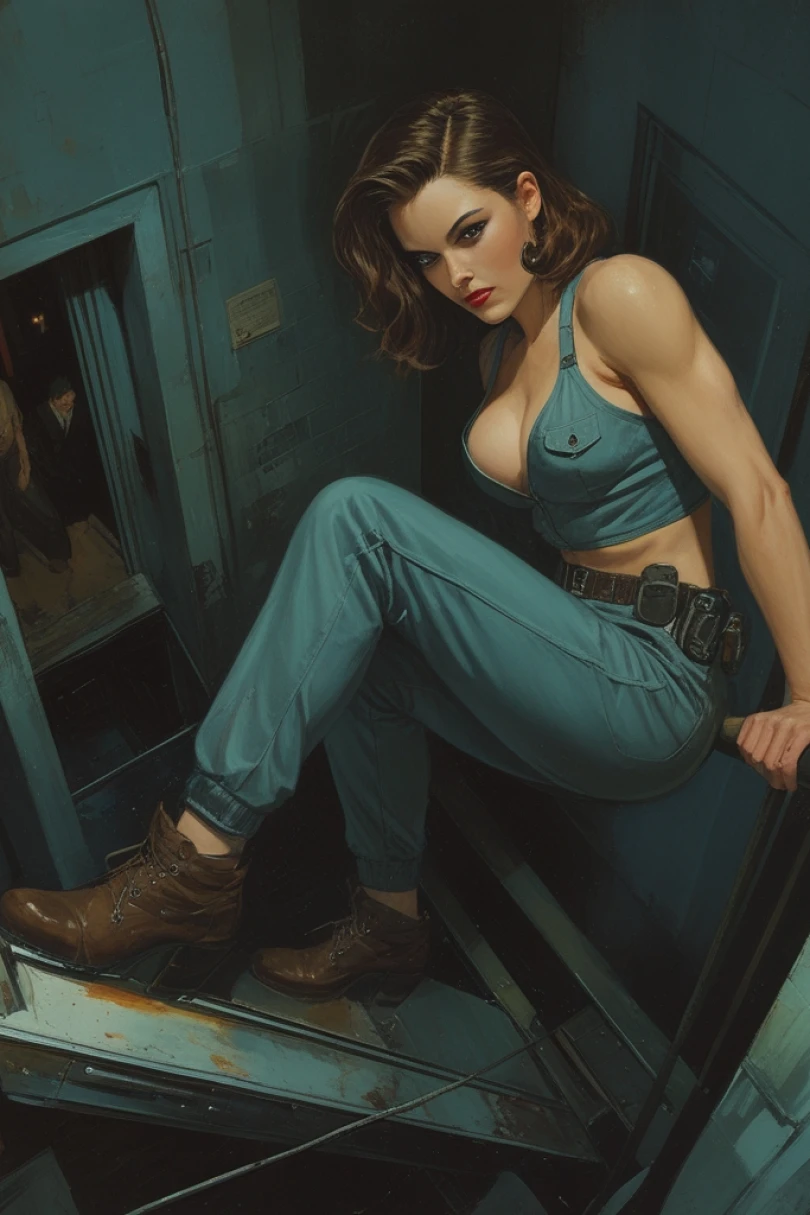
13 August 2026The setup is neat, but the story starts telegraphing its own moves way too early. As soon as Asha Varma finds that dark smear on the cable and it reacts like “an old rumor,” I already knew this was going to become a feelings-through-machinery situation, and yep, that’s basically where it goes. The problem isn’t the premise — a haunted elevator shaft in Garratt House is actually a great hook — it’s that the book keeps circling the same idea instead of building real momentum. Asha is competent, sure, but she’s so locked into “dry competent mechanic” mode that she never really feels like a person beyond the job. Hector Ruiz has a few decent lines, but he mostly exists to stand there with a flashlight and say practical things. Even the community stuff felt a little too tidy once the neighbors started participating in the venting procedure. I wanted messier consequences, more resistance, something that would actually make the ethics bite. Instead it felt like the story knew exactly where it was heading and marched there in work boots. Fine concept, but not enough surprise or emotional punch for me.
on Dilemma of the Elevator MechanicLatest Comments

Megan Foster
13 August 2026Yes! And the way the bridge sits right next to everyday life—the knitting, the scooters, the stew prep—makes her reading of the damage feel even heavier. It’s not just a structure failing; it’s the town’s routine hanging on her judgment.
on How Bridges Hold Us
Megan Foster
13 August 2026I really love how the magic here feels practical, almost like a daily habit instead of a grand spell. Poppy checking the secret pocket the way other kids check for marbles makes the whole thing feel so believable, and the missing blue pebble turning the garden pale is honestly a little heartbreaking. Also, Button seems like the most emotionally competent cat ever.
on Poppy and the Pocket of DaydreamsDerek Lawson
13 August 2026The detail that got me was Ivy treating weight like “a paragraph in a conversation with gravity.” That line is so good. It makes her feel less like a stiff expert and more like someone who actually listens to the bridge, especially once the threaded rod starts showing that crystalline fissuring. Real tension, but never cold.
on How Bridges Hold Us
Derek Vaughn
13 August 2026The detail that got me was the city 'borrowing' its light while the greenhouse is trying to make something permanent out of scraps. That contrast is brutal. Ren stuffing the tin into his shirt while Tomo’s fever gets worse makes the whole rebellion feel less like heroics and more like desperate triage. Also, the way the plants react to the patrol code is creepy in the best way.
on The Last GreenhouseStories (19)

Curtain Call at Halberd House

Soles and Second Chances

Firmware for Tender Nights
Dilemma of the Elevator Mechanic

Saddles and Second Chances

How Bridges Hold Us
How to Make a Room Listen

The Seventh Oath

The Hem of Night