
About
Poetry shaped my prose long before I ever considered writing full-length novels as a serious pursuit. The transition from verse to fiction happened gradually as poems grew longer and more complex, eventually demanding narrative structures that pure poetry couldn't contain. Years spent crafting individual lines taught me to value precision, rhythm, and the emotional weight of carefully chosen words—lessons that transformed my fiction into something lyrically distinct from conventional prose.
Pinned Stories


Latest Reviews

Nina Caldwell
13 August 2026This book has that rare thing where the setting actually feels like it’s doing the work, not just sitting there looking moody. The flooded streets, the floating market, the old arches half sunk under the channel — all of it made me believe this city had kept going by sheer habit and stubbornness. Etta Korr is great too. She’s not written like some broad, fearless hero; she’s more like the person everyone quietly relies on because she knows how to tie the right knot, hear when an engine sounds wrong, and keep moving when the weather starts turning ugly. What really got me was how the story treats repair as something serious and almost intimate. The salvage effort to free the main gate feels huge not because it’s flashy, but because every choice is practical and risky in a very real way. The submerged drive chamber, the lines under strain, the improvised torque that puts her boat in danger — that stuff had me tense the whole time. And I liked that the ending doesn’t magically fix the city. It just gives people a reason to start working together a little better, which honestly felt more earned. It’s the kind of post-apocalyptic story that understands survival is mostly maintenance, and that made it hit harder for me.
on Crossing the Sunken Streets
Hannah Bell
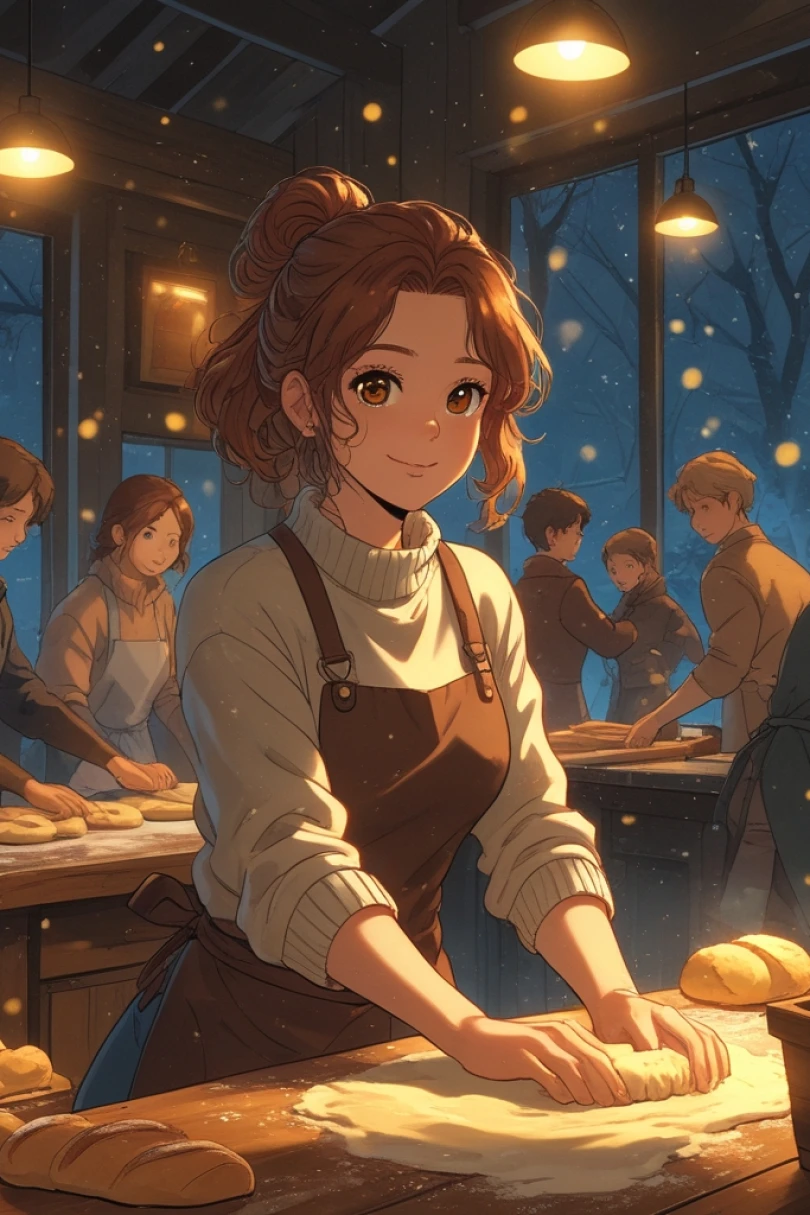
13 August 2026This one completely won me over with how grounded it feels. Etta isn’t doing anything flashy, but that’s exactly why she works so well — she’s the kind of person who can keep a bakery running, calm a room, and somehow get a whole town fed without making a speech about it. I really liked how the story keeps coming back to the physical stuff: the weight of flour sacks, the little ritual with Mabel the starter, the oven’s slow heat, the bell’s awkward clink at the door. It all makes the place feel real. What stuck with me most was how the storm doesn’t turn into some huge dramatic disaster movie. It becomes a problem people solve together, which honestly feels more satisfying. Sam’s easy warmth gives the story a nice lift, and the odd little town details — the clock with its extra quaver, the citrus peel superstition — made me smile more than once. By the time Etta is organizing everyone into a communal bake, it feels completely earned. Soft, cozy, and smarter than it first looks.
on A Door Left Ajar at Marlow’s Bakery
Liam Carter
13 August 2026Honestly, this one wore me out more than it won me over. The setup is clever enough — Cass dangling off the side of a building, weird privacy glass, neighbors improvising in the dark — but after a while it felt like the book kept telling me how competent everyone was instead of actually making the rescue feel uncertain. Cass is obviously meant to be a razor-sharp professional, but she’s so locked into “I know the tool, I know the beam, I know the angle” mode that she starts feeling flat. Same with the crew around her: they mostly function like helpful hands, not people. The bigger issue is pacing. The first chapters promise a tense, technical night-shift disaster, and then the story keeps pausing for little bits of city flavor or practical-magic worldbuilding that don’t really pay off. The glaze-buns, the spoon chimes, the pigeon ordinance — fine, cute, whatever — but when someone is supposedly trapped behind a malfunctioning façade, I need momentum. Instead, a lot of the book feels like it’s circling the same point: Cass is good at her job, the retrofit is bad, the neighbors are quirky. By the time the inevitable company oversight/exposé angle showed up, I’d already guessed exactly where it was heading. Solid premise, but too safe and too neat for something that starts this gritty.
on Glass & Grit: Nightshift in Eversill
Grace Whitman
7 August 2026I got weirdly attached to this book in the first few pages. Cass in that midnight depot, fixing bearings while the city hums around him, just felt so specific and lived-in — like you could smell the grease and old coffee. And then the manifest drops Sera and little Tess into the mix, and suddenly what looks like a normal maintenance shift turns into something personal and awful in the best story way. What really worked for me is how the book keeps making the technical stuff matter emotionally. It’s not just “cool machinery” for decoration; the stalled car, the compensator chains, the shaft alerts, all of it ties into who gets saved, who gets ignored, and who has to do the hard thing when the system fails. Rosa was probably my favorite part overall. She’s not written like a sidekick doing cute banter — she feels like someone who knows the town, knows what people are hiding, and still chooses to ask questions anyway. By the time the pressure builds and the story shifts from routine repairs into something much more dangerous, I was fully in. It has that quiet, stubborn kind of tension where every small choice matters. Really strong atmosphere, but the heart of it is the people trying to keep each other from falling through the cracks.
on Mechanics of ReunionLatest Comments
Nina Brooks
27 July 2026Yes! And the fact that the story gives us all that city texture before dropping the emergency makes the reveal hit harder. Cass’s calm, practical routine makes his reaction feel even more human when the names show up.
on Mechanics of Reunion
Megan Ellis
27 July 2026Yes! That’s exactly what stood out to me too. It’s like the infrastructure and the community are one thing here, and Jonah is the guy who understands both sides. Also, Priya’s café feels way more important than just a place to get coffee.
on Rewiring the Night Signals
Daniel Reed
27 July 2026Yes, exactly — I liked how the story makes control feel fragile instead of comforting. The bell and the lattices together make Mara’s work feel personal, but also like she’s standing right at the edge of something much bigger than herself.
on The Last Waybinder
Claire Whitman
27 July 2026Yes! The ivy disappearing feels so on-brand for community theatre too. Everyone’s improvising, but Harlan is the only one who knows exactly how much that improvisation is costing them.
on Counting Props for MidnightStories (16)

Rewiring the Night Signals

Counting Props for Midnight

Crossing the Sunken Streets

Glass & Grit: Nightshift in Eversill
A Door Left Ajar at Marlow’s Bakery

Mechanics of Reunion

The Carver and the Bone Spire

Holdfast

Forged Crossing