About
Silence and waiting contain more emotional power than most dramatic action sequences ever achieve. The spaces between words carry as much meaning as the words themselves when you understand how to use restraint.
Pinned Stories

Latest Reviews

Megan Foster
11 August 2026This one hooked me way harder than I expected. I went in thinking it would be a neat little coastal adventure and ended up caring a lot about Etta Calder, which is mostly on account of how grounded she feels. She’s not some loud, swaggering hero — she notices grain in a plank, keeps track of tools, and reads a boat the way other people read faces. That made her return to the quay feel loaded from the start. The best part, for me, is how the book makes the rescue feel like a craft problem first and a drama second. The whole business with the service boat trapped on a hidden grave of stones, and Etta having to build that improvised frame and cradle with Jonah at her side, is exactly the kind of thing I eat up. It’s tense because one wrong judgment could wreck the hull, but it’s also satisfying because the solution comes from skill, not luck. Jonah was a pleasant surprise too. He could’ve been the usual eager-apprentice sidekick, but he feels real — cocky one minute, useful the next, and clearly trying to earn Etta’s trust. And the setting is excellent. The tide-clock tower, the gull behaving like a tiny criminal, the smell of tar and seaweed, Marnie frying kelp fritters while everything is going sideways… it all gives the story a proper working-harbor feel. Also, I really liked that Etta’s past with the water isn’t treated as a decorative wound. You can tell that old night at sea still has teeth, and when she finally has to make the decisive move, it lands. Really strong stuff.
on Timber and Tide: A Shipwright's Return
Calvin Reed
27 July 2026I didn’t expect a book about rope maintenance to hit this hard, but here we are. Kestrel Voss is exactly the kind of character I like in dark fantasy: competent, a little shut off, and clearly carrying the burden of keeping everyone alive while nobody thinks about the work until something snaps. The opening market-rig failure had me immediately, but what kept me reading was the way the story treats repair as something bigger than repair. Every splice, every belay, every keystone seating becomes a way of deciding whether this city is going to keep tearing itself apart or actually learn to function together. The vertical city setting is excellent too. The Sundering Tiers feel precarious without ever turning into pure doom-scroll material, because there’s always a stubborn little current of ordinary life running through it — noodle stalls, gossip, the Splicehouse smell of hemp and iron, people arguing while standing one bad inch from disaster. I also liked that the sabotage doesn’t come off like random evil; it feels like panic curdling into damage, which is way more believable and, honestly, sadder. Tane’s courier bit is great for breaking up Kest’s intensity, and the crew training sections were my favorite part once the story moved past crisis mode. There’s something very satisfying about watching a bunch of scared people become a real maintenance system instead of just waiting for one expert to save them. Gritty, smart, and way warmer than I expected.
on Knots of the Sundering Tiers
Ethan Clarke
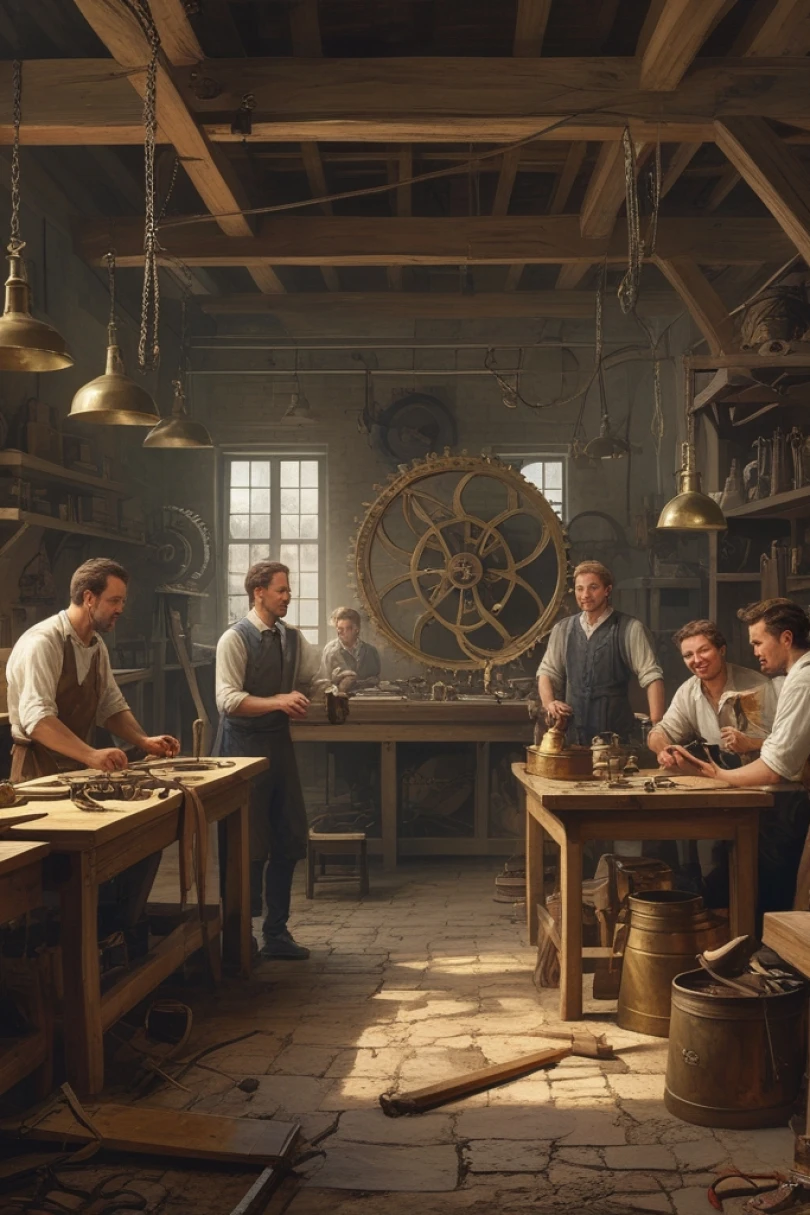
19 July 2026The brass parrot was fun for about five minutes, and then the book kept leaning on it like it was the height of wit. That kind of sums up my problem with The Gearwright's Grace: it has a really nice workshop smell to it, but not much going on underneath. Jonas, Margot, Marek, Sister Beatrix — everyone feels sketched in as a role rather than a person. Jonas is the earnest craftsman with ambition, Margot is the snappy fixer, Beatrix is the voice of reason. You can practically hear the author moving them into position for the moral lesson. And the lesson is so obvious it starts waving at you from chapter one. Big flashy showpiece bad, practical aid good. Fine. But the book stretches that point out with endless scenes of filing, broaching, and measuring tolerances, like if it describes enough metalwork the emotional payoff will magically appear. It doesn’t. I kept waiting for the story to complicate Jonas’s choice or make the cost of scaling the wrist joint feel real, but instead it all seems to resolve into neat workshop harmony and a little town-wide gratitude. Even the conflict around reputation feels oddly flat. Jonas supposedly wants to be remembered, but the book never lets that desire get messy enough to matter. The pacing just crawls, then rushes through the “important” bits. By the end I felt like I’d spent a lot of time in a very well-decorated room without ever being surprised by anything.
on The Gearwright's Grace
Ethan Clarke
4 July 2026This book looks tougher than it actually is. The opening on Hearthstead, with the stripped rooftop gardens and people lining up under the solar chimneys, is great at setting the mood, but after that it starts running on pretty familiar post-apoc rails. Kira’s guilt over the old crop failure, the stolen heritage seed, the trip to Seedhold, the sick land, the inevitable “you must fix what you broke” punishment — I could see the whole spine of the plot from miles away. What bugged me most was the pacing. The story keeps pausing to remind us how dire everything is, but it doesn’t always earn that urgency with actual development. Soren sounds like he’s giving the same warning speech over and over, Juno mostly exists to be bright and determined, and Kira’s big inner conflict never gets as sharp as it should. The living graft idea could have been really unsettling, but it gets treated like a neat moral endpoint instead of something genuinely disturbing and complicated. There are good bits here — the child with the limp leaf, the dry desperation of Hearthstead, the practical details of hydroponics — but they aren’t enough to hide how predictable and tidy the rest feels. For a story about survival, stewardship, and sacrifice, it plays things surprisingly safe.
on Waking the FieldsLatest Comments

Nina Caldwell
27 July 2026Yes! The sound design in the writing is doing so much heavy lifting here. I also love that Mara isn’t just fixing bodies, she’s basically patching together a whole civic system with her hands. That shard in the crate feels like the kind of object that’s going to cause a lot of trouble fast.
on Aetherheart
Paula Jensen
27 July 2026Yes! And I love that the clue isn’t some dramatic confession, it’s tucked into his own papers like he expected someone careful enough to find it. That scratched-out face in the photo is doing a lot of heavy lifting too — it makes the whole town feel complicit.
on Between the LinesDylan Reed
27 July 2026Right? The charm scene hit me too. It’s like Juno is trying to keep some control over a situation that’s way bigger than her. And Kira agreeing anyway makes the whole thing feel less like heroism and more like survival with consequences.
on Waking the FieldsMaya Thornton
27 July 2026The line about the tiers hanging like hands holding a secret is such a killer image. I also really liked how Kestrel isn’t some flashy hero here—she’s all calm thumbs, clamps, and listening for what the rope is trying to say. That makes the sabotage feel way creepier, because panic shows up as wear and fray instead of a villain stepping out of the shadows. Really cool, tense setup.
on Knots of the Sundering TiersStories (17)

Of Cables and Rooftops

Timber and Tide: A Shipwright's Return

Knots of the Sundering Tiers
The Gearwright's Grace
Counterweight - Chapter 1

Between Ash and Starlight

Borrowed Moments
The Unlisted

The Ashen Pact