About
Living by the sea teaches you about solitude in ways that landlocked people rarely experience. Meditative writing reflects the rhythm of waves that never stop moving, a constant reminder of the world's ancient and uncaring heartbeat. I’ve spent long nights on the shore, watching the moon pull the tides and the fog swallow the horizon, finding that in the deepest silence, the most profound stories begin to stir. My work is an invitation to pause, to breathe with the ocean, and to explore the vast, uncharted territories of the inner self that only emerge when the noise of the world finally fades into the distance.
Pinned Stories





Latest Reviews

Derek Holloway
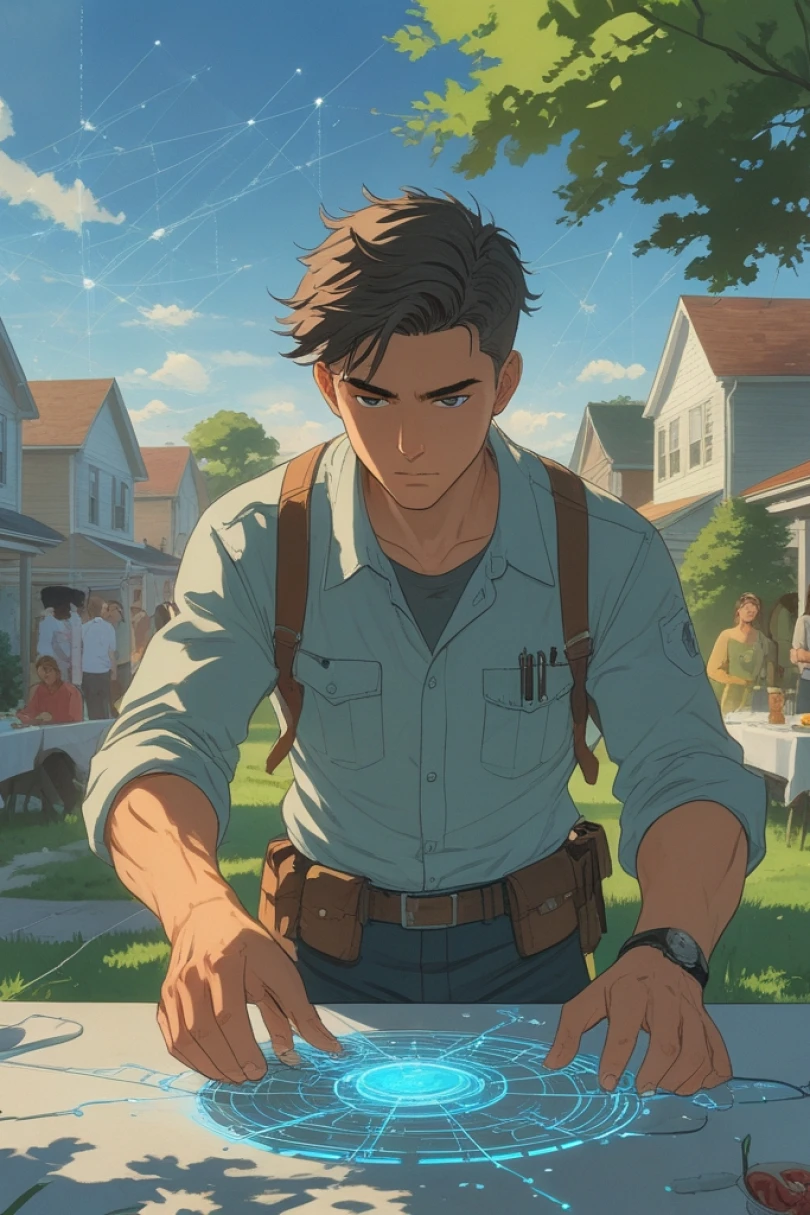
13 August 2026The idea here is better than the execution, which is kind of frustrating because the early chapters really do have a nice feel to them — Asha on Celeste’s porch, the smell of flux, the cardamom buns, all that. But after a while the book leans way too hard on the same beats: Asha fixes a thing, explains the ethics of fixing a thing, then everyone around her has a small emotional breakthrough. Repeat. It gets predictable fast. The neighborhood festival outage should’ve been the point where everything gets messy, but even that ends up feeling a little too managed. The “visible smoothing indicators” are an interesting concept, yet the story treats them like a magic answer to trust issues. Same with the covenant — it sounds like a big community shift, but the book skips over most of the hard parts and jumps straight to the warm ending with lanterns and crowns and people making up. Theo especially felt undercooked; his whole arc with Celeste is so neatly arranged that it barely registers as conflict. Asha is competent to the point of being almost unreal, which drains tension from the whole thing. I kept waiting for her to make a serious mistake or for the neighborhood to actually push back in a meaningful way, but it never really happens. By the end I was less moved than I was mildly annoyed that the story kept choosing comfort over consequences.
on The Presence Project
Lauren Pierce
27 July 2026I ended up way more invested in Ember Lane than I expected to be. What starts with Jonah Hale doing a very unglamorous midnight repair job turns into this tense little neighborhood pressure cooker, and I mean that in the best way. The potluck/open hour idea is such a clever setup because it turns ordinary small-talk into something way more dangerous: people saying the thing they’ve been avoiding, and not always kindly. Jonah feels like a real person, not a mystery-novel robot. I liked how he notices stupidly specific things — the cardamom smell from the bakery, the shape of a dented thermos, the warm streetlights after the town council’s weird bulb mandate — because that’s exactly the kind of detail that makes a place feel lived in. Evelyn Park was another standout for me. Her panic over Noah doesn’t come off as melodramatic; it’s that exhausted, practical kind of fear that makes you feel for her immediately. What really worked is that the tech never replaces the people stuff. The Hearthlink isn’t just a gimmick; it becomes this messy tool that exposes what the neighborhood has been hiding under politeness. And the sabotage angle gives the whole thing a sharper edge than a cozy mystery usually has. By the time Jonah is fixing things with his hands while everyone else is trying to decide whether honesty is worth the damage, I was fully in. Solid, smart, and surprisingly emotional.
on House Calls on Ember Lane
Tanya Wilson
27 July 2026This was way more intense than I expected from a story about rigging. I went in thinking, okay, festival stunt, some cables, maybe a little drama — and ended up stressing out over an anchor plate like it was my own problem. Ari is great because he’s not pretending to be invincible. He notices the bad welds, the worn webbing, the tiny things everyone else ignores, and that makes the whole crisis feel earned instead of random. What I really liked is how grounded the action is. When the wind starts fighting the setup and the whole thing tips from “showtime” into “oh no,” the book doesn’t suddenly turn into superhero nonsense. It stays practical: rerouting, knotting, checking, hauling, trusting the people around him. Nora feels like someone you’d actually want on your side in a panic, and Dana Park has that exhausting, hyper-competent energy of a person trying to keep a whole town from falling apart with a clipboard and sheer willpower. Even Ethan, who is pretty much insufferable at first, doesn’t feel cartoonish. Also, the opening details are weirdly charming in a way that stuck with me — the stew, the rope-looking pastry, the half-awake festival atmosphere before everything goes bad. It made the later chaos hit harder. And the mentoring stuff with the younger volunteers gives the story some heart without slowing it down. Really solid action story, but with actual people in it.
on Ropes and Reckoning
Megan Walsh
4 July 2026Ari Calder is the kind of protagonist I immediately trust with a dangerous job. She feels competent in a way that isn’t flashy — more like someone who’s spent years learning where buildings fail and how to keep people alive when systems get weird. That makes the whole Nullcoil discovery way more unnerving, because you can tell she understands exactly how bad it could get before the story even spells it out. What I liked most is how dirty and believable everything feels. The salvage rig, the decommissioned splice, the antiseptic smell in a place that should reek of old oil — those details really sell the setting. And Max! He could’ve been just “the hacker friend,” but his stubborn, half-joking energy gives the early chapters a nice bite, especially once you realize how much pressure he’s carrying too. The corporate corruption angle is also handled well. Gideon Stroud doesn’t come off like some cartoon villain twirling a mustache in a boardroom; the way his directives are tied to municipal systems and the Red Lock ceremony makes the whole conspiracy feel scarier because it’s so practical. I also appreciated that the action doesn’t magically reset itself after the Splice Node break-in and the broadcast. People get hurt, plans go sideways, and the city is left shaken instead of neatly saved. That ending hit harder because of it. Solid, tense, and way more grounded than a lot of cyberpunk thrillers I’ve read lately.
on Gridfall ProtocolLatest Comments

Daniel Foster
13 August 2026Yes, exactly — it doesn’t just feel futuristic, it feels personal. That Lyra status alert sitting right there next to the delivery grind makes the whole setup more painful. I’m already bracing for Atlas Veil to ask for something Niko can’t afford to give up.
on Echoes of the Atlas Veil
Dylan Foster
13 August 2026I really liked how the story starts with something so physical—the smell of ozone, the raw hands, the clack of boots on the terrace—and then quietly turns into a crisis about who gets to keep the ring moving. Gideon’s little dented box feels loaded with history, and Tessa stepping up because the system won’t fix itself just hits. Also, that moment with the children humming in the background? That one stuck with me.
on The Gatekeeper's ArcEvelyn Mercer
13 August 2026The little details here hit hard: the bone-conductor voice, the worn photo tucked in Niko’s jacket, even the chipped kettle in the studio. It all makes his world feel lived-in and exhausting in a very real way. Atlas Veil sounds terrifyingly seductive, like the kind of game that knows exactly how desperate people are.
on Echoes of the Atlas Veil
Ethan Price
13 August 2026Honestly, the line about the Archive promising to 'keep your absence safe' is brutal. It sounds so neat and compassionate until you realize that safety might just mean control. And Avery finding their own name on a consult label? That’s nightmare fuel. I’m really curious whether the hour contains a mistake, a confession, or a version of Avery they were never meant to see.
on The Archive of Slow Light