About
Botanical studies first taught me that growth and decay are not opposites but partners in a far older choreography than literature usually admits, and that almost every truth about human resilience has already been quietly demonstrated by a plant somewhere. Years spent reading roots, dormancy responses, the strange intelligence of seeds that wait decades for the right rain shaped the way I write characters: never linear, never finished, always negotiating between seasons of growth and the necessary work of being still. My fiction borrows that scientific patience and braids it into poetic resonance — stories about people pruned by circumstance, communities surviving long droughts of meaning, and the small, almost invisible adaptations that quietly determine who emerges intact on the other side of a hard winter.
Pinned Stories





Latest Reviews

Priya Bennett
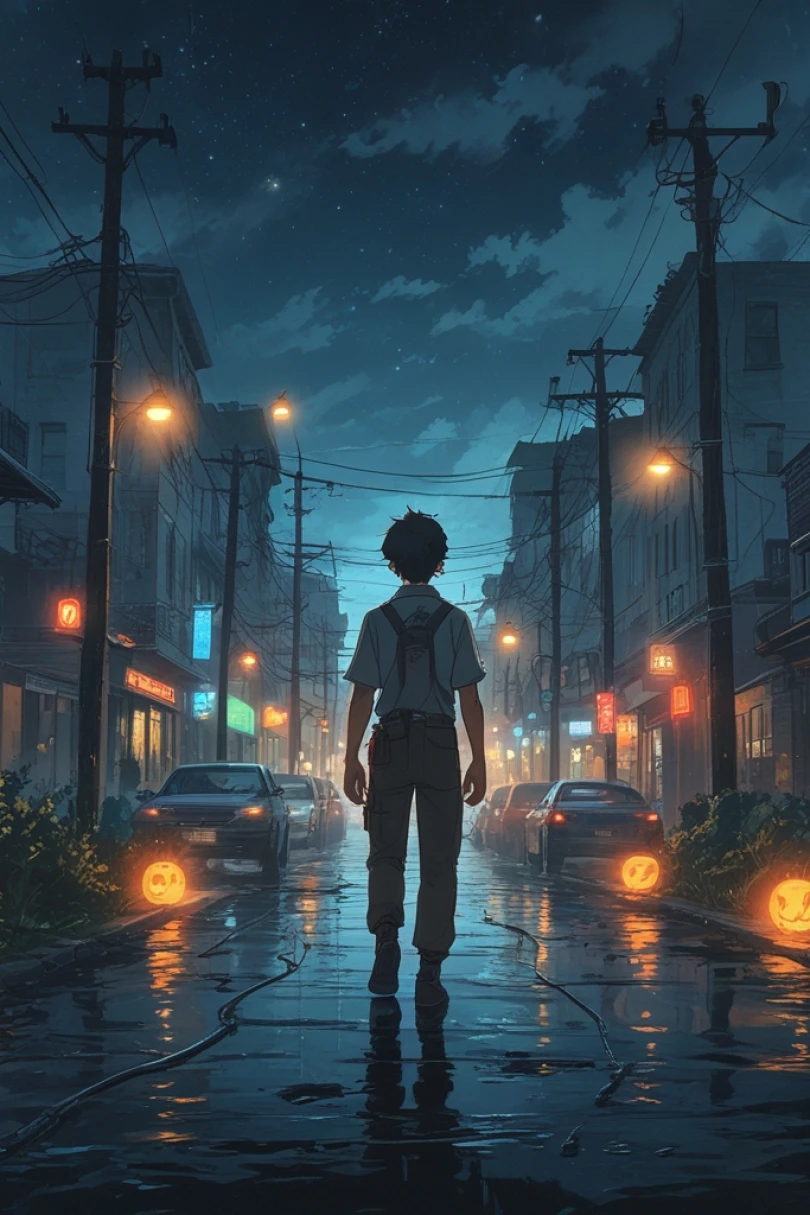
27 July 2026Honestly, this one got me on the side of the elevator panel. Harper is such a good lead because they’re not trying to be noble about anything — they’re just doing the work, listening to the motor, checking the burr on the sensor, keeping the building from turning into a headache for everybody else. That made the whole emotional part land harder for me. What I liked most is how the story treats the spire like a real neighborhood instead of a sci-fi prop. The dumpling markets, Mrs. Qiu’s cat hair getting into everything, the rooftop lanterns, the weirdly charming “rain and cumin” scent feed — it all makes the place feel lived in. And then when the story shifts from routine maintenance to Harper helping stage that one unscripted meeting between estranged siblings, it doesn’t feel melodramatic. It feels careful. Human. A little risky in the best way. I also appreciated that the interactive choices weren’t all flashy “save the day” moments. A lot of them are about what kind of person Harper is when no one’s clapping. Do they follow protocol to the letter, or do they bend the rules just enough to let something real happen? That’s way more interesting than a big dramatic rebellion. The ending I got was quiet, but it hit me harder than I expected. Very sweet, very grounded, and weirdly soothing without ever getting bland.
on Five Stops to Meet You
Megan Brooks
4 July 2026This book won me over with how oddly tender it is. A story about plumbing sounds like it should be a joke, but Valves & Voices makes every pipe, valve, and hum feel alive without getting precious about it. Avery is such a good lead — awkward in a believable way, hyper-competent, and just private enough that when they start letting people in, it actually lands. I especially liked the early Spin & Sip scenes. Mari running the laundromat like a late-night refuge, the courier who keeps pretending not to care, the old man with the fastest-cycle obsession, even the kid treating quarters like treasure — it all made the neighborhood feel inhabited instead of just “quirky.” And the detail of Avery using that battered, modified stethoscope? So good. It says everything about how they work: careful, practical, a little poetic by accident. What really stuck with me, though, was the tone. It’s funny without trying too hard, and then it’ll slip in a line about the city’s plumbing carrying more than water and suddenly you’re feeling things about municipal infrastructure, which is not something I expected to happen to me this week. The hidden diversion, the weird wrongness in the pipes, and the way Avery pulls in unlikely allies to fix it gave the whole story momentum. By the end, I was completely on board with this little found-family repair crew. Delightful, grounded, and genuinely comforting in a way that still has teeth.
on Valves & Voices
Ethan Clarke
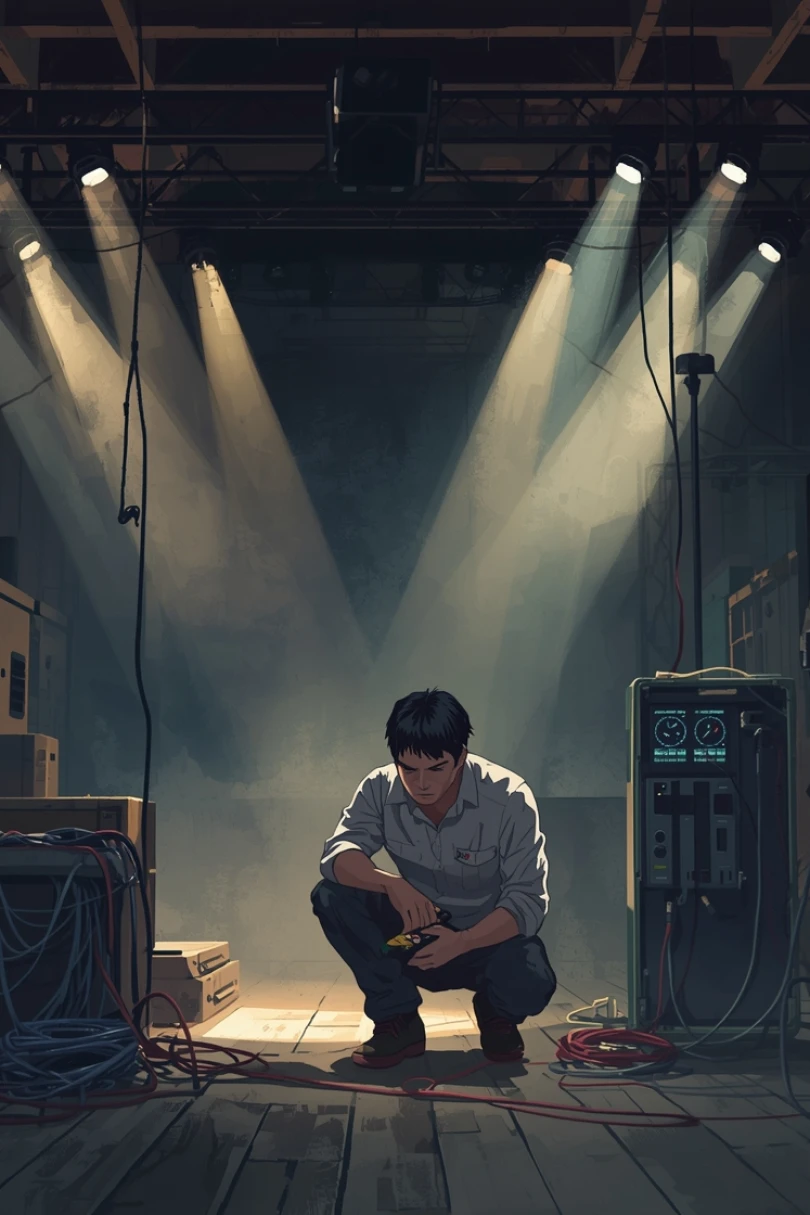
4 July 2026This book has no business being this tense about rope and hardware, but here we are. I was completely into Kade Reyes from the moment he starts reading the rigging like it’s second nature — checking the shackle threads, feeling for burrs, catching that hairline abrasion before it turns into a disaster. That opening atmosphere is so good it almost made me forget I was reading an action story. Almost. What really sold me was how the chaos feels practical instead of flashy. When the sabotage starts stacking up and the central truss is threatening to come down on a crowd that’s just trying to enjoy a parade, Kade doesn’t turn into some invincible movie hero. He stays a working pro, splicing, rerouting loads, barking at Brett, Laila, and Jun, making tiny decisions that matter a lot. Jun especially was a great contrast — all gadget noise and nervous energy — and Tether the ferret stealing gloves is exactly the kind of odd little detail that makes the whole thing feel alive. I also liked that the story doesn’t treat the aftermath like an afterthought. The way the community changes how it handles spectacle afterward gave the whole thing more weight. It’s exciting, but it’s also about people learning to take care of each other better. That landed for me.
on Holding the Line
Derek Collins
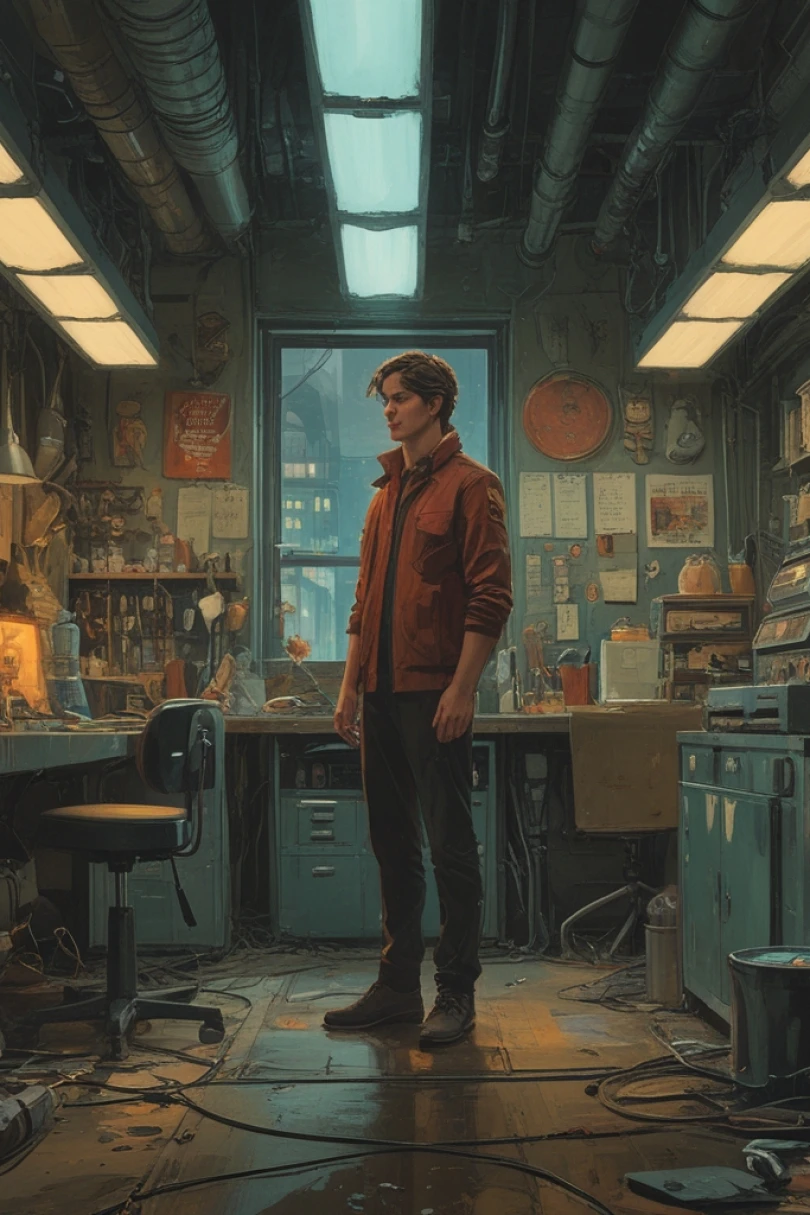
4 July 2026Honestly, this book won me over because it treats care like a skill, not a vague nice idea. Eli Navarro coming home with that screwdriver and basically becoming the guy who can retune a building’s mood sounds ridiculous on paper, but the story sells it hard. I loved the way the ProxMesh is described — not as some slick corporate gadget, but as something temperamental and a little intimate, like a house full of nerves. The best parts for me were the people around him. Maris with the deadpan jokes from the micro-repair kiosk, the throat-module cat absolutely refusing to be normal, Sera Kwon arriving with those plaster pigeons and immediately throwing the whole 12B ecosystem off balance. It all feels playful until it doesn’t, and that’s where the book gets really good. There’s real tension in the consent stuff too. The story never lets Eli slide into being some benevolent fixer who just knows best; he has to listen, renegotiate, and accept that “help” can be invasive if you’re careless. I also appreciate that the humor never undercuts the emotional weight. The algae-glaze donuts, the micro-sprinkle weather note, the weird little machines in the hallway — they make the building feel alive, which matters when the plot is basically about a community learning how to live with each other again after something dangerous. By the end, the routines they invent actually feel earned. Warm, funny, and surprisingly moving.
on Tuning DistanceLatest Comments

Claire Bennett
27 July 2026Right? And the fact that she spots the missing piece because she’s used to phantom faults is so smart. It makes me wonder whether the ‘archive’ file is a trap or the first real crack in the whole light system.
on The Rationed Sky
Dylan Carter
27 July 2026Yes! That shift from everyday workshop life to that uneasy turbine change is so good. I also liked how the glass bird already feels symbolic before it even gets to do anything — like Kae is literally shaping the thing he needs to become.
on The Glass SkylarkDerek Walsh
27 July 2026Yes! It feels like the story is asking whether care can be engineered without becoming coercion. Also, that detail about the micro-sprinkle keeping pollen “polite” is such a perfect little joke for this world.
on Tuning DistanceMaya Bennett
27 July 2026The part that got me was the building trying to learn how to be gentle without pretending nobody has a say in it. Eli’s whole “caretaker of courtesy” thing feels almost like a civic philosophy, especially with the ProxMesh, the breakfast ads, and even that ridiculous singing cat all sharing the same hallway. It’s funny, but also kind of moving in a weirdly practical way.
on Tuning Distance