About
Growing up surrounded by ticking clocks made me obsessed with how time moves through our lives—not just as a series of minutes, but as a physical force that shapes our destinies. The rhythm of gears and springs found its way into every sentence I write, creating a mechanical soul inside each story. I see the world as a complex watch movement, where every encounter is a tooth on a gear and every decision winds the mainspring of the future. My prose is built with the precision of a master horologist, seeking to capture those fleeting moments that define a lifetime before they are lost to the relentless sweep of the second hand.
Pinned Stories

Latest Reviews

Caleb Turner
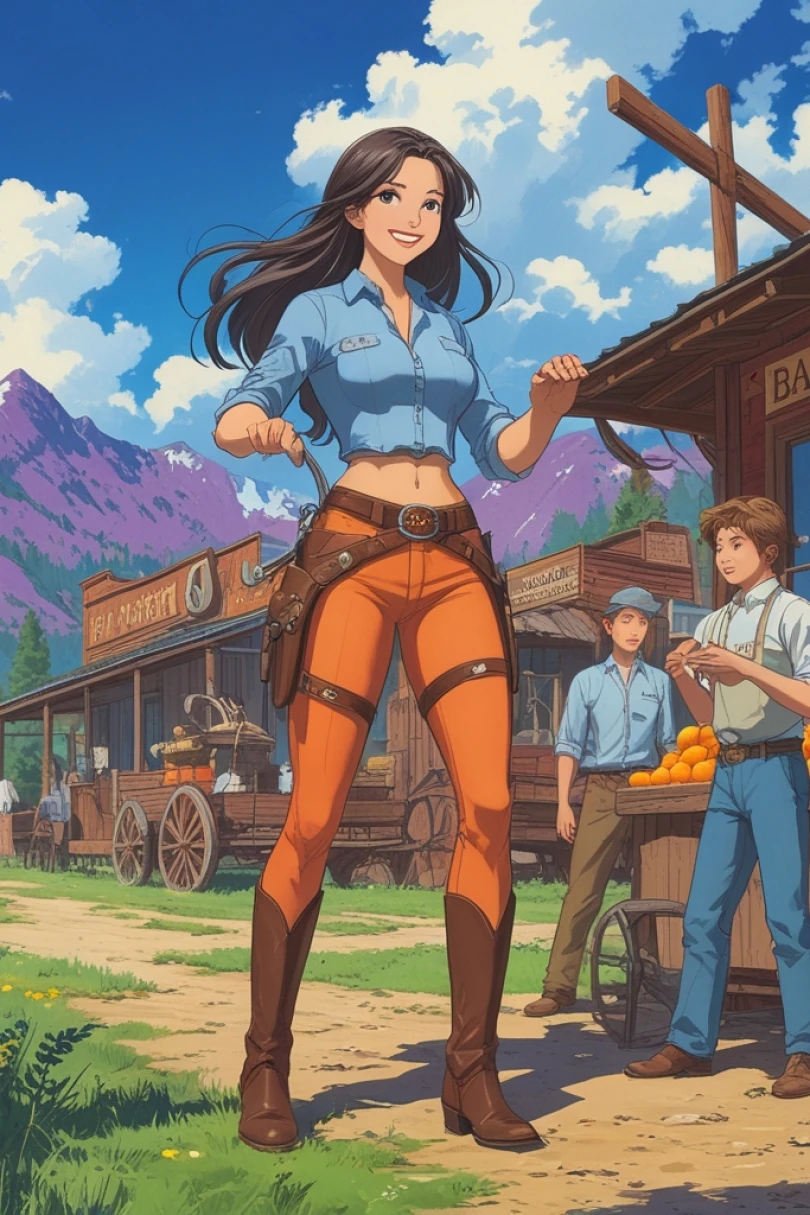
27 July 2026This book kept handing me the same answer before the question was even finished. Ada rolls into Coyote Bend with her forge, fixes June’s hoof, talks through the trade with the boy, and then every big problem after that more or less behaves itself. Even the storm-and-doctor run, which should’ve been the tense part, felt weirdly rehearsed, like the story knew exactly how many hammer strikes it wanted before anybody got nervous. I did like the set dressing — Eben’s bell, Mabel’s ridiculous crescent pies, the peaches on the porch, all of that gives the town some flavor — but it never turns into actual people. Eben stays “the cautious livery man,” Mabel stays “the baker,” and the boy apprentice mostly exists to ask Ada the right questions so she can say a wise thing and keep moving. Ada herself is competent to the point of being hard to read. I never got much sense of what she wants besides doing the job well and maybe standing in one place for once. By the end, I wasn’t annoyed so much as disappointed. There’s plenty of craft on the page, but the story keeps sanding down every rough edge. If it had let one repair fail, or let the doctor’s run cost something real, it might’ve hit harder. As it is, it’s all very neat, and that kind of undercuts the whole frontier struggle vibe.
on Shoes for Coyote Bend
Oliver Grant
27 July 2026Honestly, I did not expect a book about a spanwright to hit this hard. Eiran Vale is one of those characters who sneaks up on you — at first he seems like the quiet guy fixing things in the background, but by the end you realize he’s carrying the whole emotional weight of the city on those resin-stained hands. I loved how the book treats his craft like actual problem-solving, not just pretty fantasy window dressing. The early scene with the child wobbling on the repaired crossing is such a good example of that: it’s small, practical, and somehow more tense than a swordfight. What really got me was how the fissure isn’t just a magical disaster, it messes with everyday life. Markets, crossings, people arguing over access, the slow panic of realizing one skilled person can’t hold everything together alone — it all feels very real. The market banter also works well, especially the baker who keeps teasing Eiran while he’s clearly trying not to show how much pressure he’s under. And the best part? The story doesn’t turn teaching into some neat little speech. Eiran having to actually explain himself, get frustrated, and let other people make mistakes makes the whole thing feel earned. It ends up being about trust as much as bridge-building, which is a nice little gut punch in a very cozy wrapper.
on Where Spans Converge
Jordan Ellis
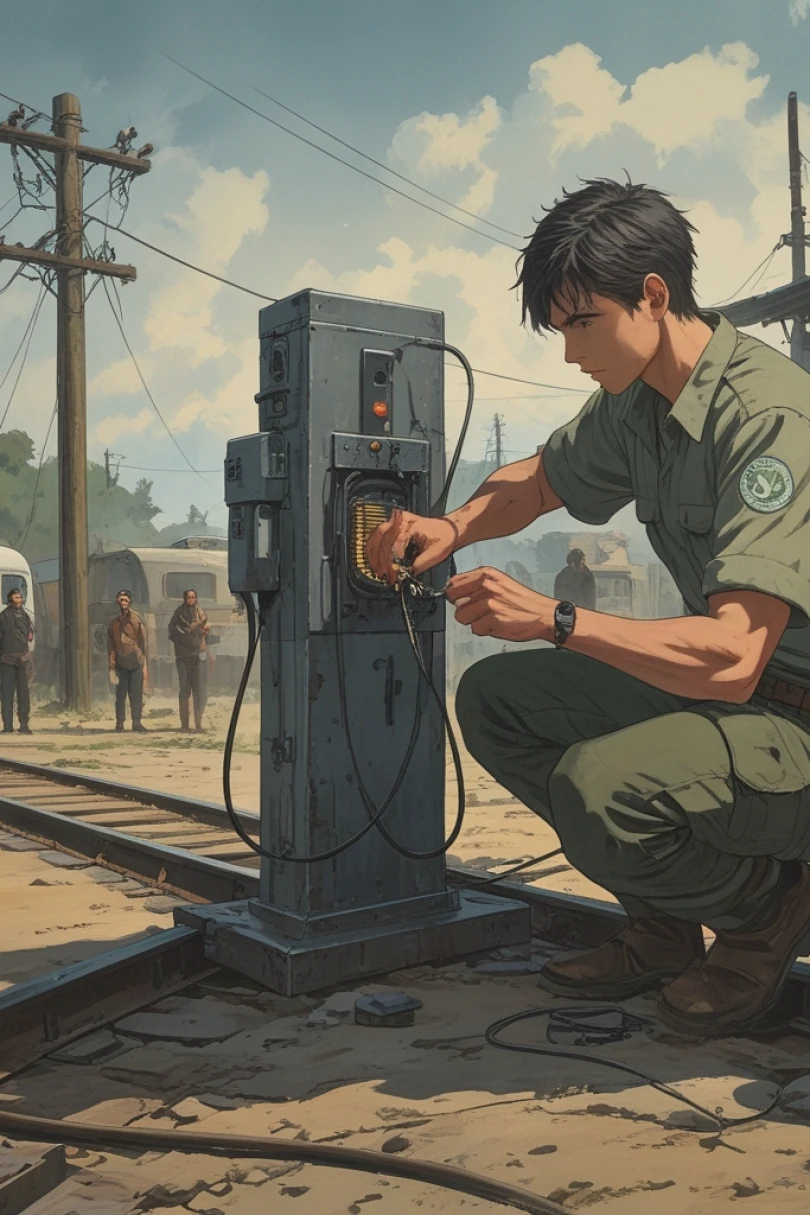
27 July 2026Honestly, this book made me care way more about a repeater tower than I expected. That sounds like a joke, but it isn’t. The whole Dry Crossing setup is so grounded and specific that every bolt, sleeve, and busted splice feels important. Rowan isn’t some big swaggering hero — just a person who knows how to keep bad wiring from becoming a disaster, and that’s way more interesting to me. The best scenes are the ones where the work gets uncomfortably real: the ferrite choke, the live splice under load, the one-minute handshake through a guarded repeater while everyone below is basically holding their breath. I also liked that the story doesn’t treat skill like magic. Rowan has to think fast, improvise, and make a call that could go wrong in a very ugly way. Finn’s part in it gives the story a nice edge too, because his apprenticeship feels messy and human instead of polished. What really sold it for me was the town atmosphere. Dry Crossing feels like a place where people have learned to live with scarcity, watchfulness, and small traditions that still matter. By the time the rescue turns into a community argument about blame, credit, and responsibility, it all feels earned. Strong, tense, and weirdly warm in the middle of all that rust.
on Hands on the Line
Caleb Morgan
4 July 2026This started with a cool premise and then kind of marched straight into the obvious. The memory-nursery setup is memorable at first — the glass pods, the photonic lattice, Mira doing her careful little rituals — but once the unmarked packet shows up, I could see the whole thing locking into place pretty early. Secret seed, suppressed leadership, brave truth-teller, public reckoning... yeah, it all unfolds exactly the way you’d expect from there. My bigger issue was the pacing. The story spends a lot of time on the mechanics of stabilizing seeds and the city’s Stability Protocol, which is fine, but then the actual character work feels thin. Mira is set up as someone torn between obedience and conscience, but she never really surprised me. Same with the supporting cast — the mentor, the auditors, the people connected to the vanished leadership — they mostly felt like pieces arranged to deliver the next reveal. The later scenes with seeds being scattered and testimonies being recorded should have hit harder, but by then I was just waiting for the inevitable “living anchor” upload and the big civic speech. Also, a few plot choices strained credibility for me. A whole metropolis running on curated memory seems like it would have way more safeguards than the story gives it credit for, and the collapse of those safeguards happens a little too neatly. Solid idea, decent worldbuilding, but it never really escaped the predictable lane it set for itself.
on Seed of RecallLatest Comments

Thomas Avery
13 August 2026Yes, exactly. That shift in the comb’s scent says so much without spelling anything out. It made the whole ritual feel invasive in a really unsettling way, like the city gets under your skin before it ever takes your name.
on The Toll of HollowmereMegan Clarke
13 August 2026I was not ready for how brutal the comb detail was. The way Seren’s mother’s last keepsake starts out smelling like yeast and rain, then ends up carrying the bell’s metal tang, is honestly devastating. It feels like the city doesn’t just take memories — it contaminates them until they belong to the machine. That final quietness hit harder than any big dramatic ending could.
on The Toll of HollowmereTessa Caldwell
13 August 2026I really liked how the story makes the trade feel tactile and alive — the hammer dings, the oilcloth-wrapped files, even the coal-smudged forge all make Ada feel real before she’s explained. And that detail about the town’s “weekly custom” of weird triangle pies? So odd in the best way. It gives Coyote Bend a personality all its own.
on Shoes for Coyote Bend
Evelyn Park
11 August 2026Yes! That’s exactly it. The story makes the gear feel as important as the people, which is a cool way to show how the co-op works. Also the “hold weight, literally and politically” part is such a good way to put it.
on Tetherline