
Wrenches and Spotlights: Nights at the Marigold
Join the conversation! Readers are sharing their thoughts:
About the Story
A YA story about a teen lighting technician choosing between a prestigious internship and staying with a community theatre.
Chapters
Story Insight
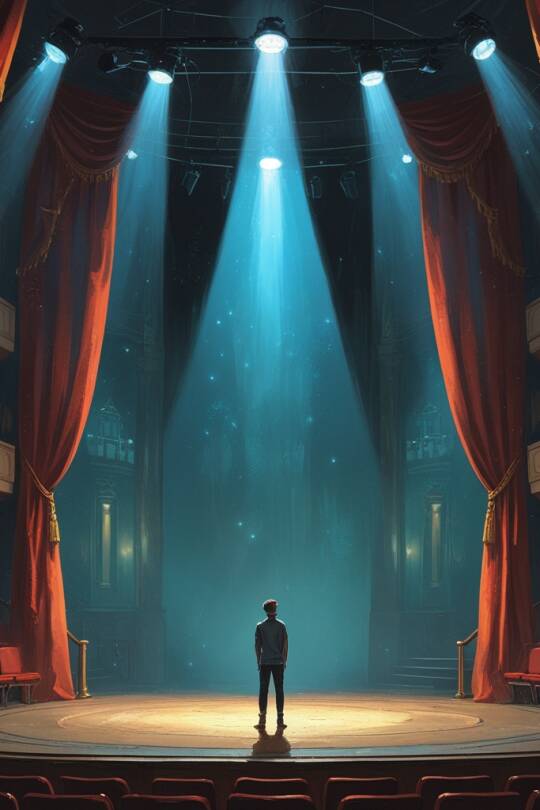
Rowan Patel is a seventeen-year-old lighting technician whose world is built of cables, brass clamps, and small, stubborn rituals. He works at the Marigold, a community theater whose backstage smells of solder, lemon oil, and the kind of tea that volunteers keep topping up at midnight. When a polished invitation arrives from LuxSphere—an internship that promises training, prestige, and a tidy stipend—Rowan faces a practical dilemma that feels larger than either option: accept a career-changing opportunity or stay to keep the Marigold’s premiere from collapsing. The tension that follows isn’t posed as an abstract moral puzzle but as a tactile, sweaty responsibility: a dimmer rack that groans, a corroded bus bar, a follow spot with a temper, and a blackout that demands hands, not revelations. Humor and gentle absurdity thread through the narrative—Rowan names his wrench “Big Red,” a cat named Disco Bob stages an intermittent takeover of the lighting console, and a biscuit tin becomes an improvised softbox—so even when stakes rise the tone stays warm and human. The story centers on trade-offs and the craft that makes them meaningful. By placing a trade-off at the intersection of profession and belonging, the plot treats technical skill as moral agency: soldering a connection, rerouting power, and manual-following a performer’s face are not only practical acts but also choices that shape the community’s fate. The writing leans on concrete detail—DMX runs, fader sweeps, labeled fuses, inverter packs and emergency distro improvisations—without turning into a manual; those specifics earn the narrative its authenticity and make Rowan’s expertise feel earned. His relationships are equally grounded: Lena, the actor who depends on his light to hold a fragile monologue; Mr. Alvarez, the patient mentor whose absence creates a real logistical gap; and Noah, whose interplay with Rowan mixes rivalry and camaraderie. Small domestic scenes—a bowl of lentil stew left for late-night crew, the neighborhood vendor folding cardamom buns, volunteers hanging bunting—expand the world beyond the immediate crisis and give the stakes a human scale. Written in a voice that balances practical problem-solving with wry youthfulness, the novel moves from ricocheting cynicism toward a cautious, earned hope. Conflict unfolds in real time and resolves through action: the climax hinges on Rowan’s professional decisions under pressure, not an interior epiphany. The atmosphere is tactile—rain drumming on tin roofs, grease stains on hoodies, the glow of a handmade light pool—and the pacing privileges scenes where hands, bodies, and tools do the convincing. The book will appeal to readers who enjoy intimate coming-of-age stories grounded in subcultures rarely treated as central metaphors, where competence is a form of care and community feels like a scaffolding that must be actively maintained. If you like a YA story with practical stakes, honest humor, and a protagonist whose growth is shown by what he does with his hands, this is a close, thoughtful portrait of how work and loyalty can illuminate one another.
Related Stories
The Sounding Line
When 19-year-old Isla Reyes hears her missing brother’s harmonica echo through an old lighthouse radio, it draws her into a hidden network beneath a Maine harbor. With a retired acoustician and a scrappy intern, she exposes a corporate scheme and finds a new way to listen—to the sea, to grief, and to herself.
A Small Reckoning
Seventeen-year-old Etta uncovers a boxed confession and a small, telling piece of evidence that ties her missing brother to a night the town prefers to forget. As irony, loyalty, and power collide, she must decide whether to expose a hidden truth that will unsettle a whole community.
Borrowed Moments
June Navarro inherited her family’s curios shop and discovered that certain small objects kept other people’s lived moments—first-person memories that appear when touched. When one such object seems linked to her missing sister, June must decide whether to pry and risk exposing private lives, or to protect community privacy against a company that wants to commercialize these memories. Tension mounts as she and her friends trace clues to a mill, confront the firm’s offers, and learn a quiet truth that forces a new kind of stewardship.
Signs for Strangers
The neighborhood smells of pastry and varnish; a young apprentice sign painter navigates a commission that could humiliate a classmate. June uses craft, timing and a small crew of friends to alter a public moment and then opens her workbench to the community, turning skilled hands into a shared resource.
Mending Days
In a town where repairs can also smooth painful memories, an apprentice mender discovers a porcelain star containing a fragment of her missing mother’s voice. When she uncovers a pattern of municipal erasures, she and her allies retrieve sealed fragments and broadcast a preserved memory across the town’s bell network. The revelation forces confrontation with entrenched authorities, reshapes how memories are stewarded, and sets a community toward a new, public practice of repair.
Unwritten Lines
June Harlow finds a peculiar blank journal that makes written lines come true. As she uses it to mend fractures after her sister’s death, memories begin to fray for others. When the cost becomes clear, she confesses, faces the fallout, and tries to rebuild truth by human work rather than quick fixes.
Other Stories by Sylvia Orrin
Frequently Asked Questions about Wrenches and Spotlights: Nights at the Marigold
What is Wrenches and Spotlights: Nights at the Marigold about and who is the protagonist ?
A YA drama following Rowan, a 17-year-old lighting technician, who must weigh a LuxSphere internship against staying to save his community theatre's premiere. The story focuses on practical stakes, hands-on work, and local ties.
Where does the story take place and how does the Marigold theatre shape the plot ?
Most scenes unfold in the Marigold, an aging community theatre. Its patched rigging, temperamental dimmers, and volunteer culture create technical crises and intimate moments that drive the plot and character choices.
What central conflict drives Rowan's decisions and how is it resolved through his profession ?
Rowan faces a moral and practical dilemma—personal advancement versus responsibility to his community. The climax is resolved by his technical expertise: rerouting power, manual-following, and leading repairs under pressure.
Is the story more about emergencies and action or relationships and personal growth ?
It blends both: action scenes (blackouts, broken fuses, rigging fixes) provide urgent plot momentum, while relationships—mentorship, friendship, community—deepen the emotional stakes and show growth through action.
Are there humorous or absurd elements in the story and what purpose do they serve ?
Yes. Light moments—Disco Bob the cat on the console, Rowan's named wrench 'Big Red', improvised biscuit-tin softboxes—add warmth, relieve tension, and humanize the crew without undercutting the seriousness of the crises.
Who are the key supporting characters and how do they influence Rowan's journey ?
Lena (lead actor) relies on his cues, Mr. Alvarez is a steady mentor, Noah mixes rivalry with support, and volunteers provide practical aid. Each shapes Rowan’s sense of duty, skill, and belonging through real teamwork.
Ratings
Right away, the writing hooked me—the Marigold's onion-scented oil and warm fabric leap off the page and you can practically taste the dust and stage makeup. Rowan is an absolutely winning protagonist: hands that smell of solder and black coffee, talking to a stubborn follow spot like it's a petulant roommate, and naming his wrench Big Red (three moves and an ex-girlfriend—chef's kiss). Those little details make him feel lived-in and real. I loved the scene with Disco Bob sliding a paw across the dimmer and bathing the stage in carnival green—it's funny, humanizing, and it underscores how much this theater is a messy, beloved community. The excerpt balances humor and tenderness so well; the lines about the follow spot “having an opinion” and Rowan giving it a “stern talking-to” had me smiling and rooting for him. Beyond voice, the atmosphere is the real star: the drizzle stitching city lights, the late-night bakery pastry box, the hum of lights that rub at the back of your teeth. You can feel the tug of two worlds—the shiny internship versus the warm, imperfect Marigold—and that stakes-of-growing-up friction is classic YA done with heart. Smart, funny, and gorgeously sensory. I want to know what Rowan chooses. 😊