
High Hopes, Low Ropes
Join the conversation! Readers are sharing their thoughts:
About the Story
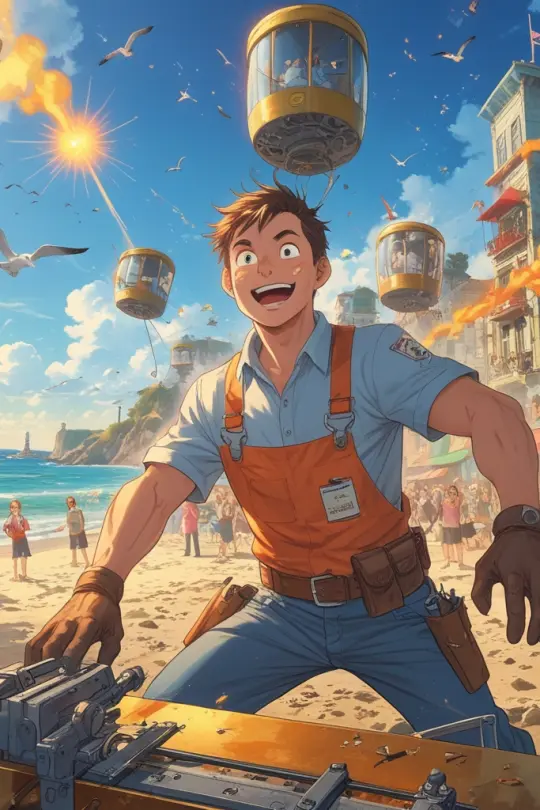
In a seaside town, an exuberant elevator technician chases brief fame when a Vertical Festival offers him a stage. After a dramatic mishap that he resolves with hands-on skill, he faces inspection, community response, and a reoriented ambition—beauty paired with careful craft.
Chapters
Story Insight
High Hopes, Low Ropes follows Hugo Darnell, an exuberant elevator technician in a seaside town that treats the ordinary like festival material. Hugo’s expertise with pulleys, splices, and governors is presented with affectionate detail: he hums to check tolerances, kneels in shafts with the economy of a practiced craftsman, and approaches problems the way a musician approaches a score. A Vertical Festival offers him a public stage, and the promise of applause collides with a real, mechanical warning—a frayed cable that demands honest repair. Torn between a removable, showy regulator he designs to dazzle crowds and the slower, more responsible work of splicing and inspection, Hugo’s choices set the plot in motion. The town itself becomes a characterful backdrop—lemon-tart stalls, a tuba-playing neighbor, a sequined subculture called the Upenders, and fog that tastes faintly of citrus—giving the narrative warmth and a steady string of comic incidents. The story balances physical comedy with a close attention to craft, so humor is never merely ornamental: it arises from the contrast between theatrical spectacle and the hard realities of maintenance. A collision of absurdity and engineering precipitates a mid-festival crisis that demands direct action; the tense, farcical centerpiece is resolved through rope-access technique, improvised rigging, and the protagonist’s steady hands rather than a sudden revelation. Along the way, Hugo’s relationship with his pragmatic apprentice Tess provides an emotional anchor—sharp, pragmatic, and wryly humorous—so that the book explores how work forms identity, how mentorship reshapes ambition, and how a small community negotiates safety, pride, and celebration without lapsing into caricature. The prose favors tactile detail and warm satire: readers who enjoy well-observed tradesmanship will find the sequences of splices, crimping, and emergency lowering both technically credible and narratively satisfying. This four-chapter comedy offers a compact, human-scale arc: setup, temptation, crisis, and aftermath. It is rich in sensory specifics—market musicians, pastry stalls, and decorative rituals that don’t depend on plot mechanics—so the world feels lived-in even when the comic beats turn absurd. The story is best suited for those who appreciate gentle humor with real stakes, conversational dialog that reveals relationships as much as motives, and a tone that alternates between affectionate satire and earnest craftsmanship. Practical details are treated with respect and accuracy, while the emotional throughline moves from brash ambition toward a steadier sense of purpose, all without heavy-handed moralizing. If you enjoy fiction that celebrates the intelligence of hands and the small absurdities of communal life, this is a deliberately warm, skilled read that mixes technical verve with comforting humor.
Related Stories
The Great Grin Heist
A light-hearted caper in the city of Grinbridge where a young repairman, a knotter, and a whistling teapot reclaim stolen laughter from a faceless corporation. A comedic tale about community, small inventions, and the odd jobs of keeping joy alive.
The Pancake Planet Panic
When Batterby-by-the-Bay’s beloved sourdough starter vanishes, ten-year-old tinkerer Juno and best friend Tariq team up with a prickly lighthouse keeper, a humming whisk, and a gull named Button. Their foam-filled chase into a celebrity chef’s floating stage becomes a hilarious quest to bring Grandmother Bubbles home.
Leo Kettle and the Town Without Taste
Ten year old Leo loves cooking at his aunt’s diner, until a mysterious Advisor turns Puddleford’s food bland. With a talking cat, a pun loving friend, and enchanted kitchen tools, he quests for Laughing Yeast and Whispering Peppercorns to foil a flavor stealing machine and restore Soup Day with laughter.
The Great Pancake Parade Mix-Up
When a new pancake machine and a pinch of experimental yeast turn breakfast batter into a friendly, wobbly blob, ten-year-old Nell Pepper must save Butterbell Bay’s Pancake Parade. With a listening whisk, a puffin named Pip, and the whole town, she flips chaos into comedy and pancakes into a triumph.
The Festival Fumble
A small-town events coordinator faces a catastrophic double-booking on the day a potential sponsor visits. They improvise a mash-up festival of a children's chorus, antique cars and poetry. Chaos, confetti, and community heart collide as the town learns to present its messy charm.
Head Over Herbs
Under the clatter of pans and warm kitchen lights, Jamie—an unassuming line cook—must run a charity gala after the head chef abandons service. Missing ingredients, a probing critic, and loyal coworkers force Jamie to improvise with a family braise that risks everything in a single night.
Other Stories by Giulia Ferran
Frequently Asked Questions about High Hopes, Low Ropes
What is High Hopes, Low Ropes about ?
A warm comic tale set in a seaside town where an elevator technician balances ambition and responsibility. A Vertical Festival sparks spectacle, a mechanical mishap, and a hands-on rescue that reshapes his goals.
Who is Hugo and what role does he play in the story ?
Hugo Darnell is an eager, theatrical elevator technician who treats repairs like performance. He designs inventive fixes, mentors an apprentice, and faces the consequences of choosing showmanship over strict procedure.
What kind of comedy does the story use ?
The humor mixes physical farce (stuck cabs, rope-access rescues) with situational and character-based comedy from small-town rituals, eccentric subcultures, and everyday absurdities like a tuba-playing neighbor.
How accurate are the technical and craft details ?
Technical elements—splicing, emergency lowering, rope rigging—are presented with credible, practical detail. The craft is authentic while occasionally exaggerated for comedic effect and narrative clarity.
How is the climax resolved and why does it matter ?
The climax is solved through Hugo’s professional action: rope access, improvised rigging, and manual repairs. The resolution emphasizes skill and responsibility rather than a sudden revelation or lucky twist.
Is the story suitable for family or casual readers ?
It suits readers who enjoy gentle, skill-focused comedy. It features mild peril (a stuck elevator) resolved by expertise, light absurdity, and warm community scenes without graphic content or mature-only themes.
Ratings
I enjoyed parts of this — the small tactile details (the tiny lamp balanced across a spindle, Hugo's humming, the cappuccino gag) are vivid — but overall the story felt a bit predictable. The Vertical Festival mishap is set up like a big turning point, yet the way Hugo resolves it feels almost too neat: a hands-on fix, applause, and then inspection without much real suspense. The inspection and community reaction are sketched rather than explored; I wanted more tension or consequences, not just a tidy reorientation of ambition. The small-town charm sometimes slides into cliché: quirky townsfolk, the humble craftsman discovering new purpose, the practical woman who keeps him grounded. Tess is interesting but underused — her perspective could have complicated Hugo's arc in a compelling way, instead of mainly serving as a grounding presence. Still, there are lovely sentences and a warm tone; it just doesn't push beyond its familiar beats.
I came for the mechanical jokes and stayed for the heart — and for the bizarrely specific image of a cappuccino behaving like a gull. 😂 Hugo's humming — described almost like a ritual prayer — is absurd and endearing, and the author milked that gag beautifully (bollards saluting, anyone?). Tess is the kind of side character who quietly steals scenes: the rope bag, the thermos, the look that says “you again?” The Vertical Festival mishap could have been a slapstick-free-for-all, but instead it becomes a clever showcase for Hugo's skill and humility. The inspection and town fallout add a nice layer of consequence, so the story never tips into pure whimsy. Witty, warm, and just the right amount of mechanical humor — loved it.
Short and sweet: this was delightful. The early ritual scenes — the hum, the tiny lamp test, Hugo wiping grease on a once-white rag — are so tactile I could smell the coffee from the bakery two doors down. I loved the coworking elevator moment (crema hitting the ceiling!) and Tess's deadpan presence. The mishap at the festival and Hugo's hands-on fix gave real stakes without turning into melodrama. The ending, with inspection and a changed ambition, felt earned. A warm, witty little read about craft, community, and finding beauty in doing things well.
High Hopes, Low Ropes is a finely tuned comedy about workmanship and community, and it earns its laughs by respecting its mechanics. The author uses recurrent motifs — humming as calibration, the lamp across the spindle, and the espresso physics gag — to build a tonal consistency: this is a world where craft and charm are literally in tune. Hugo is sketched with affection: his ritualistic hum, his acceptance of applause with both hands on the wrench, and the way he treats the governor like an instrument are all compact character beats that tell you who he is without an info dump. Tess Alvarez introduces a pragmatic counterbalance; her rope bag and deadpan observations ground Hugo's flare. The Vertical Festival scene works because the mishap isn't a pure stunt — it's an invitation to show Hugo's competence under pressure. The aftermath (inspection, community response) thoughtfully explores consequences and rebirth: his ambition doesn't simply pivot to fame but to reoriented purpose. Stylistically the prose is economical but evocative — the town's eccentricity is contagious, and the comedic moments are underscored by genuine human connection. If you're into stories where technical detail becomes a source of humor and heart, this one nails it.
I loved this story. Hugo's morning ritual — sliding open the van, the smell of toolbox oil and coffee steam — felt like stepping into a cozy, humming world. The image of him balancing a tiny lamp across a spindle like a prayer stuck with me; it's such a small, precise detail that says everything about how he approaches life. The coworking studio elevator scene where a ragged bolt makes the founder's cappuccino pitch like a seagull had me laughing out loud. Tess Alvarez is a perfect foil: practical, steady, that rope bag slung over her shoulder. The Vertical Festival mishap and Hugo resolving it with hands-on skill made for a satisfying, cinematic moment of craft triumph. The inspection and community reaction afterward give the ending weight — not just a gag, but a shift in ambition toward beauty married with careful craft. Warm, funny, and tender — the kind of small-town comedy that leaves you smiling.