
Pip and the Moonthread
Join the conversation! Readers are sharing their thoughts:
About the Story
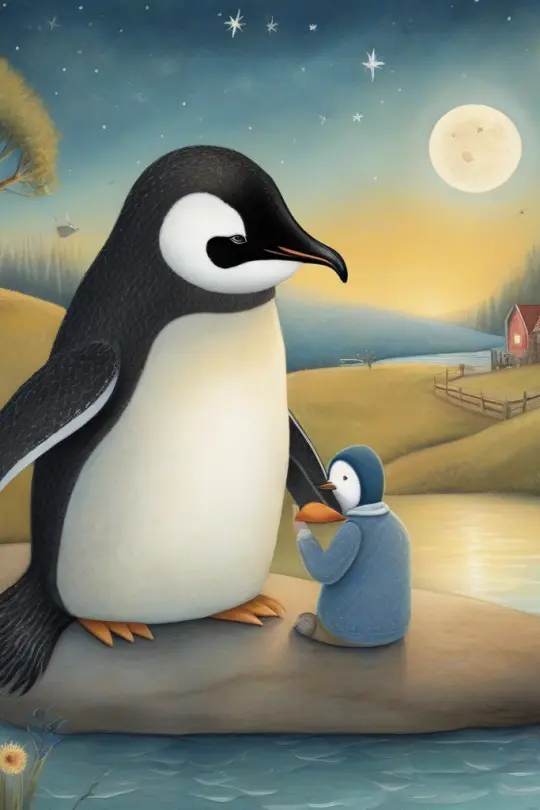
A gentle bedtime tale about Pip, a patchwork penguin from Willowmere Harbor, who finds the missing Moon-Bead that keeps the town's nights quiet. On a soft journey of mending, kindness, and clever stitching, Pip learns how small hands can mend what loneliness has frayed.
Chapters
Related Stories
A Pocketful of Moonbeams
Night-breath hush, a small girl climbs rooftops to coax a shy ribbon of light home. Mila carries a market-made pocket and pebble, a toy companion, and a cloud’s quiet help. She must name the moonbeam and prove she will remember in a way the light will accept. Gentle, patient, and wreathed in soft wonder, the story follows her final, tender steps toward Tess’s sleeping room.
The Keeper of the Last Stitch
A gentle, bedtime tale about Eloi, a nine-year-old apprentice in a seaside town who tends a communal Dream Blanket. When dreams begin to unravel, Eloi follows silver threads through hollows and glass fields with a Moon-Spool and a tiny moth to stitch sleep back together.
Mila and the Night-Stitch
A gentle bedtime adventure for children about a young stitcher who follows missing lullaby pieces through a seaside town. With patient hands, small gifts, and new friends, Mila mends the thin nights and teaches a lonely keeper how to let songs be free.
Noa and the Quiet Bell
When Cloudhaven’s Great Bell falls silent, ten-year-old Noa sets out by skiff to find its missing voice. Guided by a storm petrel, a Listening Shell, and a glimmering wind-thread, he faces fog riddles and a barge of bottled sounds. In a gentle adventure, he brings the bell home—and teaches a weary collector how to sleep.
The Pillowboat’s Hush-Song
Mira can't sleep in the new room: the noises are unusual, the shadows live in their own way. At night, her bed turns into a soft boat, and the Wisp moth leads her along the corridor, garden, and cloud bridge. Meeting the clock and Lalla the fox, Mira gathers "notes of silence" for a future lullaby.
The Little Star That Lost Its Way
Milo, a child who frets at night, finds a tiny fallen star on his windowsill. Over gentle evenings he gathers quiet practices—rooted breathing, backward counting, a purring companion, and small honest stories—and walks them up a moonlit hill to help the star find its place among the sky again.
Other Stories by Stephan Korvel
Ratings
This is a pretty tale with charming images, but there are a few narrative gaps that bothered me. The Moon-Bead is central to the premise, yet its origin and logic aren't explored — why does a single bead control the hush, and how did it go missing? Those questions make the rescue feel a little thin. Pacing also sagged for me in the middle where small repairs are catalogued; it read more like a checklist than rising stakes. Young readers will likely be soothed by the tone and details, but adult readers might notice the plot holes and familiar tropes.
I wanted to love Pip and the Moonthread, and parts of it are sweet — the imagery and Pip's gentle work are lovely. But I found the plot a bit predictable. From the opening description you can already guess that Pip will mend the missing Moon-Bead and restore the town's quiet, which makes the middle feel like a series of checkboxes rather than a real journey. Also, the book leans heavily on familiar cozy clichés (patchwork protagonist, wise tailor, magical thread jars), so it didn't feel very new. For a bedtime read it's pleasant enough, but if you're looking for surprising twists or deeper worldbuilding this one plays it safe.
I wasn't expecting to be moved by a patchwork penguin, but here we are. The story's charm is low-key and cumulative: a tiny whale sewn into a blanket, the hush that sounds like a woollen blanket being folded, Pip's humming 'the size of a sigh.' There's some true poetry in the descriptions without ever feeling flowery. It's paced perfectly for a bedtime read — calm, intimate, and punctuated by small moments of community (Mrs Brindle's tap at the window, the Loom meeting). If you're after a cozy, slightly melancholic bedtime tale that reassures kids about mending things (and hearts), this is your book.
As a former primary-school teacher, I'm picky about bedtime stories, but this one charmed me. The writing balances whimsy with warmth — it never talks down to children. Scenes such as Pip at his window, humming and choosing threads from his jars, are quietly evangelical about the value of making and mending. The map 'for quiet' is a lovely conceit: a practical map that charts emotional geography. If I had one small quibble it would be that the Moon-Bead's mechanics are a little unexplained (why does one bead keep nights quiet?), but the story's emotional truth compensates. Overall: tender, imaginative, and restorative.
This was a true delight. There's a dependable comfort to tales where the hero's job is quietly useful — Pip mending things with the 'softest stitches' is so appealing. My son loved the jars of thread and insisted we pretend to sew a 'moon-stitch' afterward. The book is paced like a slow tide: you feel worries ebbing as the plot moves. Even the smaller details are charming: the button eye the colour of boiled chestnuts, the music-box playing lullabies backwards. It reads like an invitation to kindness, and that's a nice thing to tuck kids in with at night.
I adore picture-books that feel like lullabies, and Pip and the Moonthread manages that well. The sensory writing — sea smelling of wet pebbles and sugar, the cedar and lemon oil boards — creates an instant safe world. The emotional center is grounded in small acts: sewing a whale into a blanket, fixing a bear's worry-pocket, learning to listen to where the hush has gone. The author's gentleness is the story's superpower. The pacing is delicate, perfect for reading aloud slowly to little ones. The final repair of the Moon-Bead made me a little misty; it's the kind of ending that reassures without lecturing.
Such a charming little book! My daughter clutched the pages when Pip hummed that ‘tune the size of a sigh’ — instant quiet. The world-building is clever: jars of thread (one that glows like dawn!), a torn nightcap wing, and the map that marks sleep like treasure. The Loom scene with Mrs Brindle calling everyone together had just the right hint of town-wide worry without scary stakes. The Moon-Bead reveal felt warm rather than dramatic, and the message about small hands mending loneliness hits home. Favorite bit: the backwards lullaby music-box — hilarious and oddly sweet. 10/10 for bedtime vibes 🙂
Short and sweet — this felt like a bedtime hug. I liked how the story trusts children to sit with quiet feelings; Pip's work of mending (buttons, stuffing, lullabies) becomes a gentle metaphor for tending to loneliness. The passage where Pip reads the map of quiet and knows which lullaby is needed is a lovely, magical detail that made me pause. Language is gentle and never condescending, and the pacing is ideal for a nighttime read: slow, reassuring, and small-stakes. Recommended for parents looking for a calm, imaginative story to end the day.
Pip and the Moonthread is an elegantly simple piece of children's fiction that does a lot with a little. The prose leans poetic without being precious: details like Pip's button eye and the smell of cedar and lemon oil are economical but evocative. I appreciated the craft metaphors — threads, stitches, and the map of quiet — which double as emotional language about care and community. The narrative arc (Pip finding the missing Moon-Bead and restoring the town's hush) is straightforward, but the book's strength lies in atmosphere and character work. The supporting town feels lived-in thanks to small touches — the backwards lullaby music-box, the jars of different thread — which ground the fantasy. Good for ages 5–11 as the tags suggest: calming for little ones, satisfying for slightly older readers who notice the layers.
I read Pip and the Moonthread to my 6-year-old and we both sighed through the last page. The imagery is so soft — the jars of thread on Pip's workbench, the map of quiet with its pale blue loop, and that tiny X at the pier where the Sleep-River can be heard — it all felt like being tucked in with a warm cup of milk. I loved the scene where Mrs Brindle taps at Pip's window and you can feel the night leaning in; and when Pip sews the little whale into the blanket you can almost hear the hummed tune. The resolution around the missing Moon-Bead felt perfectly gentle and earned. A dreamy, comforting bedtime tale with a neat lesson about kindness and small hands mending big loneliness. Highly recommended for bedtime reading.