About
Shoemaking taught me to value the ordinary people who keep society functioning through honest work and quiet dignity. The daily lives of working people contain more drama and meaning than most literary fiction acknowledges or explores.
Pinned Stories



Latest Reviews

Megan O'Hara
11 August 2026Honestly, this book made me care way more about tiny repairs than I expected. Asha’s whole world feels so specific and alive — the solder-and-cumin workshop, Patch being snarky from the rail, Mara barging in with lentil broth energy, all of it. That stuff isn’t just flavor, either. It matters, because the story keeps proving that little acts of care can change someone’s life more than any flashy hack ever could. What really got me was the scene where Asha’s seam lets a young person be seen by their estranged parent. That should feel gimmicky in lesser hands, but here it lands like an actual emotional event. The book doesn’t rush past the consequences, either. Once the corporate scouts show up and the neighbors start weighing in, you can feel how fragile Asha’s work is — not because it’s weak, but because it’s intimate. I also liked that Asha isn’t written like some rebellious cyberpunk savior. She’s practical, a little guarded, and very good at what she does. The whole thing has this quiet confidence to it. No giant speeches, no fake edginess, just people trying to keep a neighborhood from getting flattened by greed. That worked for me completely.
on The Interface Tailor’s Knot
Megan Hart
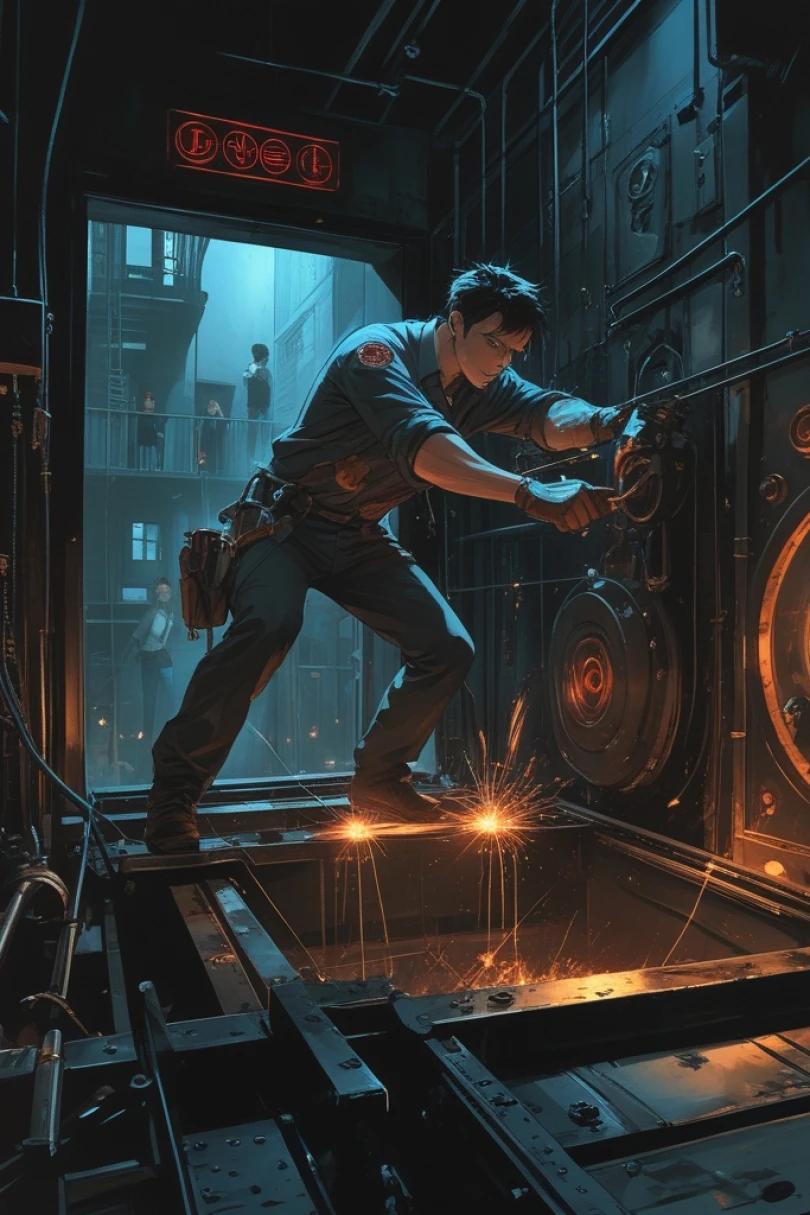
27 July 2026This is the kind of horror that gets under your skin by acting like it’s just about maintenance. Elias showing up in the rain, the busted elevator in Halcyon Tower, June Kline offering peppermint tea like this is a normal Tuesday — all of that grounded me before the story started tightening the screws. And then it keeps getting stranger in this very specific, very believable way. I loved how the book treats repair work as something almost heroic without ever making Elias some polished action guy. He’s tired, practical, a little guarded, and completely in his element when he’s elbow-deep in cables and braces. What really worked for me was the community angle. The rotating human-key system is such a nasty, brilliant idea. It’s creepy because it’s improvised, but also kind of sad because you can see how people talk themselves into making the choice for the sake of everyone else. The neighbor drills, the little bits of planning, the way Mr. Chen and June and the others become part of the machine around the menace under the building — that stuff gave the story a weird warmth that made the horror hit harder. The ending landed for me too. Elias deciding to stay didn’t feel cheesy; it felt like someone choosing a burden because no one else understands it the way he does. The whole book has this low, steady hum of dread, but it’s also about responsibility and care, and that combo really stuck with me.
on Those Who Tend the Cables
Megan Ashford
4 July 2026I wasn’t expecting to get so invested in a story that starts with a church funeral and a damp churchyard, but here we are. Adeline Hart feels like the kind of woman history usually forgets until she’s standing right in the way of the people trying to take everything from her. I really liked how the book keeps its focus on small, practical things — Elias Thorne’s tools, the parish ledger, the boy clinging to her apron, the muddy green everyone is suddenly talking about like it never belonged to them in the first place. What makes it work is that the tension never feels fake. The squire and his people aren’t just twirling moustache villains; they’re polished, cold, and much scarier for being believable. The scenes around the church and later the legal pushback have this quiet pressure to them, like everyone knows one wrong word could cost the village more than land. Adeline’s not a polished orator, which is exactly why her scenes land so well. She’s stubborn, tired, and clearly done being polite. There’s something deeply satisfying about a historical novel that understands paperwork can be as threatening as a fence. This one does. And it does it without losing the human side of the story. Really strong stuff.
on Bell and Parchment
Megan Wallace
4 July 2026This book hit me harder than I expected. The opening alone — that notice nailed to the croft door, fluttering in the wind like it’s already winning — sets the tone so well. Aileen feels completely real to me: stubborn, scared, angry, but not in a dramatic, polished way. Just a woman trying to keep a roof over her brother’s head and hold onto the place her family has worked for generations. What I liked most was how the story doesn’t treat the Clearances like some distant historical backdrop. It’s all immediate: the smell of peat, the township gossip, the split between neighbours who want to resist and those who think taking the estate’s offer is the only sensible thing left. Morag was especially good — sharp, wary, and not there just to hand out wisdom. And Duncan’s fear after reading the notice really got to me because it’s so plain and unshowy. The legal side worked for me too. The fragile indenture, the factor who isn’t quite an enemy and isn’t quite an ally, the slow pressure of a system that can flatten people with a single stamped paper — it all felt convincing. I expected a straightforward fight, but the book gives you that ugly middle ground where every choice costs something. By the end I was genuinely invested in whether the croft could be saved, and in the answer, whatever it was. Quietly devastating in the best way.
on The Last CroftLatest Comments
Maya Collins
13 August 2026Yes! The shoe makes it feel like the building has already taken something and is just waiting for more. Elias staying behind instead of walking away is what really sells the ending for me.
on Those Who Tend the Cables
Sophie Grant
13 August 2026Yes! That “normal cost” part is what gets me too. It’s like everyone in Briar Hollow has agreed to live with a little amnesia just to keep the dead from slipping loose. The coat felt so small and human against all that supernatural weight.
on Between the SeamsDerek Nolan
13 August 2026The detail that stuck with me most was the child’s shoe in the elevator car. That single object does way more than any big monster reveal could—it makes the whole sealed shaft feel personal and wrong. I also liked how Elias treats the building like a living thing that needs care, not conquest. The rotating human-key system is such a grimly clever solution.
on Those Who Tend the CablesDaniel Mercer
13 August 2026I’m weirdly obsessed with how Iris measures everything in inches and seams—it makes the whole story feel so precise and ritualistic. The detail that a memory can be stitched in but never called back is chilling, especially with the town treating it like a normal cost. Junie’s coat and that unfinished seam hit hard.
on Between the Seams